
Coming Out of the Ark
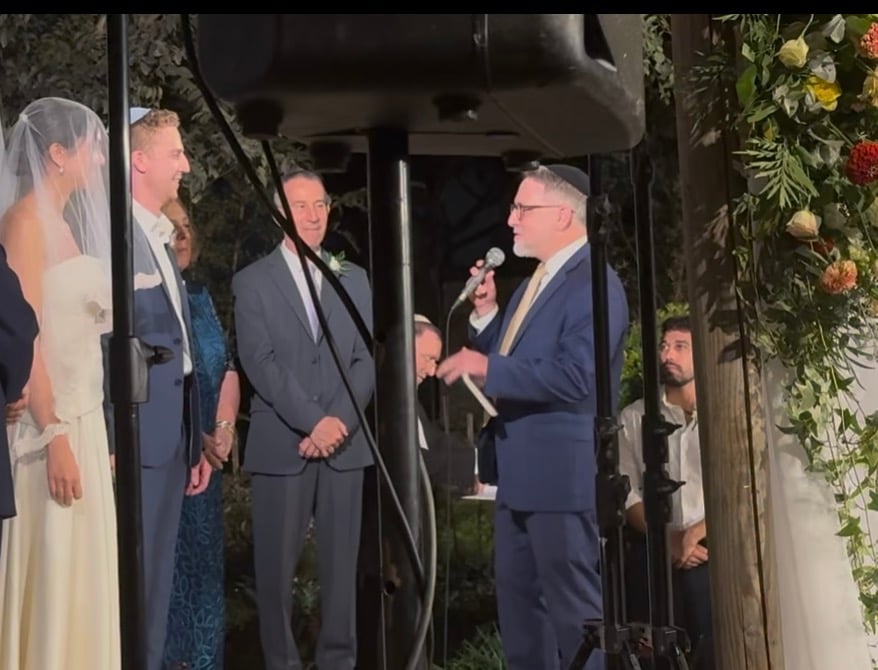
Last week I officiated at a wedding in Israel. Over the past three years, the newlyweds, and the close friends who surrounded the chuppah, risked their lives day in and day out, and sadly saw, sometimes with their own eyes, friends maimed or killed in the line of fire.
At the end of the chuppah, as I reflected on the words “Od yishama” (“We will yet again hear the voice of joy and gladness, the voice of groom and bride”), I felt for a moment a circle closing, and a sense of hope and relief. For three years we’ve been in a storm, and for a very short moment, I was out of the ark.
As soon as the chuppah ended, my eyes fell upon our friends, Shiri and Moti Twito. Years ago, the Twitos served as deeply beloved shlichim (educational emissaries) at our local Orthodox day school. On January 22, 2024, their son Eyal fell in Gaza. “Im eshkachech Yerushalayim” (If I forget thee, Jerusalem): I was back in the ark.
My wife Frayda and I spent some time with the Twitos. With love, so much love. With admiration, with hope that our presence makes a difference, and with questions. So many questions. And one question above all: How can you bear to attend these weddings? How do you get out of the ark, if that is even possible?

In truth, visiting Israel just a few weeks before an election feels a lot like being in an ark. It is a world in waiting. Has the storm subsided? Will we reach safe shores, and do they even exist? Or is another storm afoot?
I think of Noah, who upon coming out onto dry land planted a vineyard. Noah, who got drunk shortly after leaving the ark. I think of those who seek immediate relief and remedy, whose rush back to life leaves them numb.
And I think of the addictions that can form as we try to emerge from trauma. We too are vulnerable to our own addictions: addictions to “yes Bibi” and “no Bibi,” addictions to resolving everything with war or resolving everything with peace, and an addiction that lurches drunkenly between the adrenaline of living from crisis to crisis and the reflexive, numbing optimism of hakol yihye beseder (all will be fine)…yihye tov (it will be good).
And I think of the Tower of Babel. The tower of Babel and the blind spots of superficial unity: “And the whole earth was of one language, and of one speech.” (Genesis 11:1)
Babel is a towering reminder that trauma demands both decency and dissent: a true airing of diverse opinions and plans. In the face of trauma, there is a risk of false uniformity.
A friend of mine who is politically right of center surprisingly decided to vote for HaDemokratim, Israel’s left-wing party. She told me, “I firmly disagree with most of their platform. But we need a strong left. We need that voice at the table.”
Another friend recently shared on social media that Avinatan Or’s new memoir about his captivity in Gaza finally gave her space to voice her view among her peers. Avinatan’s parents did not protest for his release, and Avinatan wholeheartedly agreed with that choice. Her post drew dozens of comments echoing the same sentiment: during the past three years, my voice had no space.
How do you begin to build a home anew when everyone already feels there’s no room for their voice?
And I think of Abraham and Sarah too. Terach began the journey to the promised land together with them, but he never completed it. And in truth, that journey continues to this day, in the streets of Jerusalem and Tel Aviv, and all over Israel.
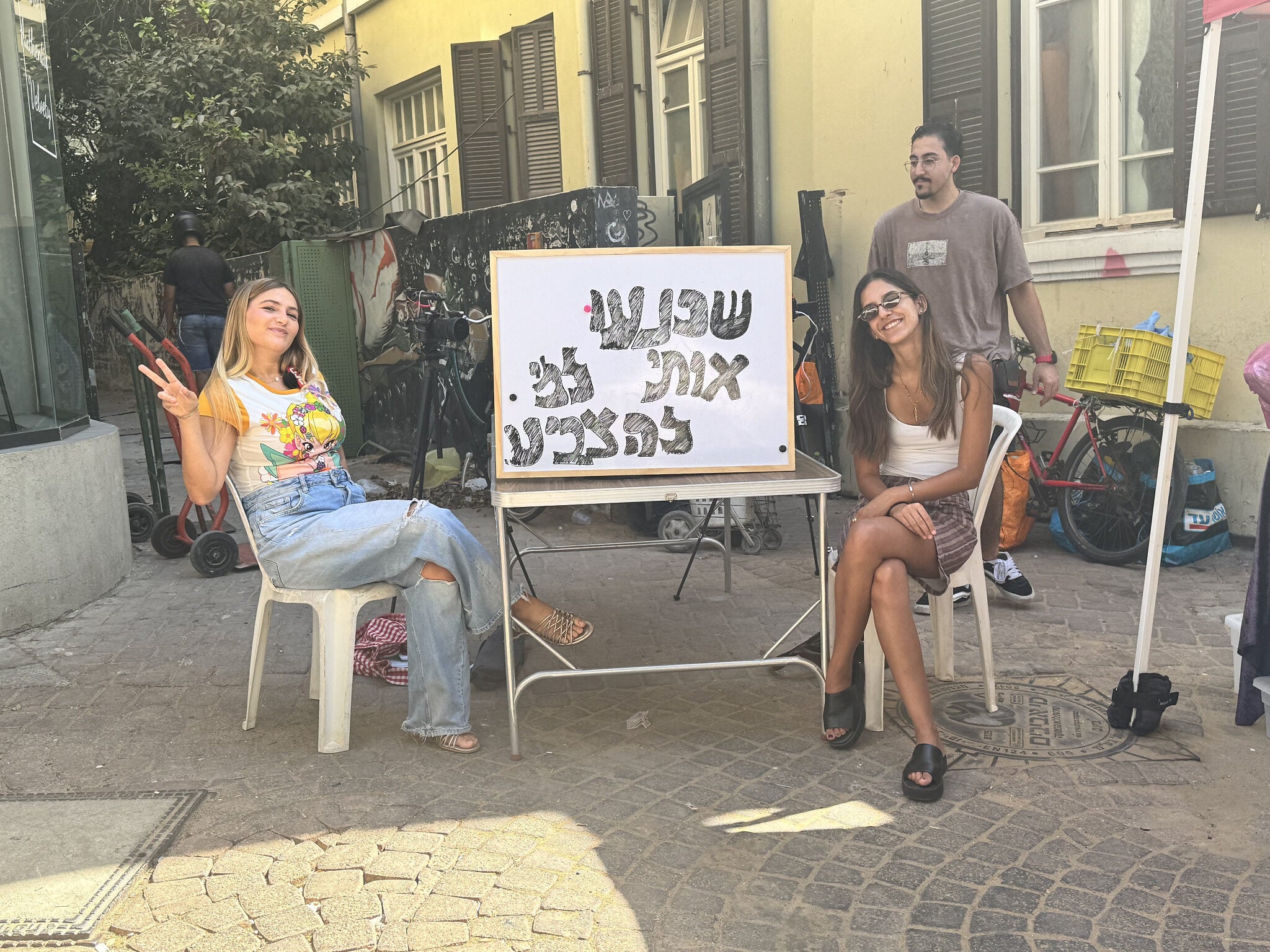
This week I met two young women, aspiring journalists from Yisrael Hayom, both in their mid-twenties, sitting at a stand at the Nachalat Binyamin art fair in Tel Aviv. Their sign read: “Convince me who to vote for.” They tried to get me to convince them, on camera. I explained that I don’t live here, and that even if I did, I would want to be convinced by them, by people their age. I told them, “Your generation has led us these past few years. Your generation paid the price. And your generation will live with the consequences of this vote.”
A dear friend in his mid-fifties recently told me how in the days immediately following October 7, his children, then in their late teens and early twenties, knew what to do. They volunteered, they organized, they led, and they served. Of course he did his share as well, but it was clear to him: “I am, we are, no longer the story.”
There is a potential here for a Lech Lecha, for the Abrahams and Sarahs of this generation to take up Terach’s journey anew. To leave home in order to go home.
Who is this generation voting for? That, I believe and pray, will be the real story.
That, I hope, is how we begin coming out of the ark.
May it be for good.