
Extraordinary Claims Require Extraordinary Evidence — Even From Netanyahu
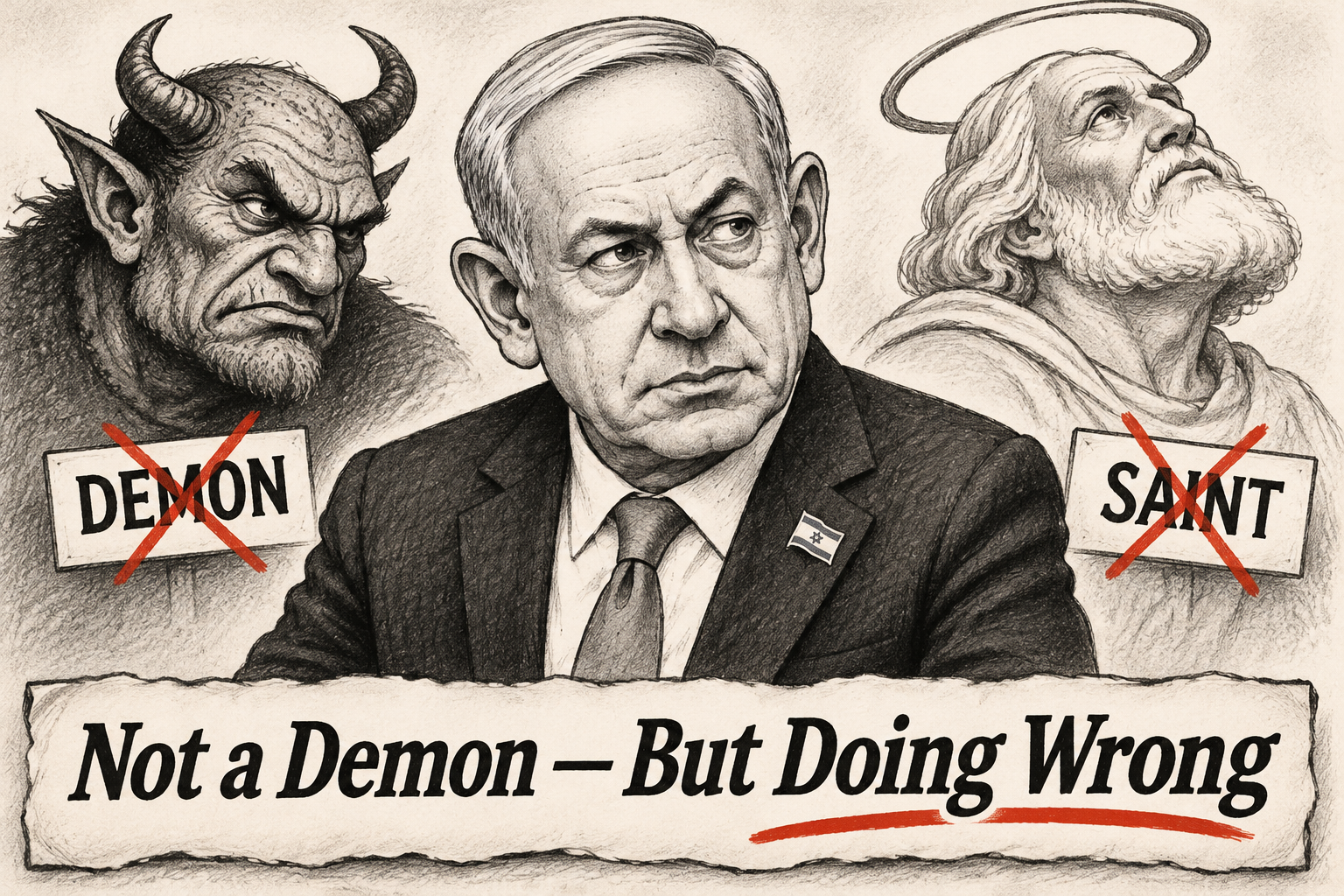
I have written before about the unfair demonization of Benjamin Netanyahu. I have questioned why he is so often portrayed as uniquely evil in a world that includes Vladimir Putin, responsible for Russia’s devastating invasion of Ukraine; Xi Jinping, whose government has subjected Uyghur Muslims to mass detention and persecution; Kim Jong Un, who presides over a system of political prison camps, torture, and executions; and Alexander Lukashenko, whose government has imprisoned and tortured political opponents.
I stand by those arguments. Netanyahu is not a dictator, and Israel is a democracy, not an authoritarian state.
But intellectual honesty requires applying the same standards to those we defend as to those we criticize. And Netanyahu’s recent allegations that Arab parties stole Israel’s October 27 election are beyond the pale of acceptable conduct for the leader of a democracy.
As Carl Sagan famously observed, “Extraordinary claims require extraordinary evidence.” This principle should apply equally to Netanyahu and to his critics.
Where is Netanyahu’s evidence?
Netanyahu and his Likud party have alleged widespread electoral fraud involving Arab voters, including bribery and foreign interference. Yet Israel’s Central Elections Committee has rejected claims that widespread fraud compromised the election. On November 17, it announced that a Shin Bet investigation had found no evidence of voter bribery on a scale capable of affecting the results.
Even more troubling are reports that the allegations may have been politically orchestrated. According to Channel 12’s Uvda, information that led to the election-day arrests of three Ra’am activists originated with individuals connected to Netanyahu’s office. Authorities are reportedly investigating whether the allegations were deliberately manufactured to undermine the election’s legitimacy. These suspicions remain unproven, but they warrant serious investigation.
There may also be a political calculation behind Netanyahu’s allegations. As political analyst Benjamin Birely suggested on The Times of Israel’s Lazar Focus podcast, Netanyahu appears to be trying to discourage Arab turnout in another election, improving his chances of regaining a parliamentary majority. His efforts to delegitimize Arab political participation may serve that same purpose.
Netanyahu seems to be taking a page from Donald Trump’s playbook.
Trump repeatedly claimed that the 2020 American presidential election had been stolen, despite the absence of evidence of fraud sufficient to change the outcome. His refusal to accept the results helped fuel the anger that culminated in the January 6 attack on the Capitol, as documented in the congressional investigation.
Trump has also made inflammatory and false accusations about immigrants. His fabricated claims that Haitian immigrants in Springfield, Ohio, were eating their neighbors’ pets were followed by bomb threats, school evacuations, and intimidation. His administration’s aggressive immigration enforcement policies have raised serious concerns about due process and the treatment of immigrants, including those who have committed no violent crimes.
The parallel with Netanyahu is disturbing. Both have used unsupported allegations to question electoral legitimacy while casting suspicion on minority populations.
And Arab Israelis are already paying a price.
Following the October election, the Israeli organizations FakeReporter and the Brandeis Institute documented a more than 400% increase in anti-Arab discourse on X in just two days. Arab citizens were accused of stealing the election, portrayed as security threats, and subjected to calls for restrictions on their voting rights. Netanyahu himself posted, “They stole the election in Israel!” His post was viewed approximately 1.2 million times.
By repeatedly accusing Arab voters of stealing the election without presenting credible evidence, Netanyahu is fueling hostility toward Israeli citizens whose democratic rights he is sworn to protect. The surge in anti-Arab rhetoric demonstrates just how dangerous such accusations can be when they come from the country’s prime minister.
One of the arguments I have repeatedly made in defense of Israel is that its Arab citizens can vote, organize political parties, serve in the Knesset, and help determine the country’s future.
Netanyahu is the prime minister of all Israelis, including those who oppose him. His responsibility is to protect their democratic rights, not undermine their legitimacy.
But his conduct has consequences beyond Israel’s borders.
As prime minister of the world’s only Jewish state, Netanyahu must recognize that his words can have consequences far beyond Israel’s borders, particularly for Jewish communities already facing rising antisemitism.
For years, I have challenged accusations that Israel is committing genocide or practicing apartheid, particularly when those accusations disregard evidence and context or are used to demonize the Jewish state.
Netanyahu’s conduct does not make those accusations true, but it gives ammunition to those who promote them.
How can we effectively defend Israel’s democracy when its own prime minister seeks to delegitimize the votes of a substantial portion of its citizens?
Netanyahu did not create antisemitism, and those who threaten or attack Jews bear full responsibility for their actions. But his inflammatory accusations make the work of those of us who defend Israel more difficult and risk worsening an already dangerous environment for Jewish communities worldwide.
None of this makes Netanyahu uniquely evil.
Israel remains a democracy with competitive elections, an independent judiciary, a free press, and institutions capable of challenging its political leaders. Indeed, the rejection of Netanyahu’s allegations by Israel’s election authorities demonstrates the resilience of those institutions.
Nor does criticizing Netanyahu require denying his accomplishments, dismissing the extraordinary security threats Israel faces, or accepting the caricatures promoted by some of his opponents.
But defending Netanyahu against unjust accusations does not require defending the indefensible.
I have criticized those who make extraordinary accusations against Netanyahu without extraordinary evidence.
I cannot excuse Netanyahu when he does the same thing to his fellow Israelis.