Perspectives from the Old City of Jerusalem
Confessions of a Haredi Anglo Woman
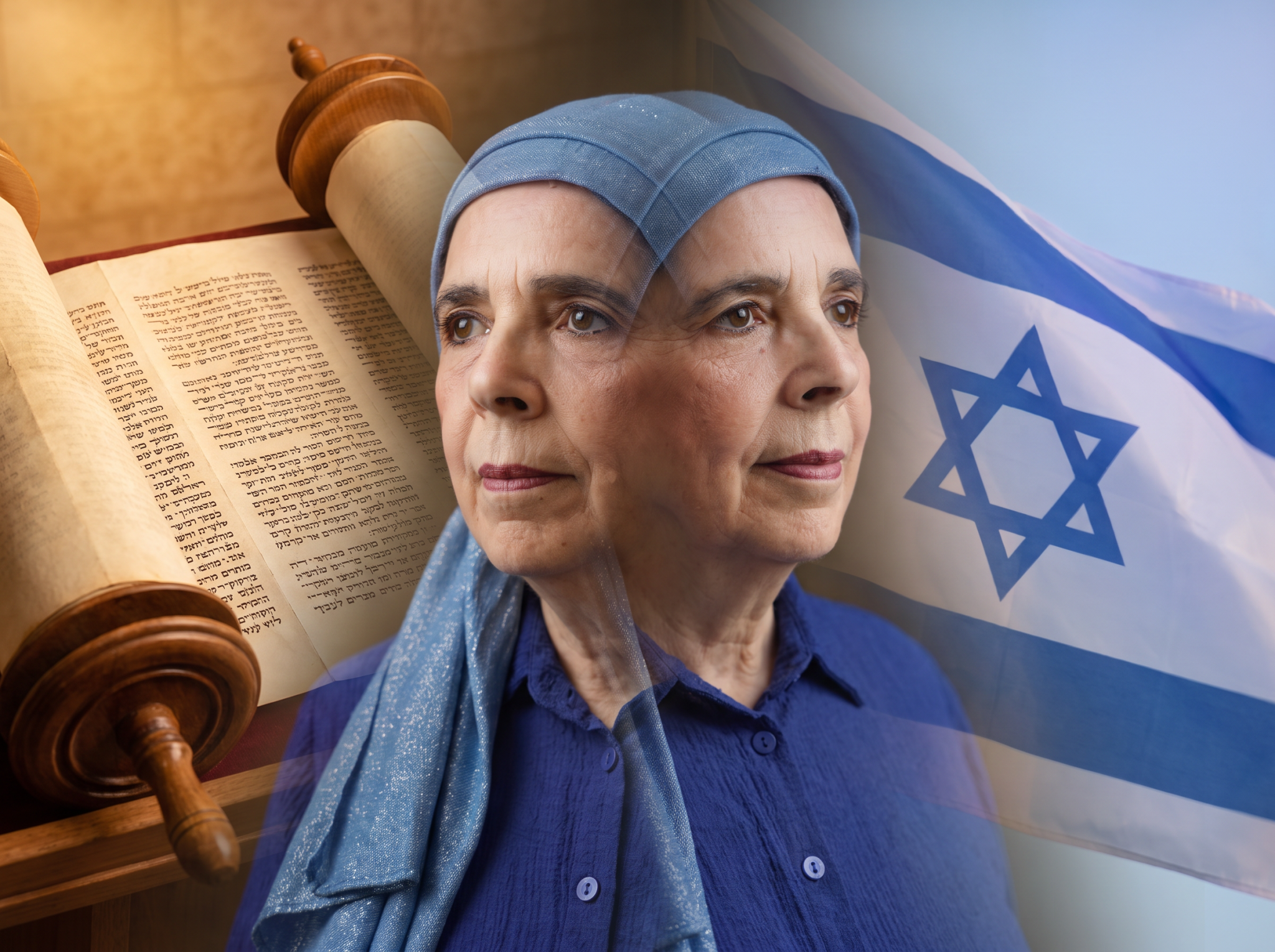
Haredi or Zionist? (courtesy)
Bs”d
When I “discovered” the spiritual path of Judaism at the age of 37, it was Haredi Judaism I was introduced to. After spending 15 years as a monastic member of a Hindu ashram (see https://www.youtube.com/watch?v=Nj2USDLLRCc), I was disillusioned by the sexual scandals that brought down every major guru in 1984. That year, an Orthodox rabbi came to our ashram and spoke about “Love of God even unto madness,” quoting Maimonides, and I decided to check out the Judaism I had left behind in my youth.
The Haredi Judaism I discovered in Jerusalem was dazzling in its God-centered focus, its spiritual idealism, and its non-materialism. The Haredi women I met were smart, kind, and awesomely generous. They invited strangers like me to their Shabbos meals every week. Often there were more guests than family members at these delicious, elaborate, multi-course meals. I had never heard of the mitzvah of “receiving guests,” but I was the beneficiary of it week after week, the mitzvah done with love and joy.
At Neve Yerushalayim, the seminary where I had enrolled, I studied with Rebbetzin Tziporah Heller. Through her, all of my preconceptions about “oppressed Haredi women” blew up like a popped balloon. Rebbetzin Heller was the most intellectually brilliant person I had ever met, far more brilliant than my college professors back at Brandeis U. She was conversant in all of Jewish scholarship, from the legal to the philosophical to the mystical. And the values she taught, she lived, doing acts of chesed (lovingkindness) daily. Plus, she was the mother of nine children (eventually to become the mother of 14 children). Pop!
I chose to embrace the Haredi stream of Judaism because I was smitten by the God-focused idealism of its adherents. In a world mesmerized by material acquisition, power, and self-aggrandizement, here was a group of people whose pristine goal was learning and fulfilling God’s will as expressed through the written and oral Torah.
Being Haredi meant I dressed modestly according to its standards; I ate only food with the highest hechsher (kosher supervision); I bought produce only in stores where the Torah’s agricultural laws were strictly enforced; during Shmitta (Sabbatical) years I did not hold by the heter mechira (the leniency which allowed Jews to continue to work the land when it was supposed to lie fallow) ; I did not go to mixed gender social gatherings; and when I married and had a son, I sent him to Haredi educational institutions.
I have written eight books on Jewish spirituality. Five of them were published by ArtScroll, the flagship publisher of the Haredi world. On my lecture tours through 35 American cities and five continents, my audiences were usually Haredi women. I have a respected place in the English-speaking Haredi world.
However, at the same time (and here’s my confession), I am a passionate Zionist. I love not only the Land of Israel, but also the State of Israel. I am thrilled that we have a Jewish state with a Jewish army, Jewish police force, Jewish engineers building roads and transit systems, and hospitals where the food served to all patients is kosher.
I celebrate Yom HaAtzmaut. I hang a big Israeli flag from my balcony. I host a barbeque. I recite Hallel (without a blessing).
My only son served in the IDF, in Nahal Haredi. A tremendously creative boy with far-flung interests, it was clear early on that he was not attracted to full-time Torah learning. So, of course, my husband, son, and I agreed, he should do his stint in the army. Several years later, on October 8, 2023, he was called up to the reserves and spent many months dealing with dead bodies and sifting through ashes for tiny body parts in the destroyed kibbutzim. Thanks to the efforts of his battalion, close to 40 missing Israelis were identified and brought to kever Yisrael (Jewish burial). During these last three years when the rest of the country has been suffering from sons, husbands, fathers, and brothers who have been killed, injured, or absent for long, repeated reserve duty, I could not have lived with myself had my family not contributed.
Yes, I know that the Haredi rabbinic leaders are staunchly non-Zionist or even anti-Zionist. But I attribute their position to a century-old conflict that is no longer relevant. For my first book, Holy Woman, the biography of Rebbetzin Chaya Sara Kramer, born in 1924, near Munkatch, Hungary, I had to research the religious controversies of that era. I learned that, back then, the various “isms, – such as Socialism, Communism, and Zionism – were not just secular; they were rabidly anti-religious. And so, the leaders of traditional Judaism fought back with virulence.
The Haredi rejection of Zionism derived from the psychological tendency to reject whatever your enemy champions. As the Imrei Emes, the third Gerrer Rebbe (1866-1948), said: “Three things were lost to the Orthodox community: The study of the Bible because the Reform movement took it; Zionism because the secular Zionists took it; and the Hebrew language because the modernists and secularists took it.”
But the Zionist state I made aliyah to in 1985 was not anti-religious. On the contrary, Shabbos and Jewish holy days were – and continue to be – legal holidays, with banks, businesses, and schools closed. The country’s main international airport closes down on Yom Kippur. The government has carved out from its beautiful beaches 16 “separate beaches” for religious men or women to swim without the opposite gender. The law mandates that in every residential or public building with more than one elevator, one elevator has to be a Shabbos elevator (automatically stopping on every floor without anyone pressing a button).
As for the recently publicized contention of the Haredi leadership that the secular population of Israel has “no connection” to Judaism, they are looking through old and cracked lenses. According to surveys conducted by the Israel Democracy Institute and the Pew Research Center:
- 63% of Israeli Jews fast fully on Yom Kippur; 11% more observe a partial fast; even among those who identify as explicitly secular nearly half (47%) fast either fully or partially.
- 98% of Jewish households have a mezuzah on their front door
- 71% of Israeli Jews avoid eating chametz (leavened bread products) during the week of Passover; approximately 37% of secular Israeli Jews strictly avoid chametz during Passover
For years I thought that I was somewhat unique in my Haredi/Zionist split personality. But the current emergence of the new Haredi party Hatzibur HaCharedi has revealed that there are tens of thousands of Haredim like me who believe in army service for those not learning Torah full-time (i.e., 10 hours a day). In addition, they endorse the core curriculum that will teach skills vital to entering the workforce. As well, they are for women’s representation in the Knesset. (Two of the first four candidates on their Knesset list are women.)
Hatzibur HaCharedi is a grass-roots party. It came into existence and is gaining momentum because a significant portion of the Haredi population wants to “take responsibility,” as the party’s slogan states, to do their part for their country. A Ynet poll taken in the first week of October among young people aged 18-22 found that Hatzibur HaCharedi would garner five Knesset seats if that population was the sole decider.
Since I am obviously Haredi by the way I dress, I have occasionally encountered the antipathy toward Haredim that has gripped the country in the last couple years because the official Haredi parties’ refusal to serve in the army has placed a disproportionate burden on the rest of the citizenry. I don’t blame the haters, but I do want to change them. I want them to realize that an increasing number of Haredim want to “share the burden.”
I support this new party because I think it is a golden opportunity to unite the country. That’s why even some avowedly secular Israelis have declared that they are going to vote for Hatzibur HaCharedi. Because disunity is the greatest danger to Israel, as we learned on October 7. And even more than Torah study, even more than the IDF, our greatest protection is our unity.
Related Topics
Related Posts