Unlikely Allies Work to Forge a Coalition Government
An Uphill Battle: A Motley Crew of Leaders Scrambles to Form a Coalition
In Israel, the politics of governing can often seem easier than the politics of actually forming a government. Post-election negotiations frequently become a headache even for the party with the most seats, as smaller factions wield significant power as kingmakers.
Blending a hodgepodge of issues, manifestos, and ideologies rarely creates harmony. Instead, it yields a jarring mix of competing flavors—seemingly sweet at first, but quickly turning sour and stale. Aware of this, every faction is scrambling to throw its own ingredients into the pot, determined to cook up its preferred agenda. It is no easy feat.
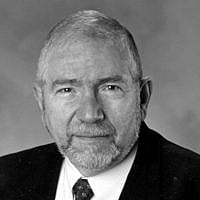
Israeli President Isaac Herzog has tasked Gadi Eisenkot, leader of the centrist Yashar party, with the formidable challenge of forming Israel’s next coalition government. Following the deadlocked October 27, 2026 election—in which neither Eisenkot’s bloc nor that of caretaker Prime Minister Benjamin Netanyahu secured an outright majority—the country faces a complex path to governance.
Having secured recommendations from a majority of Knesset members with 67 endorsements, Eisenkot was granted the first mandate on November 8, 2026. He now has a 28-day window, with the possibility of a 14-day extension, to attempt to assemble a cross-bloc or emergency unity coalition.
Gadi Eisenkot is a highly decorated former military officer who served as Chief of Staff of the Israel Defense Forces (IDF) from 2015 to 2019. During his tenure, he led the military and defended the country through hierarchical command, strict discipline, and focused mission execution. Now, stepping onto the political stage as a national leader, he enters a vastly different arena—one where leadership relies on consensus-building, legislative navigation, and broad policy management. This environment operates under a fundamentally different framework of authority and accountability, where decision-making is often marked by chaotic debates and gridlock that can bring progress to a standstill.
As a relative newcomer to politics, the question remains whether Eisenkot possesses the strategy, statesmanship, and resolve to withstand these pressures—proving that he is far from an easy pushover.
Looking at the historical trajectory of Israeli politics, there is a clear pattern of “mood” parties—factions that surge rapidly into government, sometimes even leading the country, before collapsing within a few election cycles. Notable examples of short-lived parties that either led the government or served as crucial coalition partners before vanishing include Shinui (1999–2006), Kadima (2005–2015), Kulanu (2014–2019), Bayit Yehudi/Jewish Home (2008–2023), and Yamina/New Right (2018–2022). A more recent example is Blue and White (Kahol Lavan), led by former IDF Chief of the General Staff Benny Gantz, which struggled to maintain momentum and ultimately withdrew from the legislative race in late 2026.
Given this precedent, Gadi Eisenkot’s Yashar party must tread carefully. Without a cautious, sustainable strategy, it risks becoming yet another “flash-in-the-pan” movement—springing up rapidly, governing with varying degrees of success, and soon disappearing from the political map.
The Compromise Strategy: Although Benjamin Netanyahu continues to call for a unity government, bridging the divide between him and Gadi Eisenkot remains difficult. Additional friction stems from other faction leaders within Eisenkot’s bloc—such as Avigdor Lieberman and Naftali Bennett—who oppose relying on Arab-majority parties like Ra’am or the Joint List. Consequently, Eisenkot’s camp has explored alternative options, including outreach to ultra-Orthodox (Haredi) factions.
Beyahad (Together) party chairman Naftali Bennett has made clear to his political partners that he favors promoting a unity government, though he has stopped short of ruling out joining a coalition with Netanyahu.
Meanwhile, United Torah Judaism (UTJ) chairman Yaakov Asher is openly holding talks with negotiators across the political spectrum. His outlined conditions for any political arrangement include passing a Draft Law regulating the status of yeshiva students, safeguarding the independence of Haredi education, and preserving the status quo on matters of religion and state.
The primary shared objective of the Arab-majority parties is replacing Netanyahu’s government. While Ra’am has expressed openness to joining an opposition-led coalition, the Joint List has indicated it would support Eisenkot from outside the government rather than take ministerial seats.
For his part, Eisenkot has set strict conditions for any Arab-majority party seeking to join a coalition, including recognizing Israel as a Jewish and democratic state, accepting the principles of the Declaration of Independence, and opposing Hamas.
For now, having received the presidential mandate to form a government, Eisenkot has reportedly prioritized building a coalition with the ultra-Orthodox (Haredi) parties rather than relying on Arab-led factions.
While Eisenkot is taking the first opportunity to build a coalition, his path to a stable 61-seat majority in the 120-seat Knesset remains steep, obstructed by deep ideological divides among potential partners. It remains to be seen whether he can navigate their conflicting red lines to bridge these gaps.
This is the ultimate litmus test for leaders and parties claiming they want to heal the nation from deep societal polarization and a hydra of external security threats.
The moment demands more than opportunism, fair-weather partnerships, or a myopic “anti-Bibi” agenda—just as it rejects a Machiavellian worldview where clinging to power justifies any means.