Confronting Antisemitism Through Institutional Courage and Jewish Pride
Two Fronts. One People. One Unbreakable Future.
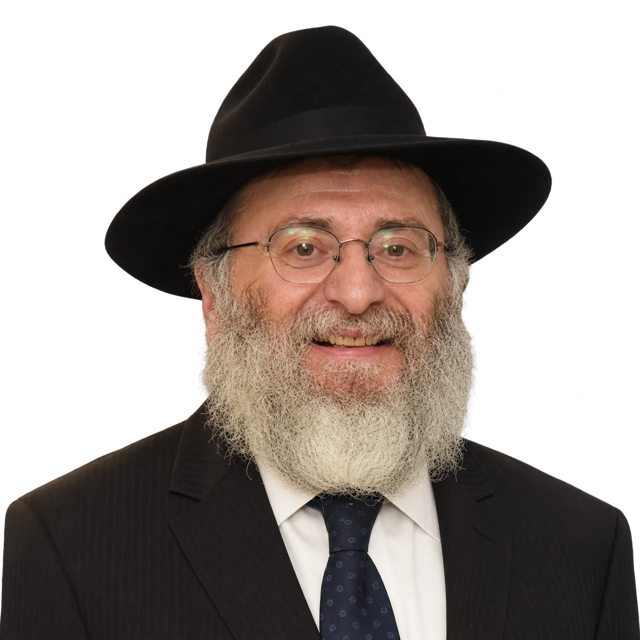
By Rabbi Anchelle Perl
Director, Chabad of Mineola
Nassau County Human Rights Commissioner
Member, Faith Council of the Nassau County District Attorney’s Office
Two Gatherings. One Essential Lesson.
How do we confront growing antisemitism in a way that not only protects the Jewish people today, but strengthens Jewish life for generations to come?
That question was very much on my mind as I attended two significant gatherings this past week.
The first, at Touro University in Manhattan, assembled an extraordinary group of scholars, attorneys, researchers, educators, and public leaders confronting contemporary antisemitism.
The second, at the Museum of American Armor in Old Bethpage, examined the enduring lessons of the Nuremberg Trials, eighty-one years after their opening.
Together, these experiences reinforced my conviction that our response must embrace two equally vital responsibilities: the institutional courage to confront antisemitism and the personal commitment to live proudly and meaningfully as Jews.
Touro University: Turning Concern Into Action
What impressed me most at Touro was the remarkable caliber of leadership brought together under the direction of its president, Dr. Alan Kadish.
This was more than a gathering to condemn antisemitism. It was a serious effort to understand its sources, expose its manifestations, and develop effective responses.
Researchers such as Dr. Charles Asher Small examine the ideological networks and institutional influences associated with contemporary antisemitism.
Legal scholars and advocates, including Kenneth Marcus, Professor Anne Bayefsky, Professor Thane Rosenbaum, and Rabbi Dr. Mark Goldfeder, bring the expertise needed to confront unlawful discrimination, protect civil rights, and hold institutions accountable.
Educators, campus leaders, investigative journalists, and public officials contribute their own essential perspectives.
The message was clear: Antisemitism cannot be confronted through outrage alone. It requires evidence, scholarship, legal expertise, education, and leaders prepared to act.
We must protect freedom of expression while insisting that threats, harassment, and unlawful discrimination against Jewish students and citizens receive the serious response they deserve.
Institutions must be measured not merely by the principles they proclaim, but by their willingness to uphold those principles consistently.
Nuremberg: The Price of Indifference
Three days later, I attended Nuremberg: The Verdict of History at the Museum of American Armor, as a guest of Gary Lewi of Rubenstein Communications.
The gathering offered a sobering reminder that the Holocaust was not carried out by violent extremists alone. It involved institutions, professionals, government officials, and ordinary individuals who participated in or enabled a machinery of persecution.
The Nuremberg Trials established the principle that individuals could be held accountable for grave crimes, even when acting under orders.
While today’s circumstances must never be casually equated with Nazi Germany, the warning about institutional indifference and personal responsibility remains timeless.
Laws mean little without the courage to enforce them. Education loses its moral purpose when knowledge is divorced from conscience.
And silence, when confronted by injustice, can carry consequences far beyond the moment.
History challenges not only the decisions of our leaders, but the convictions of each of us.
The Rebbe’s Vision: Strengthening Jewish Life From Within
The Lubavitcher Rebbe, Rabbi Menachem M. Schneerson, offered a profoundly positive approach to Jewish strength.
We must never allow antisemitism to define what it means to be Jewish.
Judaism is not simply a response to those who oppose us. It is a magnificent inheritance of Torah, mitzvos, faith, family, education, kindness, and responsibility.
The Rebbe consistently emphasized the infinite value of every Jew and the extraordinary power of every positive Jewish action.
A person putting on tefillin, lighting Shabbos candles, studying Torah, giving tzedakah, or sharing a Shabbos meal is strengthening the living continuity of our people.
Such actions may appear modest beside legal battles or national conferences. Yet they build something no institution can provide on its own: a deeply rooted Jewish identity.
Years ago, the clothing retailer Sy Syms popularized the slogan, “An educated consumer is our best customer.”
I believe there is a powerful Jewish lesson in those words:
An educated Jew is our strongest answer to antisemitism.
Our children must learn about the Holocaust and the suffering of our people. But they must also discover the richness of Jewish history, the beauty of Shabbos, the wisdom of Torah, and the joy of Jewish observance.
They must know not only what others have done to the Jewish people, but what the Jewish people have contributed—and continue to contribute—to humanity.
Knowledge creates confidence. Meaningful Jewish experiences create belonging. And personal commitment transforms Jewish pride from a declaration into a way of life.
Our enemies do not get to decide how Jewish we will be. That decision belongs to us.
Jewish Leadership Must Be Personal
This places a special responsibility upon rabbis, educators, and communal leaders.
Effective administration, fundraising, and public advocacy are important. But authentic Jewish leadership must begin with personal conviction.
A rabbi speaking about Shabbos should radiate its joy. An educator teaching Torah should communicate a genuine love of learning. A communal leader advocating Jewish continuity should demonstrate that commitment through personal example.
The Rebbe’s model of leadership was not simply about building institutions. It was about reaching individuals, inspiring them, and helping each person discover the extraordinary potential within Jewish life.
Our success should therefore be measured not only by attendance figures or fundraising totals, but by the lives we touch.
How many young people have gained confidence in their Jewish identity? How many families have discovered the beauty of a new mitzvah? How many previously uninvolved individuals have found warmth, meaning, and belonging?
These are the achievements that shape our future.
From Conviction to Action
The lessons of Touro and Nuremberg should inspire practical steps.
We must support serious research, effective civil rights advocacy, responsible university leadership, and stronger cooperation among legal professionals, educators, and public officials.
We should expand opportunities for Jewish learning, strengthen campus Jewish life, and encourage families to deepen their connection to Jewish traditions.
We must also build understanding beyond our own community.
At Chabad Mineola, our Ask the Rabbi Project, being offered in public schools across Nassau County, provides opportunities for students to ask sincere questions about Judaism, religious traditions, and Jewish life.
By replacing misconceptions with knowledge and unfamiliarity with understanding, we can help nurture a culture of mutual respect.
And every Jewish individual can participate by choosing one additional positive Jewish action—learning Torah, observing a mitzvah, joining a community program, or performing an act of kindness.
The strength of our future will be determined not only by what our institutions accomplish, but by what each of us contributes.
Chanukah: Increasing the Light
As Chanukah approaches, we are reminded of a beautiful and enduring Jewish principle.
We do not respond to darkness merely by condemning it.
We increase the light.
Each night of Chanukah, another candle is added.
One more advocate defending civil rights. One more educator teaching Jewish history. One more student discovering the beauty of Judaism. One more family celebrating Shabbos. One more mitzvah. One more act of kindness.
Each adds another light.
And together, those lights illuminate our future.
Am Yisroel Chai: Our Declaration and Our Responsibility
I left Touro University inspired by the extraordinary intellectual and professional resources being mobilized against antisemitism.
I left the Nuremberg gathering reminded of the dangers of indifference and the importance of moral courage.
And I returned to my work at Chabad Mineola with a renewed appreciation for the responsibility that belongs to every Jewish individual.
We need the researchers to investigate, the attorneys to defend, the educators to teach, and public officials to uphold their responsibilities.
But we also need you and me.
We need Jewish leaders whose personal commitment inspires others, parents who make Jewish education a priority, and young people who recognize that being Jewish is not a burden imposed by history, but a magnificent inheritance and sacred opportunity.
Above all, we must remember:
The purpose of Jewish life is not simply to defeat antisemitism. It is to live proudly, joyfully, and meaningfully as Jews.
We will confront prejudice with evidence, discrimination with the law, ignorance with education, and indifference with moral courage.
And we will confront spiritual darkness with the light of Torah, mitzvos, kindness, and Jewish pride.
May Hashem bless our efforts with wisdom, strength, unity, and success.
May our children inherit not our fears, but our faith; not merely the memory of what our people endured, but the inspiration of what our people continue to accomplish.
And may we merit abundant blessings, greater security, and a future filled with Jewish pride, peace, and goodness.
Am Yisroel Chai!
The Jewish people live—and with Hashem’s blessings, we will continue not merely to survive, but to flourish, inspire, and illuminate the world.