
Congress confronts antisemitism in healthcare
Medicine has an ancient covenant: treat the patient in front of you, without prejudice, without exception. Public trust in healthcare depends on neutrality, professionalism, and the belief that every patient and practitioner will be treated fairly, regardless of religion, nationality, politics, or identity.
That trust is beginning to erode and Congress has taken notice.
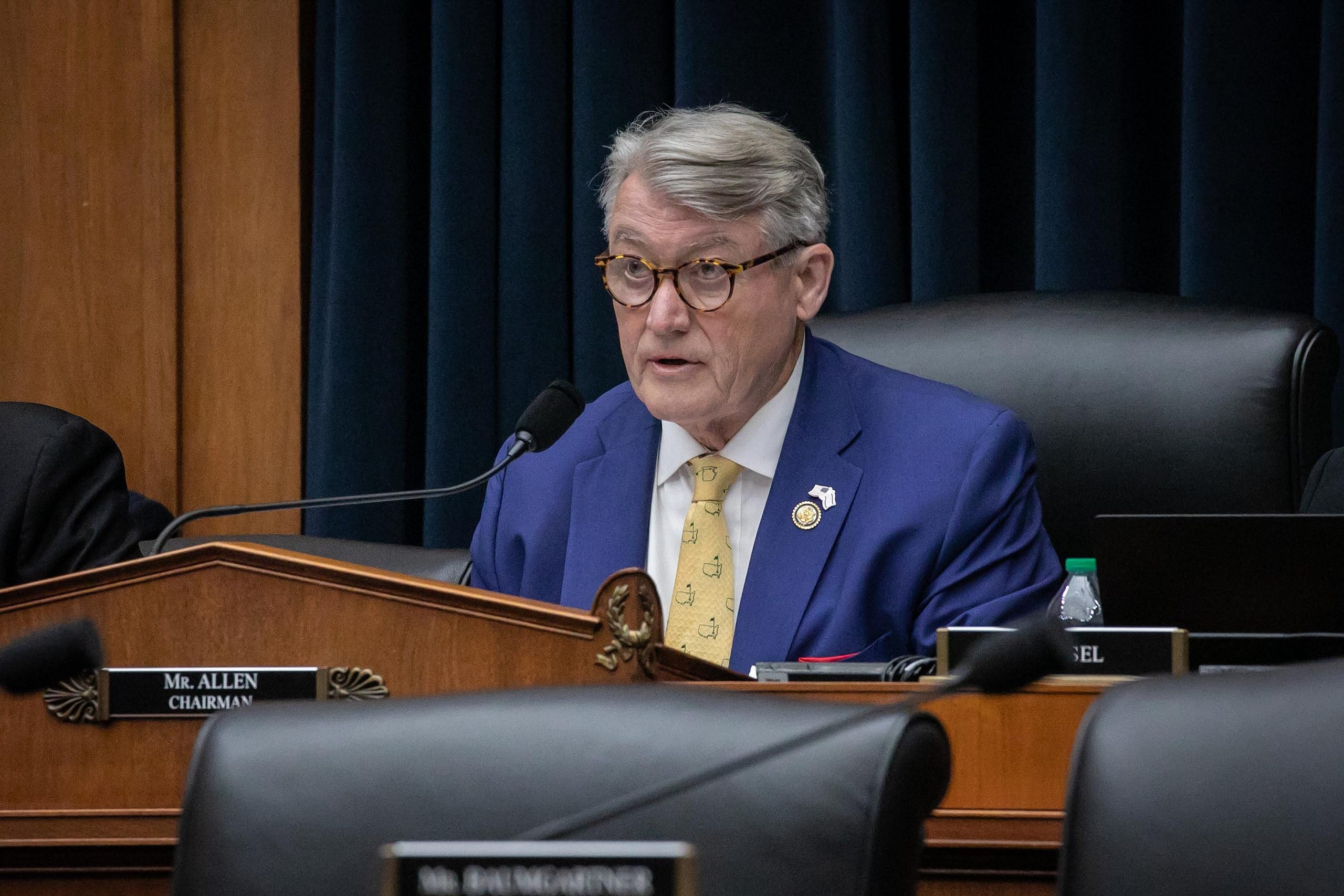
In May, the House Committee on Education and the Workforce‘s Subcommittee on Health, Employment, Labor, and Pensions held Congress’s first hearing focused specifically on antisemitism in healthcare. What emerged was a picture of a professional environment increasingly struggling to uphold the standards it claims to represent. Subcommittee Chairman Rick Allen (R-GA) and members from both parties delivered a message the healthcare establishment can no longer ignore: take action, or Congress will.
Jewish healthcare professionals are facing exclusion from opportunities, retaliation for speaking out, and pressure to renounce their identity or remain silent. Medical organizations are calling for boycotts of Israeli doctors, technology, and medicines. Prestigious journals are refusing to publish research on antisemitism. Unions are endorsing terrorist sympathizers and recommending hospitals exclude Israeli colleagues. Jewish patients are being refused treatment and fear that ideology is affecting their care.
When geopolitics enters the clinical environment it compromises trust, teamwork, professionalism, focus, and patient confidence. The entire system suffers. This is not simply a Jewish issue; politicization of medicine is a patient care crisis for everyone. A healthcare system cannot function if practitioners fear colleagues, patients question whether they will be treated fairly, or trainees feel pressured to hide parts of their identity.
The aftermath of October 7th did not create this problem, but it exposed how unprepared healthcare institutions were to address it. Antisemitism increasingly presents itself through the language of anti-Zionism, making it easier for institutions to dismiss or avoid confronting behavior that would be immediately recognized as discriminatory if directed at almost any other group.
The vast majority of American Jews identify as Zionists or support Israel’s right to exist as a pluralistic, Jewish democratic state. When Zionism is targeted, Jewish people are targeted. Declaring that the world’s only Jewish state has no right to exist, that its supporters should be excluded from professional life, and that terror against civilians is justified, is not political activism, but a targeted hate movement. It is discrimination against Jews, dressed in language designed to make it harder to name.
As history has shown, what starts with the Jews rarely ends with the Jews. The medical profession has its own painful chapter in that history. Physicians and nurses joined the Nazi movement earlier and in greater numbers than almost any other profession, and played an integral role in designing the euthanasia, gas chambers, and medical experiments practiced in the Holocaust. That history is not a distant warning. It is a reminder of what becomes possible when medicine allows ideology to override the obligation to treat every human being with equal dignity.
Some of the most troubling examples involve organizations that are supposed to protect healthcare workers. National Nurses United has distributed guides instructing members how to bring anti-Zionist politics into clinical settings. The Committee of Interns and Residents, a union representing more than 34,000 medical residents and fellows, has called for hospitals to exclude Israeli colleagues from employment, offered institutional support to a physician who backed Hezbollah, and plastered horrific antisemitic posters in and around hospitals, all while compelling union dues from the very Jewish colleagues it ostracizes.
Lawmakers from both parties expressed concern, a sign the problem is too serious to be dismissed as partisan. The responsibility to address this begins within the healthcare establishment within its existing framework. Hospitals and medical schools routinely regulate speech and conduct when it interferes with patient care, workplace safety, or professional standards. They do so because healthcare is different from most professions – the stakes are life or death and team cohesion and trust are critical. Healthcare organizations must enforce their own nondiscrimination policies and make it clear that ideological coercion and distractions have no place at the bedside or in medical schools. Professional associations must treat this as a threat to the integrity of the profession. And unions must be held accountable when their political activities harm the members they are obligated to represent.
The medical profession can address this. What has been missing is the will. If it does not materialize, Congress has made it clear what action looks like: increasing civil rights enforcement against bad actors, opening investigations into specific institutions, conditioning federal funding on compliance with civil rights protections, and more.
The healthcare system cannot claim to uphold ethical standards while tolerating discrimination inside its own institutions. The integrity of medicine depends on confronting this problem, and Congress has now made clear that if these organizations fail to act, lawmakers will.