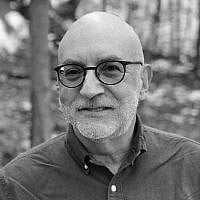
A Jew from Texas, who knew?
Converging Lives in Transit: Lisbon, June of 1941
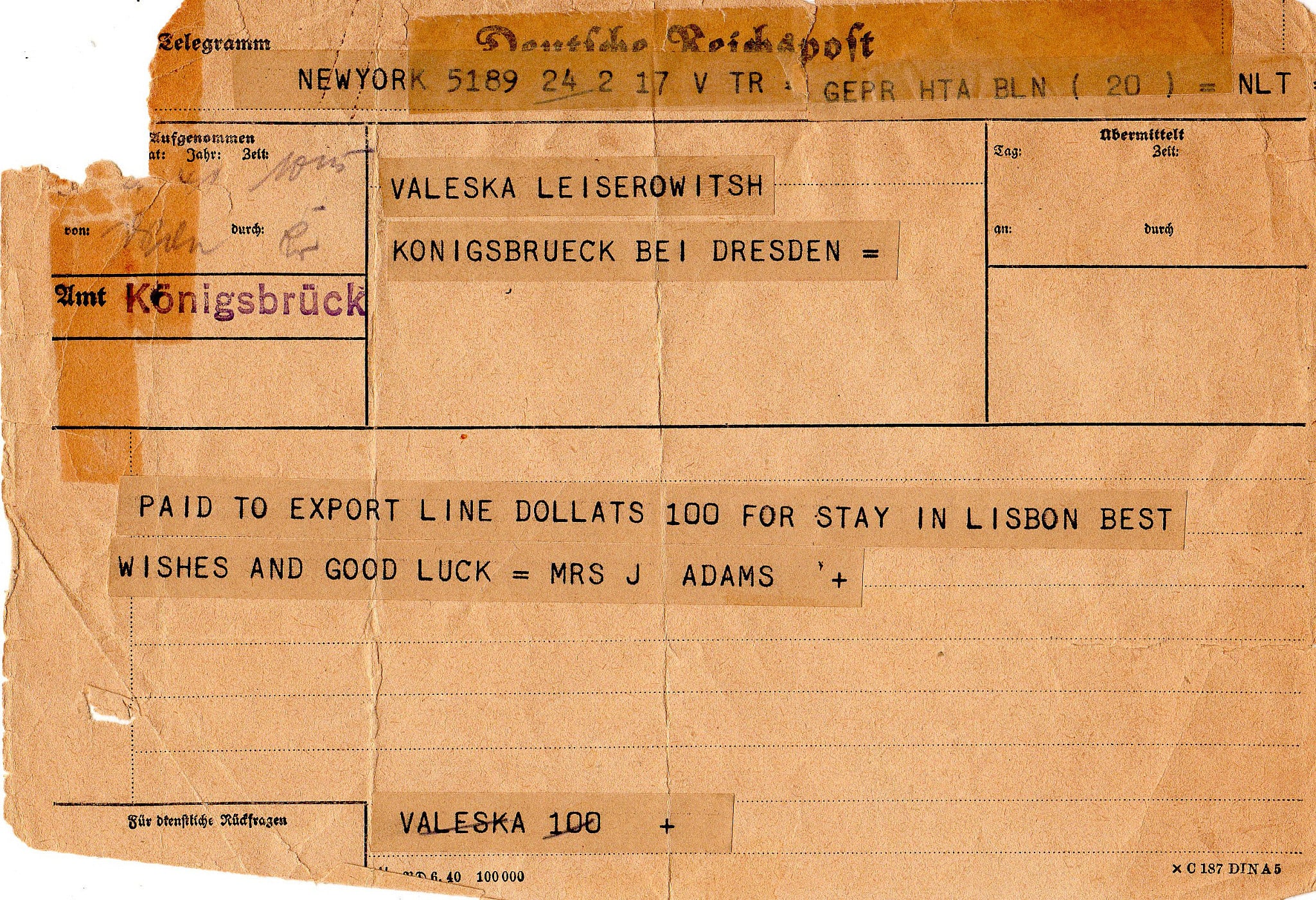
Paperwork of survival, on to Lisbon.
I knew the facts about Jews desperate to leave Europe in 1941, but only recently did I pull together a powerful strand of stories about four people—a world-famous artist, a Chabad rabbi, a future journalist and a teen from Dresden—and their families escaping through Lisbon, Portugal in June of 1941. Did any of their paths cross on the way to the ships that would take them west to freedom, what degrees of separation connected them? I don’t know but their intersecting paths—routing through Lisbon on the way to New York and points beyond—show how fate (or, if you will, the hand of God) can tumble together the famous and the unknown in one time and place.
The book Hitler’s Jewish Refugees: Hope and Anxiety in Portugal by Marion Kaplan ably gives institutional and individual details on the Portugal experience. Inspired by the story of my partner Naomi’s father Eric Leiseroff, who left Dresden with his mother Valesca Schulman Leiseroff in June 1941 to sail from Lisbon to New York, I found other memoirs and articles about people who left in June, three in the period between June 10 and June 20. I wondered if they encountered one another, or brushed shoulders on the streets with a nod of Jewish recognition, in their preparation for voyages to a new world.
Marc Chagall, departed June 10
U.S. journalist Varian Fry became involved with the Emergency Rescue Committee in the late 1930s and in 1940 connected with Hiram “Harry” Bingham IV, the U.S. vice consul in Nice, France, who was hiding refugees in a rented villa in the area. In December 1940, Fry and Bingham met with Marc Chagall, the Russian-Jewish artist then living with his wife Bella in Gordes, France. Bingham helped Chagall with the paperwork to immigrate to the United States. The Chagalls first moved to Marseille. Arrested and then released by the Vichy police (released with Bingham’s intercession), Marc and Bella Chagall reached Lisbon on June 10-11. They left Lisbon on June 12 on the Mouzinho, with 700 other passengers, including 130 children from QSE homes and internment camps in France, and arrived in New York on June 21. (Sources primarily from the David S. Wyman Institute for Holocaust Studies, PDF at this link).
According to a June 12 story from Jewish Telegraph Agency, notable passengers included:
Prof. Maximilian Weinberger, former head of the Rothschild Hospital in Vienna, who is supervising the care of the children aboard the ship; the painter, Marc Chagall, who has arranged to give them drawing lessons; Erwald Schindler, Prague stage director, with his wife, who is the daughter of Arthur Nikisch, former conductor of the Boston Symphony Orchestra; Chief Rabbi Robert Serebrenik of Luxemburg and Martin Aufhauser, banker.
Peter Schrag, departure date unspecified
Peter Schrag’s family moved from Germany to Luxembourg to Belgium between 1935 to 1939. His father Otto was interred in the French internment camp at Saint-Cyprien. He wrote about his family’s harrowing experiences in his book When Europe Was a Prison Camp: Father and Son Memoirs 1940-1941. After leaving the camp and separated from his wife and son Peter, Otto got the required paperwork in Marseille. As in so many of the escape stories, he took a train through France to the Spanish border, then on to Barcelona and Madrid and finally Lisbon in May 1941. There he waited for his wife and son to join him from France. Peter Schrag’s book sets the scene about Lisbon’s impact on harried, exhausted people on the run:
Anyone who came to Lisbon from fascist prisons—or from Europe’s pillaged, hungry, occupied countries—was struck by so many powerful impressions that it became impossible to take them all in at once. Many little things were so striking that they immobilized those who saw them: the appetizing displays in the richly stocked food shop windows, the menus in the restaurants, the ability to openly buy dollars and other foreign currencies, the freedom to walk the streets and public squares with relatively little fear of the police, the brightly lit streets. In the midst of that, more ordinary things weren’t as obvious and often went unnoticed. Many people were well dressed; they moved freely without lowering their heads between hunched shoulders. There were not as many uniforms on the streets. At first, many didn’t even notice that.
The Schrags left Lisbon on the Nyassa and arrived in New York on June 13.
Rabbi Menachem Mendel Schneerson, the Lubavitcher Rebbe, departed June 12
Source: The Story of the Serpa Pinto, the ship that carried the Rebbe to safety
When the Portuguese liner Serpa Pinto weighed anchor in Lisbon on June 12, 1941 (Sivan 17, 5701) and set sail across the Atlantic Ocean, who on board could have guessed that one of the most important pages of Jewish history was in the process of being written?
Eleven days later, on June 23, the 28th day of Sivan, Rabbi Menachem Mendel Schneerson, son-in-law and future successor of the Lubavitcher Rebbe, and his wife, Chaya Mushka, disembarked from the ship in Staten Island, New York, together with hundreds of other refugees from Nazi-occupied Europe.
For the Chabad community all over the world, Sivan 28 became a special occasion for rejoicing. Known as yom ha-bahir, “the inspirational day,” it signifies a turning point in the revival of Judaism in the United States and the entire world.
Unfortunately, we have few details about the future Rebbe’s brief stay in Portugal (he arrived on June 11) , with the exception of some notes for what may have been a lecture delivered in Lisbon’s Shaare Tikvah synagogue. Literally “Gates of Hope,” the synagogue’s name reflected the significance that the Portuguese capital had assumed as the last port open to refugees fleeing Europe. As a neutral country, Portugal—a place where Jews hadn’t settled in hundreds of years—became an unexpected portal to freedom.
Chabad provides more details:
There are two artifacts that survive from Rabbi Menachem Mendel’s brief stay in the city. The first is a wooden trunk bearing Portuguese travel labels and marked with the name “Schneerson, Mendel”. The second is an entry in his private journal. After his passing in 1994, three binders were discovered in a drawer of his desk. They were crammed with entries tightly inscribed in Hebrew script, spanning the years between 1928 and 1950. These entries offered unprecedented insight into the inner world of the man who would later become famous as the Lubavitcher Rebbe. One of those entries is dated 16 Sivan [1941], Lisbon. On the following day—Sivan 17 (June 12)—the Schneerson couple boarded the Serpa Pinto and sailed for America.
Eric Leiseroff, June 20
The most detailed entry I found came from Eric Leiseroff, a native of Dresden, Germany. He had the last bar mitzvah in Dresden just weeks
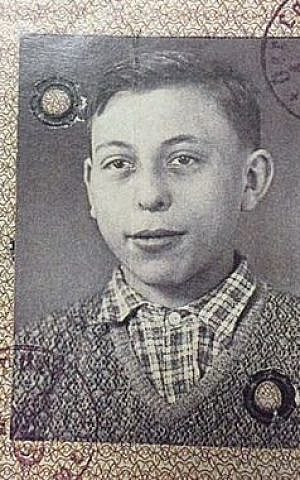
before Kristallnacht in November 1938. His father was Simon Leiserowitsch, commonly known as Sim Leiser, a star with the Tennis Borussia Berlin soccer team. He divorced Eric’s mother Valesca and moved to British-Mandate Palestine in the 1920s, with no further contact with Valesca and Eric. I came to know Eric well through his daughter Naomi, my partner. I edited Eric’s memoir, This Country Gave Me Life!, when he was in his early 90s, shaping materials he had written for a memoir class in White Plains, NY. I arranged the narrative while maintaining his distinctive authorial voice. This extended passage discusses the process of leaving Germany and the transit to Lisbon and beyond:
Eric’s memoir
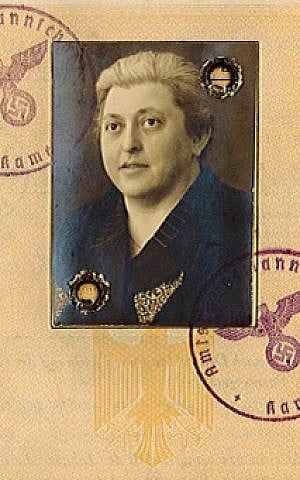
When we left, Germany was already at war for two years. We finally got our quota immigration visa on March 28, 1941 (no charge). We were very fortunate to get a visa to come to the USA and with the help from my mother’s family, which was already in the United States. My mother and I got out of Germany in June 1941, which is, to many people, unbelievable. I found out later we were called to the Gestapo while we were on a train to Spain. We left from Berlin by railroad through France, which was occupied by Germany, to the French/Spanish border and finally we reached Spain on June 15. What was so remarkable is that we got permission to enter Spain. General Franco (the dictator) gave the OK for some Jewish refugees to pass through. Even to this day, I feel he was instrumental in saving the small groups of Jews who left Germany.
The difference between Germany, France and Spain (which was the first place where we finally were free) and our arrival in Portugal was unreal. In Spain we saw the effects of the Spanish Civil War, with bombed buildings all the way to Portugal. People looked happy in Portugal and the streets were full of traffic. The train was clean and our arrival in Lisbon was a happy affair. We had the help of the American Jewish Joint Distribution Agency (the Joint), which arranged sleeping quarters and food, and made sure we had all the papers, affidavits, paid shipping passage, and the ever-present passport.
The Joint opened an office in Lisbon in 1940 after closing their Paris office because of the German’s conquest. In Lisbon, my mother had to go to the American Consul to show we had paid passage and to prove to the Portuguese agencies we had money. We lived in a hotel and had a very nice but hot room—no air conditioning in those days. António de Oliveira Salazar, the Prime Minister, opened Lisbon for anyone who had passage to leave from Portugal. He was smart enough to collect dollars from the refugees to help his economy. Lisbon was a Mecca for refugees who gone so far to get away from Hitler.
In Lisbon our group was separated, as some lacked all the papers. What happened to them we never found out. Our group of about 25 or so was separated to go to the USA. The others went to Cuba.
Finally, we walked up a gangplank on the American Export Line freighter Excalibur for our trip to the USA. The freighter was overcrowded with American diplomats and others who wanted to get home. The State Department directed most embassies be closed in Europe. The Excalibur had 219 passengers, the most it had ever carried. My mother had a cabin and I slept on the deck. We ate in the ship’s restaurant and I liked the ice cream. [the Excalibur left on June 20.]
On June 22, during the trip, the Excalibur saved 12 Dutch crew members from a tanker SS Pendrecht, who had been drifting in an open lifeboat. The Pendrecht was a Dutch-flagged ship operating in British service. The tanker came from temporary repairs at Swansea, Wales, and was heading to New York. It was fascinating to watch the rescue from the little lifeboat to the Excalibur. The crewmen were in pretty bad shape as they been in the lifeboat for 14 days. They were happy, but their concern was not what happened to them but their 24 other shipmates (we found out later the US Navy picked them up). The Excalibur took them on to New York.
I spoke to some of them after they recovered. Several of them were teenagers, maybe four years older than me. They looked in bad shape The Excalibur had the U.S. flag painted on its sides but the German U-boats would still stop the ship to inquire if we had any non-American sailors on board. On the sea, we were stopped by German U-boats that wanted to know if anyone was rescued by our ship but the Captain did not allow the Germans on board.
During the trip we stopped in Bermuda and watched the loading and unloading of freight. These guys worked really hard. We landed in Jersey City, N.J. on a hot day, June 30, 1941. At the harbor, we found out Germany invaded Russia on June 22, meaning that very few Jews from Germany had a chance to get out of Germany. It was a miracle to be part of an escape during one of the most horrifying times in modern history. My mother’s sister and family met us. I finally was free.
When we landed in New Jersey, my aunt picked us up and brought us to the Bronx, where my mother’s family lived. The first chance they got, my two boy cousins took me out to get hotdogs and ice cream. It was wonderful! In Germany we didn’t have foods like those. My uncle owned a house in Far Rockaway, where we stayed until we moved to Port Chester, New York, on the border with Greenwich, Connecticut. My mother came from a family with seven siblings. None of her brothers or sisters got killed, but in my father’s family, everybody got wiped out; all except one of my father’s brothers. He was a concertmaster in Germany and he lived because somebody hid him in Berlin.
Life after Lisbon
The four refugees mentioned here landed in the United States and got on with their lives. I’m happy to note that all four of them lived into their 90s and, I like to think, knew that every day was a gift.
Marc Chagall, July 7, 1887 – March 28, 1985
Already a prolific and well-known artist when he arrived in New York, Chagall was the subject of a 40-year retrospective at New York’s Museum of Modern Art in 1946. He returned to France in 1947 and spent the rest of his life in Paris. Chagall worked across genres, including stained glass and murals. His long life and collected works are vast and impossible to summarize.
Peter Schrag, July 24, 1931 – March 19, 2026
Peter Schrag graduated from Amherst College in 1953 and went on to build a remarkable career in journalism. Schrag served for 19 years as editorial page editor of The Sacramento Bee. He also served as executive editor of Saturday Review and contributed to publications including The Atlantic, Harper’s, The New York Times, The Washington Post, and The Nation. Over a prolific career, Schrag authored numerous books exploring immigration, education, and American identity, A Guggenheim Fellow, he also taught at Amherst College and the University of California, Berkeley. His book When Europe Was a Prison Camp: Father and Son Memoirs 1940-1941 directly inspired the idea of this blog post when I realized he had been in Lisbon around the same time as Eric Leiseroff.
Rabbi Menachem Mendel Schneerson, April 18, 1902 – June 12, 1994
Rabbi Schneerson arrived in New York and immediately began working with his father-in-law, the sixth Lubavitcher Rebbe, Yosef Yitzchak Schneersohn. In 1950, after his father-in-law’s death, R’ Schneerson became the seventh Lubavitcher Rebbe. Based at Chabad’s headquarters at 770 Eastern Parkway in Brooklyn, NY, R’ Schneerson guided Chabad through decades of growth by sending out emissaries worldwide, and he also taught, lectured and wrote on Jewish topics. Chabad’s expansion continued following R’ Schneerson’s passing in 1994. As with Marc Chagall, R’ Schneerson’s activities and impact cannot be summarized in a short paragraph.
Eric Leiseroff, October 10, 1925 – February 25, 2022
After three years in New York, Eric joined the 89th Infantry Division, the Rolling W, and served in Germany in the winter and spring of 1945. His native German-speaking skills were invaluable for interrogations of prisoners, and he served as an investigator in Austria after the war. Eric returned to New York, married, started a family, worked for the same company as a paper salesman for 57 years and was very proud of his military service, speaking at schools and often wearing a hat saying he was a World War II veteran. He was also a devoted fan of the New York Yankees and singer Leonard Cohen and an avid adapter of digital technologies to email friends and family worldwide and keep up with the news.
Related Topics
Related Posts