

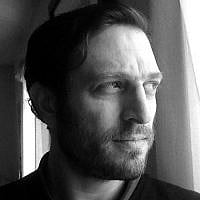
Coralie Camilli Interview | Alexandre Gilbert #348.2

Coralie Camilli, substitute philosophy professor at the University of Corsica, Associate Researcher at CNRS and French boxing champion, published L’art du combat (Puf) in 2020, Jours de grâce et de violence (Vérone éditions), Insulaires (Vérone éditions) in 2023. and Une Saison en prison (PUF) in 2026.
What does the Jewish tradition teach us about confinement?
Coralie Camilli: The whole Jewish tradition, and my thinking was built with it from the start, is made of stories to be interpreted, but also and above all of dialogues. The Talmud (a commentary on the Torah in several tractates) is written as a transcription of conversations between rabbis and students, between students, and between different schools, with the notion of pilpul, a “sharp and lively discussion,” where it is very often the other person who pushes our thinking to its limits. A bit like a boxing ring! A demand to be maintained, I believe, for body and mind alike.
In summary: is it not conceivable to think of an event as both contingent and necessary? In that case, we would not reduce the two terms (“necessary” and “contingent”) to the same status but would try to think them together. It was at once contingent (because merely non-contradictory) that Caesar would be assassinated on the Ides, and at the same time necessary (since it was indisputably the case a posteriori). Is it not possible to think a thing as both contingent and necessary: foreseeable and yet non-contradictory?
In this sense, Meillassoux’s claim that “hollow signs” are devoid of meaning (Alpha, Beta, etc.) and apparently need no space-time raises two questions.
Indeed, saying that “hollow signs” command a break with space and time inevitably calls for a closer examination of both space and time. Space first. If Alpha or Beta require no space, how do we justify the fact that we need to write them in order to communicate them? A real sheet of paper and a real pencil are needed to communicate the same sign, however devoid of meaning it may be. Then time. Even if the question of space were quickly dismissed (“no, I need no paper or pencil, and therefore no concrete space, everything can be transmitted orally”), the fact remains that speech undoubtedly requires some duration (that is, a temporality).
How can we dispense with space and time? From there, the question of calculation, very quickly and in two points. First, and here I return to concepts from the Hebrew tradition, the secularized forms of modern messianism appear as attempts, or temptations, to decide between, or reconcile, two characteristics of traditional Jewish messianism: the coming of the unforeseeable and the repetition of the same, and to approach in a singular way the notion of calculating the Messiah’s coming. Leibniz tries to solve the following problem: determine the largest number that can be reached by combining the elements of a finite sequence, an alphabet.
How many statements can be formed from this defined sequence of letters? The answer is that the number is also finite, and the calculation tends to demonstrate the necessity of repetition, the inevitability of the same statements recurring over time.
Two points, then, are particularly interesting: first, the Jewish tradition approaches this concept of the absence of meaning in a combinatorial way; and second, through its prohibition of calculation, it anticipates in a certain way Meillassoux’s concept of the “hollow sign.” The great master of the combinatorial art was Rabbi Abraham Abulafia (1240–1291), who developed several techniques of combination. The three main elements of the method were gematria (calculation of numerical values), temurah (substitution of letters) and notarikon (analysis of the first letters of a word), among other procedures.
However, caution regarding the calculation of the Messiah’s coming is ancient, and still present. The Sefer ha-Temunah (the “Book of the Image”), written in Spain in the 13th century and Kabbalistic in inspiration, relies on numerous eschatological calculations intended to predict the date of redemption.
Yet it is clear that if the Messiah can come at any moment, or as the Talmud puts it (tractate Sanhedrin, 98b), “from today, and at any instant,” these calculations are futile. Hence religious Law forbids them, and as Maimonides writes in his Epistles: “May the spirit of those who calculate the end of times be blown away!” Why such distrust of calculating the Messiah’s coming, or of arbitrary combinatorics, if not to open a space for the “hollow sign,” in the field of the messianic question of course, on the side of Jewish thought?
I immediately note a connection to be made between the “hollow sign” and the prohibition of calculating the coming, in other words between speculative realism and messianism (on this point). The fertility and possibility of this connection remain entirely to be developed.
However, the ambivalence of this very relation between the “hollow sign” and messianism must not be underestimated. It is entirely tied to the pivotal question of temporality. For it is at the heart of temporality that this famous dichotomy of the necessary and the contingent lies. On the side of necessity are the “eternal truths,” as in Leibniz, or what logicians call irrefutable statements, mathematical propositions for example: that whose contrary is impossible, so it is necessary that it be so. On the side of contingency, again according to Leibniz, are the “truths of existence,” that is, what could have not been, and whose contrary could have been. Leibniz affirms that in both cases the predicate is contained in the subject. But here is the point: that the predicate is contained in the subject does not mean it is an attribute.
For either we are dealing with “truths of essence” (necessary) or with “truths of existence” (contingent), and whatever the proposition, the predicate is always “contained” in the subject. True, but it is contained either as “inherent” or as “included.” In other words, there are two ways for the predicate to be contained in the subject: inherence or inclusion.
Leibniz will think what belongs to the “truths of essence” as the inherence of the predicate in the subject. For example, “the triangle is a triangle” or “blue is blue,” that is, basically, propositions whose converse is always true. Here the subject and what is predicated of it are one and the same thing. And what belongs to the “truths of existence” he thinks as the inclusion of the predicate in the subject.
For example, “the triangle has three sides” or “the sky is blue”: here blue is contained in the subject, but not reciprocally within the proposition (one cannot say “blue is sky,” if one wants to say something “true” in the simplest sense: correspondence with reality). In this case the predicate is “included,” that is, it is the object of a relation, or an event. Something does happen when the sky is blue, because it could (contingency) have not been blue.
We will be asked: what about mathematical signs, “those of formal language,” as Meillassoux calls them? One could very well say that “1” and “2” are the predicates of “3,” but only because there is a relation or event between these signs (they are added together, for example). Consequences: not only do mathematical signs not escape the idea of a “predicate contained in the subject,” but they would also lie more on the side of inclusion (that is, the contingent) than of inherence (which concerns only absolutist truths!). Inclusion, because operations take place within them, that is, relations.
This consequence would bring mathematics back down to the side of the contingent (since it would belong to inclusion, that is, to relation: we create relations between signs, however “hollow” they may be), and would topple it from the pedestal of a “formal language” that escapes time and space according to Meillassoux and Badiou.
Precedently:
*Penser la « messianicité sans messianisme »
*L’art de combattre un ennemi invisible
*Pandémie et production
*Après la contingence
*Hegel, Bensussan et la sortie de la philosophie
*Philosopher à Strasbourg, Jean-Luc Nancy et Gérard Bensussan, rencontres et désaccords
*De l’excès à l’excellence
*Coralie Camilli and the ‘Islander philosophy’
*L’Aliénation, du Sujet vide au Signe creux
*Coralie Camilli Interview | Alex Gilbert #254
*Coralie Camilli Interview | Alex Gilbert #264.1
*Coralie Camilli Interview | Alex Gilbert #264.2
*Coralie Camilli Interview | Alex Gilbert #264.3
*Coralie Camilli Interview | Alexandre Gilbert #317.1
*Coralie Camilli Interview | Alexandre Gilbert #317.2