

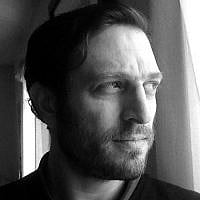
Coralie Camilli Interview | Alexandre Gilbert #348.1

Coralie Camilli, substitute philosophy professor at the University of Corsica, Associate Researcher at CNRS and French boxing champion, published L’art du combat (Puf) in 2020, Jours de grâce et de violence (Vérone éditions), Insulaires (Vérone éditions) in 2023. and Une Saison en prison (PUF) in 2026.
You were imprisoned for several weeks in Japan. Why?
Coralie Camilli : A trivial altercation with a Japanese citizen. I was there for my martial arts training, as I had been several times before, and this neighborhood dispute arose. I was obviously far from imagining the consequences. I don’t go into more detail because this is above all a philosophy essay: the autobiographical side is there to set the scene, in a way, and the aim is gradually to rise from the anecdote to the concept.
The reference to Nietzsche is implicit, yet to my mind obvious. In the Introduction to The Gay Science he speaks of his illness, his recovery, and what he draws from them philosophically: a more learned, more refined taste for everything, life as an experience rather than an ordeal, and the idea that every ascent meets its fall and is then overcome.
Can we speak of a Stoic experience?
Coralie Camilli :Yes, in the sense that you are confronted with the great distinction between “what depends on us and what does not.” Nothing material depends on you. You no longer have personal belongings or a name; you are one number among others. You are deprived of movement, outings, reading, information, letters, and telephones. Even windows! This very quickly destabilizes your perception of time. It is not entirely Stoic, however, in that accepting what does not depend on us may well be the last freedom we have left. No, you don’t resign yourself. You are humiliated, but you don’t lower your head. You keep fighting with the strength you have left (mostly mental). But I want to underline a term in your question: how do you transform an ordeal into an experience? That is where the whole work of resistance takes place.
Why are we no longer able to think, then?
Coralie Camilli : But we are! I thought this book through, chapter by chapter, in my cell. I wrote it and published it. If we were completely unable to think, that would have been impossible!
But to stress the point: in prison, the subject is no longer the object of a time that unfolds in spite of itself, nor the subject who produces its own temporality. Outside, the time of men is no longer its own, and inside, consciousness no longer produces it. What, then, is a subject outside of time? It is a vanished, evacuated, evanescent subject, dispossessed of any succession of different moments. Everything is motionless and silent. Yet the more silence settles in, the less thought thinks. We need (and perhaps this is where salvation lies!) an inner library.
And so the subject faces a new kind of alienation: not being dependent on others (or lacking the conditions of daily life), but on the contrary being “too riveted to oneself,” in Levinas’s apt phrase. The experience of imprisonment is not an experience of alienation understood as deprivation of one’s own subjectivity, but on the contrary as the fact of being nothing more than that subjectivity. And it empties itself.
So, starting from an experience of imprisonment, privation and desubjectivation that takes the form of hypersubjectivation (basically, the same thing), I propose to rethink certain philosophical categories. Having experienced the reduction of the subject to itself alone (one is no longer a subject because one is nothing but that), with the world gone, critiques arise: of alienation in the Hegelian sense, of temporality as the philosophical tradition has thought it, and of prison as Michel Foucault analyzed it.
Which author shed light on this Pascalian experience: Socrates, Lduwig Wittgenstein, Antonio Gramsci, Jean-Paul Sartre, Michel Foucault, Pierre Goldman, Bernard Stiegler, Imre Kertész?
Coralie Camilli :Well, you rightly mention Foucault, but all of these authors, of course! To whom I would add Bensussan, Fischbach and Meillassoux. For these last ones, because of their obviously pertinent conceptions of alienation. And for Kafka, in a strange grouping: I had in fact published an essay on his work The Trial. A strange way of confronting it in real life!
As for the authors who inspired me, those I mentioned earlier, it is on the themes of freedom and alienation that I would venture the following hypothesis: repression does produce alienation, but not in the traditional sense (a subject dependent on external conditions beyond its control). On the contrary, it is the fact for a subject of having no outside at all, of being so riveted to itself that only itself remains. This produces not only alienated subjects but also “hollow” subjects, to borrow Quentin Meillassoux’s expression, whose argument I will interrogate.
Subjects who, socially speaking, dealing with a judicial system that is either too repressive or, on the contrary, too lax, will no longer trust justice. The book will examine the consequence, which is not new but remains current: the desire to “take justice into one’s own hands.” This must be seen as a misunderstanding of what justice itself is. Justice cannot be an institution whose function is to return the same for the same, to ensure equity, equality and reciprocity in that sense, because that would confuse justice with vengeance. Hebrew law will offer several illustrations of this.
Violence repeats, but never identically, and in that respect the Leibnizian thesis that no two things are identical will be invoked in order to think the interruption of carceral logics. By this I mean any form of institution or structure that reduces the subject, or the individual, to privation or isolation, and thereby makes it an alienated subject. One need not actually be put in prison to be isolated and alienated: the society we live in produces isolation (dialogue is replaced by communication, and note that the more silence settles in, the less the subject thinks; movement by immobility, otherness by solitude, creation by consumption).
What remains to be thought is how to interrupt this carceral isolation that makes us alienated, hollow subjects, riveted to ourselves and no longer to external things. Will redemption be possible?
However, I would not entirely call this experience “Pascalian”: he chose to isolate himself, I did not! He chose to make a “clean slate” of his knowledge, whereas I had to gather mine back together through memories.
What role do the Japanese cultural and carceral contexts play in your thinking?
Coralie Camilli : As a philosopher, I do not allow myself to reflect on a legal system, whatever it may be, just or not, fair or less so, open to criticism or not. I start from an experience and draw a philosophical argument from it. As a citizen, however, and no longer as a philosopher, there would be many reflections to make, but that is not the subject of the book.
That said, it is somewhat “the flip side of the coin”: Japanese culture is built around notions of honor, modesty and politeness, but therefore also humiliation and punishment, with little room left for error, failing, threat, or even irony.
Your book is described as a “plea for reconciliation with the outside.” What do you mean?
Coralie Camilli : That expression does not appear in my essay, but readers, editors and journalists found it apt. I can indeed take it up as my own, because, unlike Pascal, who shuts himself away voluntarily, I remain convinced that under conditions of total isolation certain aspects of consciousness become inoperative. As temporality fades, so does everything that ties our consciousness to itself: well-ordered memories of the past and projections of the future. We are reduced to a pure present, which obviously limits intellectual exercise. The whole difficulty then lies in continuing to think without relying too much on memory or imagination.
What we observe, see, hear and touch, this whole external space, then takes on a greater dimension than we might have thought. Especially for me, who think with my body! Nietzsche appears here again, of course, who said (and I think it is more than an aphorism!) that we only think well while walking.
In the solitude felt in prison, other solitudes resurface. The very “descent” echoes the arrest. And that famous day, in the police station elevator that leads to the building’s basement, where we had to keep our eyes lowered, surrounded by many silent police officers. The body feels the descent as an extra heaviness, without seeing the floor numbers go by (we were forbidden to look up). You only sense that you are sinking into the basement of a building with endless floors, a descent into hell one might readily have said, and our only certainty was that it was to take our fingerprints and DNA. Outside, August was in full swing, and the heat wave was bearing down day after day on the Tokyo capital.
Alienated subject: it can only be riveted to itself, because nothing else remains. Deprivation of the outside, of speech, of others, of movement. In other words, and in order: confinement, silence, solitude, immobility.
This is nothing other than an illustration of what alienation is: being so deprived of everything else that only oneself remains, with no more doors or windows, so that there is no longer any curvature. One is alone, in a straight line.
What you observe, see, hear, and touch, this whole external space, takes on a greater dimension than one would have imagined. Especially for me, as I think with my body! Nietzsche comes in here, of course, who said, very rightly (and in my view it is not just an aphorism!): we think well only while walking.
Part 2