
Could Eisenkot as PM Handle the Consequences of a Trump-Netanyahu Iran Strike?
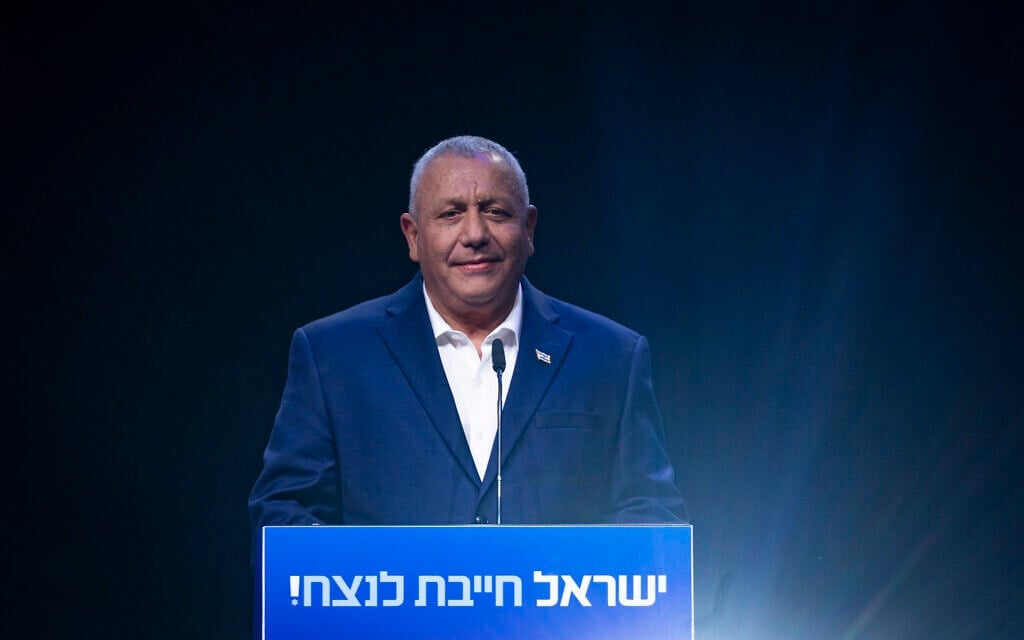
Donald Trump has made his choice in Israel’s upcoming election.
On October 18, nine days before Israelis head to the polls, the American president gave Benjamin Netanyahu his “complete and total endorsement,” warning that Washington might have to confront Iran alone under any other Israeli leader.
Trump has openly supported candidates and political leaders in other countries, including Hungary, Argentina, Poland, Japan, and Honduras. Such interventions reflect a familiar geopolitical calculation: presidents prefer dealing with foreign leaders they believe will help advance their strategic objectives. Trump makes those preferences unusually explicit.
But his endorsement of Netanyahu raises an interesting question, particularly because he previously said of Gadi Eisenkot, Netanyahu’s principal rival, “I don’t hear bad things about him.”
Moreover, according to Axios, some of Trump’s closest advisers believed his Middle East agenda might actually benefit from a change of government in Israel.
Why, then, such an emphatic endorsement of Netanyahu?
Eisenkot, a former Israel Defense Forces chief of staff, is hardly an advocate of accommodation with Iran. He recognizes the nuclear threat and has not ruled out renewed military action under circumstances that justify it. His objections concern the urgency of another offensive and Netanyahu’s leadership of it.
He has also expressed appreciation for Trump and emphasized the importance of American-Israeli cooperation, while insisting that Israelis alone must choose their prime minister.
The difference may therefore lie less in the ultimate objective of preventing a nuclear-armed Iran than in who would make the next military decisions, and when.
On October 22, The Times of Israel, citing The New York Times, reported that the United States and Israel had developed plans for renewed strikes against Iran after the American midterm elections on November 3. The options reportedly include a short, intensive campaign against nuclear facilities, missile and drone capabilities, and potentially energy infrastructure. Pickaxe Mountain, the heavily fortified underground nuclear complex near Natanz, is among the possible targets.
These preparations do not establish that Trump has authorized another offensive. The White House has denied reports that he and Netanyahu discussed resuming the war before the elections, although other officials have described military preparations and discussions about a possible operation.
Trump has stated that American forces will not strike Iran before the midterms. Israel, however, votes on October 27.
Suppose Eisenkot emerges from that election with a viable path to forming the next government. His victory would not immediately remove Netanyahu from office. Coalition negotiations could take weeks, leaving the outgoing prime minister in charge during the transition.
That creates a potentially consequential interval after November 3.
Trump could decide to resume major military operations against Iran while Netanyahu still leads Israel, even if Eisenkot is preparing to replace him.
There is no evidence that such an operation is intended to prevent Eisenkot from taking office. But its consequences could profoundly shape the government he eventually leads.
Consider a hypothetical scenario.
American and Israeli aircraft strike Iranian nuclear and military facilities. Pickaxe Mountain is destroyed or rendered unusable. Iran’s missile infrastructure suffers devastating losses. Trump and Netanyahu announce a major military success.
Yet the Islamic Republic survives and refuses to end the confrontation.
Iran’s military capabilities may have been severely degraded, but its remaining forces could still launch missiles and drones, conduct cyber operations, disrupt maritime traffic through the Strait of Hormuz, or support attacks through regional networks.
The Islamic Revolutionary Guard Corps is also shaped by an ideology in which revolutionary resistance, martyrdom, and religious symbolism play important roles. These convictions coexist with calculations about regime survival; they do not make Iranian behavior entirely predictable. Nevertheless, the destruction of military infrastructure would not necessarily extinguish the leadership’s determination to continue fighting.
A devastated Iran could remain a dangerous Iran.
This is the distinction that military planners and political leaders cannot afford to overlook: destroying an adversary’s principal targets does not necessarily end the conflict.
A campaign intended to last three days could generate consequences lasting months. Iran might continue retaliating even after its nuclear facilities had been neutralized. Israel could face intermittent missile attacks, regional instability, and the economic burden of maintaining heightened military readiness.
Eisenkot could then assume office facing a confrontation whose opening decisions he did not authorize.
And that is where his earlier statements become especially relevant.
On October 13, Eisenkot said he knew of no critical development requiring an immediate strike against Iran, while acknowledging that he no longer had access to the highest-level intelligence available to the government. He also questioned Netanyahu’s suitability to direct another military operation.
His position invites a question that extends beyond the Israeli election.
If there is no urgent military justification for striking Iran before October 27, what would make such an operation necessary after November 3?
New intelligence about Iran’s nuclear program could provide an answer. So could evidence of an imminent threat. But the conclusion of the American midterm elections would not, by itself, change the military equation.
For Eisenkot, the question would become how Israel should respond if Iran continues fighting.
Would he support additional strikes to suppress the remaining threat? Seek a negotiated cessation of hostilities? Press Washington to reconsider the scope of its campaign? Or conclude that Israel must continue military operations until Iran’s ability to retaliate has been sufficiently reduced?
These would be decisions with immediate consequences for Israeli civilians, the armed forces, and relations with the United States.
Equally important would be the political narrative surrounding his leadership. How would Eisenkot explain to Israelis a confrontation initiated by his predecessor? Would he defend the military achievements of an operation whose timing he had questioned, distance himself from the decisions that triggered it, or seek to establish a new strategic direction? Whatever course he chose, he would have to convince the public that his government had a credible plan for protecting Israel and bringing the confrontation to an end.
If a renewed offensive devastated Iran’s military infrastructure without toppling its government, Eisenkot might have to decide whether continuing the campaign would advance Israel’s security or merely prolong the confrontation.
A different outcome is also possible. Iran might respond only briefly, leaving Israel in a stronger strategic position. Eisenkot could recognize the military gains even if he had disagreed with the timing of the operation.
But the possibility of a prolonged confrontation raises a question that goes beyond military experience.
Eisenkot has spent decades in Israel’s security establishment, including serving as IDF chief of staff and participating in the country’s wartime leadership. Those credentials would be valuable in any crisis.
Yet commanding military operations and assuming political responsibility for their consequences are different tasks.
He would need to be mentally, politically, and strategically prepared to make decisions under enormous pressure, possibly while Israeli cities remained under attack and Washington expected him to support an offensive initiated before he took office.
None of this is an argument for Netanyahu or against Eisenkot. Israeli voters will decide who should lead their country. Nor does it assume that Eisenkot will form the next government or that another strike will occur.
But if he takes office while Iran is still fighting back, even after Trump and Netanyahu have declared their military objectives achieved, he could confront a dilemma far more difficult than anything debated during the electoral campaign.
Unless Trump and Netanyahu surprise everyone by striking Iran before either election, Eisenkot, if he becomes Israel’s next prime minister, could inherit a military confrontation he never authorized, along with all its consequences.
Is Eisenkot prepared for such a scenario?