Dancing Through Darkness: What Israelis Taught Me About Faith, Resolve, and Choosing Joy
How do we cultivate joy in a world that feels increasingly uncertain and precarious for Jews?
As we prepare to enter 2026, I reflect on both the challenges our community faces and the enduring strength of the Jewish people. During a recent law faculty trip to Israel with Academic Engagement Network (AEN), I learned valuable lessons from people who live with seemingly impossible contradictions—heartbreak and hope, grief and celebration, despair and determination. Their experiences offer valuable lessons about resilience, the pursuit of justice, and living with joy.
Faith Sustains Us
Mai Hayat does not consider herself especially religious. But when terrorists attacked the Nova music festival on October 7—where she was working as a bartender—her instinct was to recite the Shema. Terrorists found her hiding in a pit with Avi Dadon, who was murdered before her eyes. In that harrowing moment, she told God, “The situation is in your hands now.” Mai survived by running, hiding among murdered festival-goers, and playing dead. She credits God with keeping her calm and taking control when nothing else was possible.
Mai teaches us a quiet but profound truth: even tenuous faith can anchor us in our darkest moments. Prayer can steady the mind and body when circumstances are beyond human control. But Mai was also clear—surviving trauma is only the beginning. Healing requires something more.
Moving Forward Requires Resolve
At Hostages Square, Ayelet Somerano shared her heart-wrenching story. Her son, Yonatan, and his friends, Bnayahu Bitton and Maor Gratzyani, fled the Nova music festival on October 7, only to be murdered once they believed they had reached safety at the gate of Kibbutz Be’eri. Security footage shows their final moments—and a Hamas operative, later revealed to be employed by UNRWA, taking Yonatan’s body.
Instead of succumbing to grief, Ayelet became a relentless advocate, exposing UNRWA’s ties to Hamas and demanding accountability. Her efforts helped drive Israeli legislation that bars the agency from Israeli territory and from contact with Israeli officials. She told us she draws strength from Yonatan himself.
Ayelet shows us that moving forward after tragedy requires resolve. Pain does not justify silence; it clarifies responsibility. Justice demands action—especially when fighting evil.
“Evil Knows No Borders, Knows No Limits, and Knows No Compassion”
Watching forty-seven minutes of footage from October 7 confirmed this statement by former Congressman Michael Burgess. One of the scenes that struck me deeply was when a Hamas terrorist murdered a father who was shielding his two young sons. One child cried for his mother and said he wished he had died too, as the terrorist casually opened the family refrigerator for a drink. The cruelty by Hamas terrorists defies comprehension.
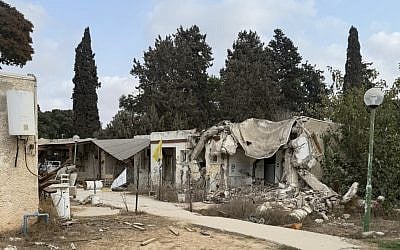
Walking through Kibbutz Kfar Aza—where terrorists burned homes, murdered 64 residents, and kidnapped 18 others—showed the extremity of this evil. Hamas’ brutality leaves no room for moral ambiguity. Terrorism is neither contextual nor excusable. It demands a united global response.
International Law Must Not Be Weaponized
As Israel confronts terror and defends the Jewish homeland, it also faces legal challenges. Israeli legal experts explained that Israel ratified the Genocide Convention in the shadow of the Holocaust, never anticipating it would one day face accusations of genocide itself. Yet, Israel is now compelled to defend its justified military responses before the International Court of Justice.
IDF legal advisors emphasized extensive civilian protection protocols: meticulous target reviews, real-time legal oversight, and evacuation warnings via calls, texts, leaflets, and designated corridors. In stark contrast, Hamas embeds fighters and weaponry in civilian areas, deliberately using innocent civilians as human shields.
The lesson here is both legal and moral: the term “genocide” requires specific intent to destroy a people. Distorting this term by using it as a political weapon undermines international law and fuels antisemitic narratives that perpetuate violence against Jews worldwide.
Israel’s Multiracial Jewish Community Tells a Different Story
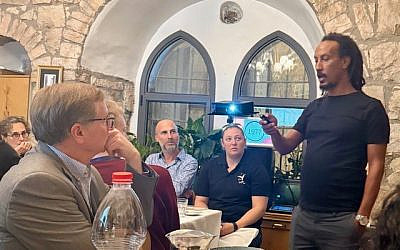
False accusations obscure a deeper truth about Israel. We met Naftali Aklum, an Israeli of Ethiopian Jewish heritage, whose warmth was immediately apparent. He explained that centuries of isolation have preserved rituals reminiscent of those practiced in the days of the Temple. For generations, his community in Ethiopia prayed, “Next year in Jerusalem.”
When his family made Aliyah, Aklum experienced profound cultural dislocation. Before arriving in Israel, he did not even know that White Jews existed, and struggled to acclimate to an unfamiliar society. As a child, he saw his parents as poor refugees, and only later did he come to understand the magnitude of their sacrifice—leaving behind land, security, and social standing to fulfill a centuries-old dream.
His story reflects a larger truth: the Jewish people are a global, multiracial community, bound together by shared history and destiny. Israel embodies that diversity, and the Jewish people embody a collective resilience.
Just Dance
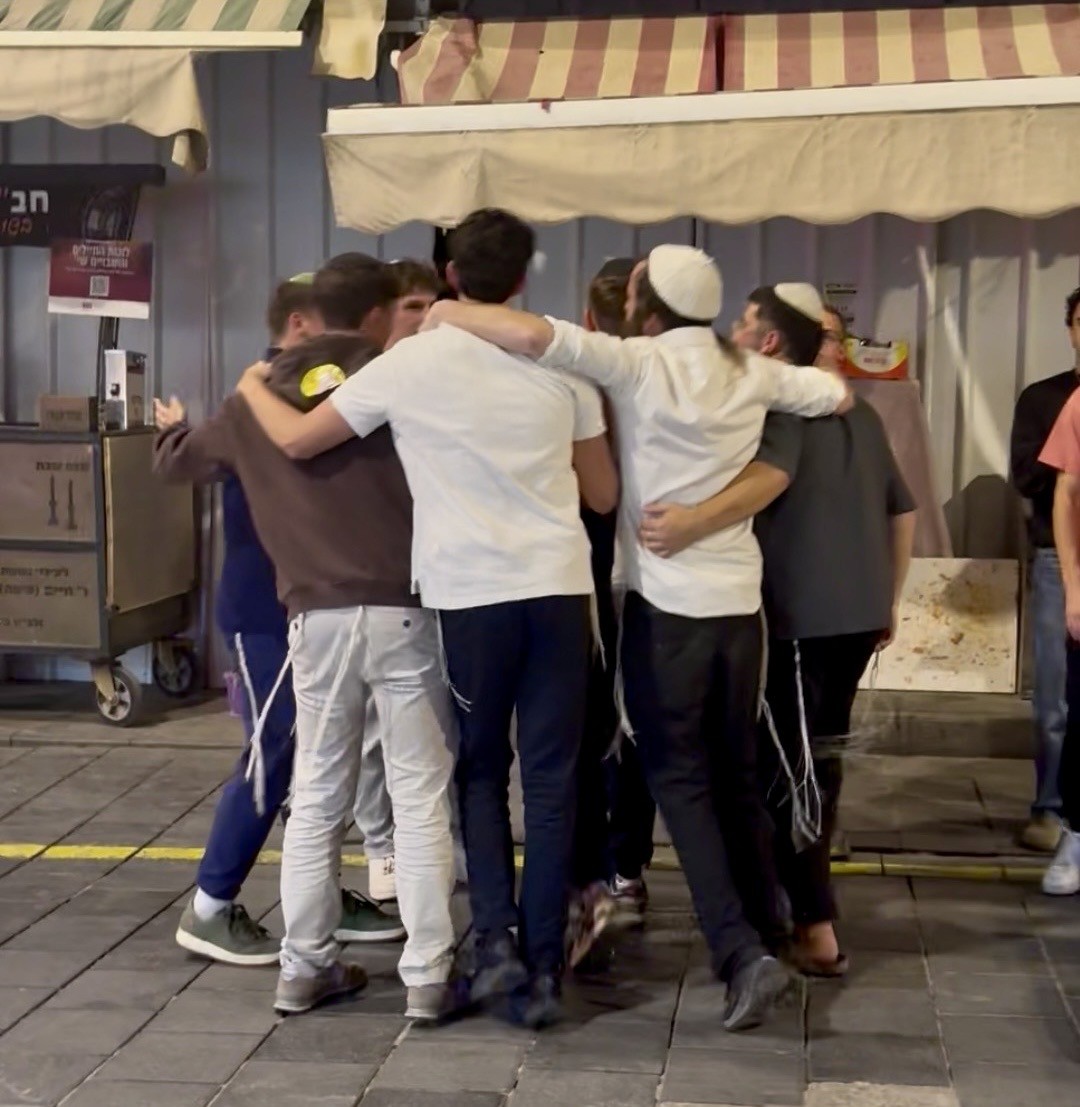
The final lesson I share is that we must live with joy. At night, Jerusalem’s Machane Yehuda market, known as the shuk, comes alive. Laughter and music spill from doorways, grills hiss, and strangers crowd tiny tables. The air is rich with the aroma of spices and citrus.
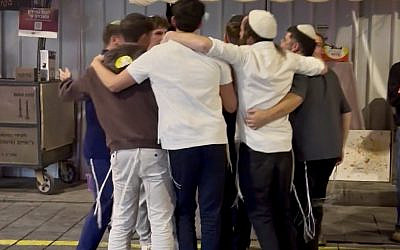
Groups of young Orthodox men link arms and burst into song, their voices rising in joyful harmony. This joy is not denial; it is defiance.
Israel taught me that in moments of despair, we can choose courage; in the presence of evil, moral clarity; in times of division, connection; and in darkness, light. And when the moment moves us, we should dance.
As we step into 2026, the year behind us has brought heartbreak—but it has not broken us. From the people I met and the lessons they shared, one truth remains clear: our light will not be dimmed, and we will live with joy.