
Day 738 Of The War: Waiting For The Hostages Return Tomorrow
When I flew on the first day of Rosh Hashanah to visit my family in the U.S., I was hoping—as I do every time I leave the country—that by the time I returned, the hostages would be home and the war would be over. But I didn’t really believe it. The situation in Israel seemed hopeless, and even I, who kept protesting week after week, began to doubt the power of our activism.
And then, it happened. The hostages have not yet returned (and I am still abroad), but I am hoping that by the time I land tomorrow evening Hag Sukkot, our prayers will have come true.
On Saturday, there was a major rally at Hostages Square in Tel Aviv. More than half a million Israelis gathered to give a final push for the agreement expected to take effect tomorrow, when the hostages are to return. Three prominent Americans were on stage: Steve Witkoff, the United States Special Envoy to the Middle East, who was mainly responsible for the agreement, and Jared Kushner and Ivanka Trump. Everyone at the rally and at home expressed gratitude for the critical role of the United States, which ultimately forced Netanyahu to end the war.
As I thought about the past few years—even before October 7—I remembered how every Saturday night, whenever I was in the country, I stood in the streets protesting. I didn’t know whether it made a difference, but I knew I had to be there. I wasn’t alone, of course—thousands of Israelis like me never scheduled anything on Saturday nights and joined special protests on other days as well.
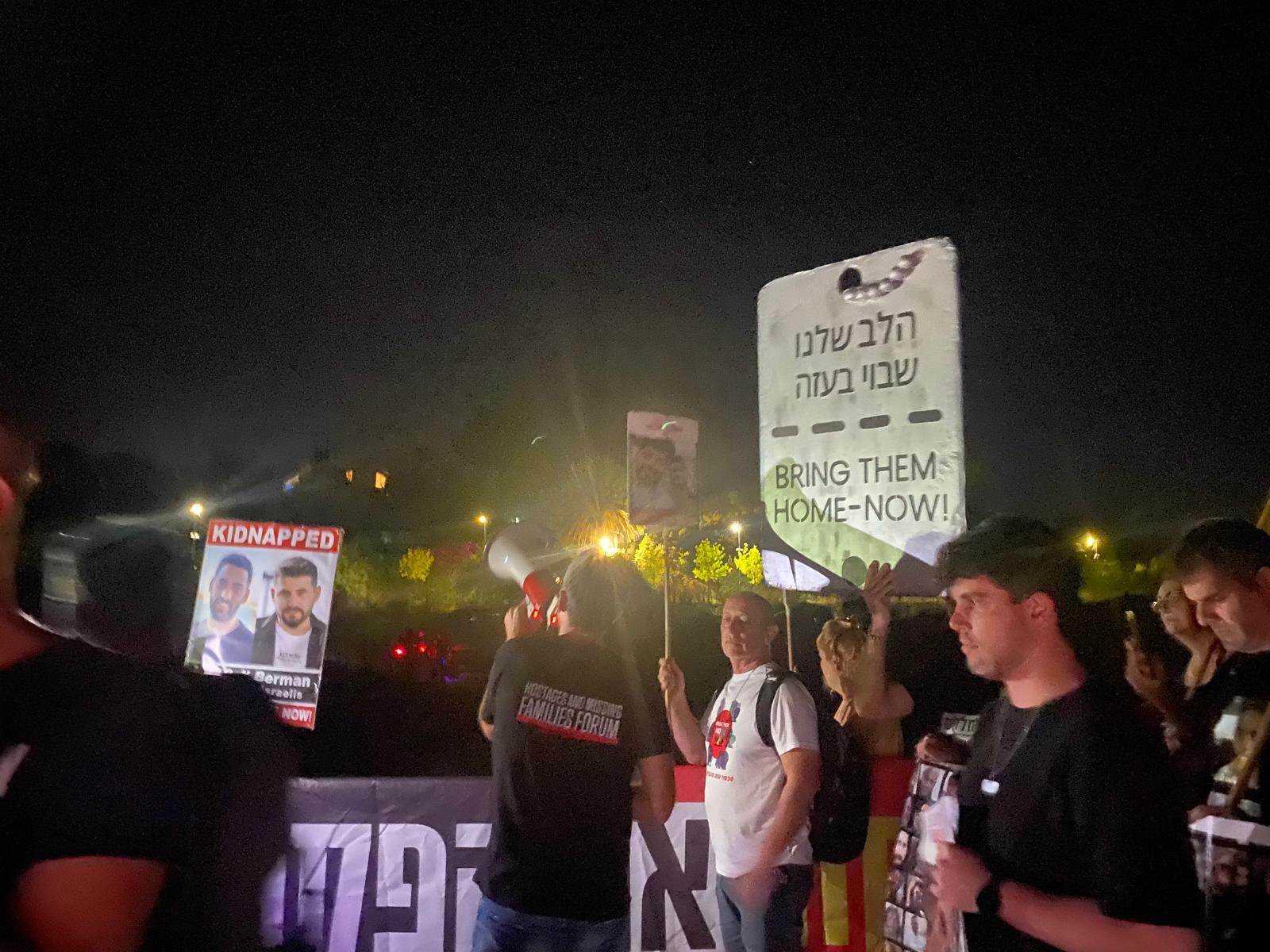
But as I reflected on the past two years, one protest kept coming to mind. It truly touched my heart because it was so unusual. It took place on Day 303 of the war, on August 5, 2024. As a volunteer with the Hostages’ Families Headquarters, I received a message calling on supporters to join the families in a demonstration outside the home of then–Security Minister Yoav Galant (Netanyahu later fired him) in Amikam, a moshav near Hadera.
A friend and I decided to go. It was pitch dark when we arrived, but we were encouraged to see several dozen people gathered at the end of a windy path. The protest site was not far from Galant’s home. We saw many family members of hostages and other supporters. The families’ speeches were short and desperate. They told Galant: We know you want to bring our loved ones back. Please tell the nation that Netanyahu is sabotaging the deal for personal, unrelated reasons.
Anat the mother of the soldier Matan Angrest said the families never sought to replace the government—they only wanted to avoid interference with the efforts to bring the hostages home. But they were losing patience. They were barely surviving, running from demonstrations to funerals, living without rest or hope.
Rubi Hen, the father of Itay Hen, a soldier killed on October 7 after saving many lives, spoke about his son. Itay had insisted on serving as a tank crewman, even though, as an outstanding student, he could have chosen a safer, more comfortable role in computers. It was heartbreaking to stand with the families and know there was nothing we could do to ease their pain. They kept thanking us for coming—didn’t they know it was the least we could do?
All the while, I couldn’t help but think of another son—Netanyahu’s—who had slipped aboard the new aircraft his father purchased with our tax money and flown back to Israel with his parents.
The demonstration ended with the singing of the national anthem. We walked back through the dark path to our cars, sad and disappointed that Galant hadn’t responded to the families. But later, we learned that after everyone had left, Galant came out to meet them and even invited them into his home to talk. He told them he was committed to bringing all the hostages back—both the living and the dead. “I am committed to this mission and work on it every day,” he said.
I believed him. But unfortunately, Galant was pushed aside, and it took another year and two months to end the war and bring the hostages home. I just hope we are now at the beginning of a new era in the Middle East.