
Dear Old Brown
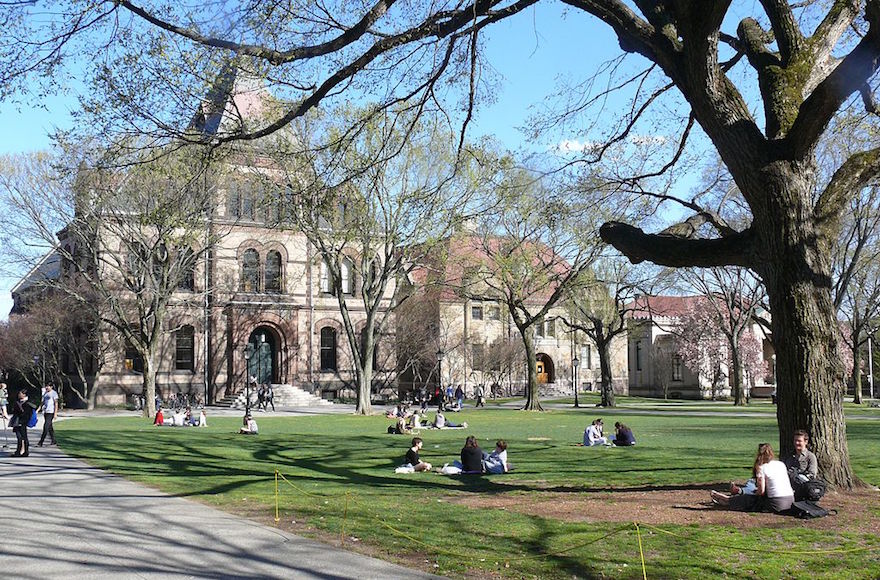
The happiest moments of youth’s fleeting hours
We’ve past neath the shade of these time-honored walls.
And sorrows as transient as April’s brief showers
Have clouded our lives in Brunonia’s halls.
The final verse of Brown’s Alma Mater song have played in a loop in my head for three days. Brown University. The “Happy Ivy.” The home-away-from-home that captures so many hearts and remains a haven of safety and security for the remainder of our days.
How can one describe the Brunonian experience? The school feels like a warm hug. It feels like eating a pint of your favorite Ben & Jerry’s ice cream with your best friends on a Saturday night while arranging music for your singing group and getting credit at Josiah’s. It feels like frisbee on the Main Green in the crisp, fall air. It feels like dragging the couches out of your dorm on Wriston Quad so you can have prime seats for the Dave Binder Concert on Spring Weekend. It feels like curling up in an oversized chair in the Absolute Quiet Room of the Rock to read a book. It feels like sitting on a friend’s shoulders at an Arch Sing in Wayland Arch so you can wave at your friends singing. It feels like that first satisfying bite into a falafel from Eastside Pockets as you saunter down Thayer St. at the end of a full day.
Truly, sorrows as transient as April’s brief showers clouded our lives as we lived a charmed existence on College Hill for 261 years.
But not for this cohort.
Not for these students who are going through a living hell.
Some of these kids are leaving Brown with deep wounds and scars. Scars from the pandemic. Scars from the encampments. Scars from a fatal shooting.
As I watch my Brown community spin in an endless, brutal dance with conjecture, misinformation, social media guesswork, and profound frustration at the ineptitude of the investigation and apparently insufficient physical security apparatuses at Brown, these words become fainter and their meaning dimmed.
Brunonia’s sorrows are deep. Its clouds are black and bleak. Each hour of uncertainty, investigative bungling, and conspiratorial conjecture seems to last an eternity.
The truth is, we know very little about what actually happened as of this moment. The further from Saturday we get, the less likely it becomes that we will ever know. This is leading to an understandable level of frustration for those who care deeply about this community and this place.
We do not know if this event was tied to the list of Zionist professors published two weeks ago by the “Punishment for Justice Movement” that sought vigilante justice against academics who have the temerity to be Jews by placing $100,000 bounties on their heads. We do not know if Professor Rachel Friedberg was on that list (although I very much hope the FBI is following up on this to determine if she was.)
We do not know if it is tied to the murder of Jewish, Zionist, MIT Professor Nuno Loureiro, killed today in Brookline.
We do not know if there is any validity to the claims on social media that a student who works for Professor Beshara Doumani is the culprit. This is pure speculation and truly dangerous because police have provided no indication that any specific individual is a person of interest and, if it turns out to be unfounded, a person’s life will have been wrecked and their safety threatened. People scrub internet presences when they are being targeted by online harassment all the time – this is not evidence of a crime.
I will tell you what we do know. We know that when society promotes the idea that violence is a legitimate solution to perceived injustices, inequities, or political disagreements, violence follows. We know that when we tolerate calls for violence in the form of a global intifada or death a group of people we decide we do not like, violence ensues. We know that when we dehumanize a people to such an extent that they cease to appear human in our eyes, violence is the end result.
For the past two years, the glorification and justification of violence has characterized our campuses and, frankly, society at large. Cries of “Resistance is Justified,” “Globalize the Intifada,” and “Death to Zionists” have been tolerated under the false flag of free speech when many have in fact been pointing out that they are incitement to violence. Hate leads to hate crimes. Why is the world so shocked when that violence occurs?
Lowering the bar of tolerance for such incitement to violence does not only affect Jews. It affects everyone, everywhere. Violence unleashed does not bend to desired boundaries. It knows no master. It curbs its rapacious appetite for no one.
Words have meaning. Hate has consequences. And threats are not always idle. The more acceptable it becomes to tar and feather those of a different religion or political persuasion or place on the color wheel, the more likely and frequent such tragedies will become in our lives. Assassinations of CEOs, politicians, and leaders have become commonplace because we fostered a sick environment that treats such actions as justifiable.
Antisemitic rhetoric leads to hate crimes. Hate crimes lead to a hateful society. And a hateful society does not restrict its victims to just Jews.
This has been a brutal week. A brutal year. A brutal few years. If we have any hope as a species of surviving our own reckless need to bathe in the putridity of hatred, we must learn to take responsibility for our own contributions to the environment that breeds this type of calamity.
We must own our culpability as a society in clouding the lives of Brunonia’s halls.