
Be the change you wish to see in the world.
December 3 Matters. What We Do on December 4 Matters More.
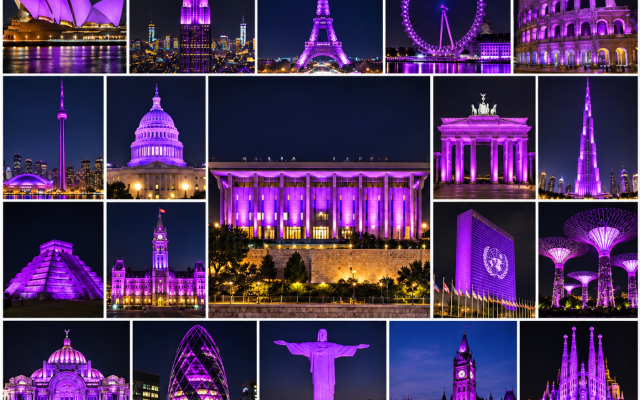
A Global Commitment to Dignity, Accessibility, and Inclusion
On December 3, the world will commemorate the International Day of Persons with Disabilities. Numerous iconic landmarks, government buildings, and public spaces across the globe will be illuminated in purple, recognizing what is often described as the world’s largest minority.
Behind these magnificent displays lies a powerful humanitarian message: every individual, regardless of ability, deserves the dignity, independence, and opportunity to participate fully in society.
Approximately 1.3 billion people, representing approximately 16 percent of the global population, experience significant disability. That is about one in every six people on our planet, each with individual aspirations, talents, responsibilities, and dreams.
The origins of this international observance date back to December 3, 1982, when the United Nations adopted the World Program of Action concerning Disabled Persons. A decade later, in 1992, the United Nations General Assembly established December 3 as an annual international observance.
The movement reached another historic milestone in 2006 with the adoption of the United Nations Convention on the Rights of Persons with Disabilities (CRPD), reinforcing the principles of accessibility, autonomy, equality, and full participation.
At the heart of this evolution was a fundamental recognition: inclusion is not an act of generosity. It is and must be a fundamental human right.
Purple: From Privilege to Universal Dignity
Few colors possess a historical legacy as fascinating as purple.
For centuries, purple symbolized royalty, wealth, authority, and distinction. The extraordinary difficulty and expense of producing purple dye in antiquity made it accessible primarily to society’s most privileged individuals.
Its contemporary association with disability inclusion offers a compelling reinterpretation of that history.
Once a color that distinguished the privileged, purple now challenges the very notion that dignity should be a privilege.
Purple’s association with disability inclusion developed gradually, gaining prominence in the United Kingdom through the concept of the Purple Pound, which describes the collective purchasing power of people with disabilities and their households.
The concept helped challenge outdated perceptions, recognizing people with disabilities not merely as recipients of assistance, but as consumers, professionals, entrepreneurs, innovators and valuable contributors to society.
Beyond Awareness: A Shared Responsibility
Disability respects no geographical, cultural, religious or socioeconomic boundaries. It can be present from birth, develop gradually or enter any of our lives in an unexpected moment.
Accessibility, therefore, should never be regarded as something we provide exclusively for others. It is an investment in a world that any of us, or someone we love, may one day depend upon.
One of the most meaningful principles of the disability rights movement is expressed in the words Nothing About Us Without Us.
People with disabilities must be active participants in shaping the environments, policies, technologies, and services that affect their lives. Their lived experiences offer invaluable expertise that good intentions alone cannot replace.
Accessibility must be woven into the fabric of society from the earliest stages of planning and design, rather than introduced as an afterthought.
An accessible workplace, an inclusive classroom or the ability to navigate public spaces independently should be ordinary expectations, not exceptional achievements.
Nor should people with disabilities have to accomplish something extraordinary to deserve ordinary equality.
The ultimate purpose of inclusion is not admiration. It is belonging.
When Purple Becomes the Color of Survival
Perhaps nowhere is the importance of accessibility more evident than during emergencies.
An emergency warning that cannot be heard or seen, an evacuation route that cannot accommodate a wheelchair or a shelter unable to meet individual medical needs can mean the difference between reaching safety and being left behind.
Through the Purple Vest Mission, developed by Access Israel and advanced internationally in collaboration with Accessibility Accelerator, purple has acquired an additional and vital humanitarian significance.
Worn by trained volunteers engaged in inclusive emergency preparedness, accessible evacuations, and humanitarian assistance, the purple vest represents a commitment to protecting the lives and dignity of people with disabilities and older persons.
It embodies a simple yet essential principle: different people have different needs, and emergency preparedness must include everyone from the outset.
Here, purple is not simply a color to be displayed. It is a color worn in service of others, transforming compassion into action and preparedness into the preservation of human life.
The True Significance of December 4
Perhaps the most meaningful measure of the International Day of Persons with Disabilities is not what happens on December 3, but what happens the following morning.
When the purple lights are extinguished, the speeches conclude and the world’s attention turns elsewhere, what will remain?
Will we design more thoughtfully, educate more inclusively, employ more equitably, and prepare our communities more responsibly? Will we listen more attentively to those whose experiences differ from our own?
International recognition matters. It brings visibility to overlooked challenges, celebrates contributions, and creates opportunities for meaningful dialogue.
But for 1.3 billion people, disability is not an annual observance. Their lives, aspirations, and rights are not confined to a date on the calendar.
The true measure of a compassionate and progressive society is not simply how it recognizes human diversity, but how naturally it embraces it in everyday life.
This December 3, let us proudly illuminate our buildings in purple. Let us celebrate how far we have come while acknowledging, identifying, and diligently working on how much remains to be accomplished.
And on December 4, when the lights are no longer purple, may the values they represent remain equally visible in our decisions, our actions, and the way we treat one another.
December 3 is a day of recognition. Accessibility and inclusion must be a way of life.
Related Topics