Decolonisation of the Jewish Mind
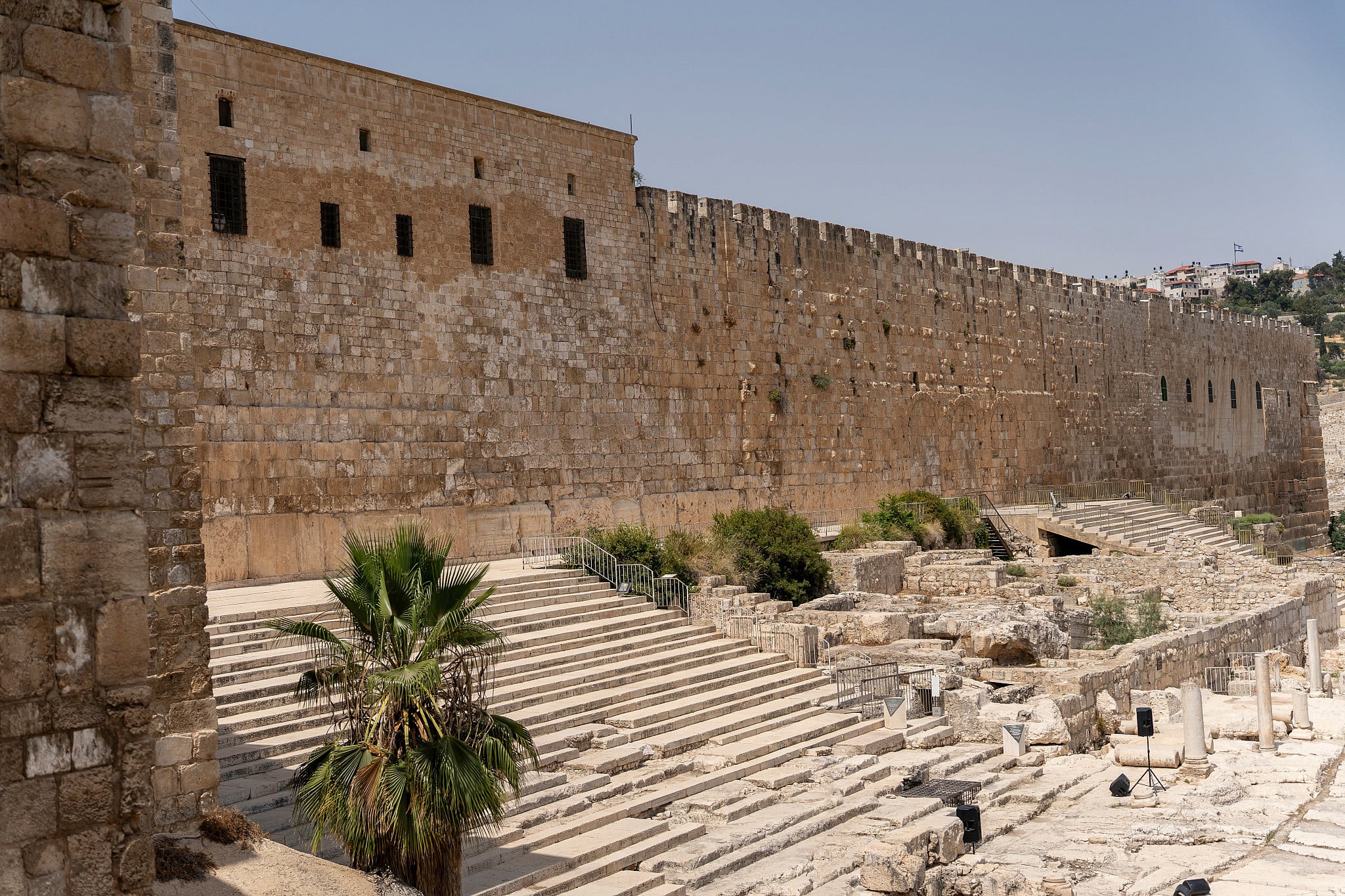
As Jews we must decolonise our own identity, reclaiming who we are at the deepest level.
The language of decolonisation has become central to contemporary debates about identity and power. In social activist and academic circles, it is invoked to dismantle colonial narratives and restore indigenous voices. Yet it is often applied through a binary lens of oppressor versus oppressed which is a problematic framework when applied to the Jewish people. The Jewish return to their ancestral homeland is frequently mischaracterised as colonial, rather than recognised as the restoration of a people to their historic home.
To address this distortion, as Jews, we must decolonise our own identity, reclaiming who we are at the deepest level. For centuries, Diaspora Jews have been described through compound or national identifiers: Australian Jews, Polish Jews, Moroccan Jews, American Jews. These descriptors tell the story of migration, but they also reinforce the idea that Jewish identity is disconnected from Israel.
Our truest identity is not Polish, Russian, or Moroccan. It is Israelite.
Our truest identity is not Polish, Russian, or Moroccan. It is Israelite. We are the descendants of those who spoke Hebrew in Judea, built the Temple in Jerusalem, and carried the covenant across millennia of exile. Every dispersion since has been displacement, often caused by external forces or colonial conquest.
While the term “Israelite” captures our historical and ancestral roots, the modern term “Israeli” is commonly understood as a citizen of the modern State of Israel. We propose that Diaspora Jews can also adopt it culturally in order to assert continuity with our ancestors and strengthen the relationship with our nation, even if we do not hold citizenship. This distinction allows for a dual recognition: Indigenous Israeli as heritage, Israeli citizen as a legal status.
To understand how this term resonates, we conducted a survey among members of the Jewish community selected to reflect a range of ages and backgrounds. When asked whether they would feel comfortable identifying as “Israeli” regardless of where they or their families have lived, responses were almost evenly divided:
- 34% of respondents said they would embrace “Israeli” as their core identity
- 23% said they would embrace it alongside their existing diasporic identity (Australian, Polish, Moroccan, Russian, etc)
- 39% rejected the label, identifying as Jewish but not Israeli
- 4% were unsure and wanted to explore the idea further
In other words, whilst 57% of respondents accepted “Israeli” in some form, a substantial bloc resisted it, preferring a Jewish identity disconnected from the term. This division highlights a deeper challenge for Diaspora Jews of how to situate Israel within our sense of self and Jewish peoplehood.
This tension is not unlike the story of Hebrew reclamation. Modern Hebrew was a deliberate fusion of ancient language and modern necessity reborn through biblical vocabulary and grammar, with Ashkenazi speech patterns, and later reshaped by Sephardic and Mizrahi voices. For centuries Hebrew survived only in liturgy and sacred texts. It was written, studied, prayed, but not spoken in daily life. In the 19th century, through deliberate revival, Hebrew became the living language of the Jewish people once again. Today, Hebrew is universally regarded amongst linguists as the world’s most successful case of ancient language revival. The term “Israeli” deserves a similar revival not just tied to modern statehood, but a cultural and historical continuity reaching back to the Israelites of antiquity.
Just as Hebrew bound generations of Jews through prayer and text, reclaiming “Israeli” as identity has the power to connect Jews today to the same continuity, bridging Diaspora and homeland.
In a similar way, Jews in the Diaspora can reclaim “Israeli” as a cultural and historical identity linking Jews today to the same ancestral continuity. Of course, the complication remains that “Israeli” already has a precise meaning, yet, cultural identification does not require citizenship. Even without living in Israel, a Diaspora Jew can acknowledge Israel as the origin and anchor of Jewish continuity. Moreover, the addition of “Israeli” as a cultural identifier is not meant to diminish or oversimplify the term Jewish. Jewish identity itself encompasses multiple dimensions including a people, a nation, an ethnoreligious group with shared ancestry and culture, as well as a faith with distinct religious practices. However, the significance of returning to our ancestral homeland is most clearly captured through the concept of Israel.
The conflict thus arises in a post-October 7 world in which Diaspora Jews who identify with or support Israel, Zionists, face a harsh reality: a dramatic rise in vocal hate and physical violence – Antisemitism in the form of Antizionism. The term “Zionism,” long relied upon as shorthand for support of the Jewish state of Israel has become increasingly problematic, provoking misunderstanding, vilification, harassment, and in some cases even physical attacks as anti-Israel sentiment intensifies. The term frames support for Israel primarily as an ideology rather than a recognition of the Jewish people’s historical and ancestral connection to their homeland, leaving Diaspora Jews exposed to social, political, and personal risk.
Unfortunately, Zionism from the prism of Antizionism is diluted in meaning; often viewed only through the lens of the modern political movement, rather than as the ancient yearning for Zion that developed over centuries of exile. For example, Psalm 137, “By the rivers of Babylon, there we sat and wept when we remembered Zion,” was written shortly after the Babylonian exile, when the First Temple in Jerusalem was destroyed and the Jewish people were sent into captivity some 2,600 years ago. This marked the beginning of the Jewish Diaspora and the transformation of Jewish identity from a land-based nation in the Land of Israel to a people bound by memory, scripture, and tradition.
Yet many rabbis didn’t accept exile as the norm. For example, the Talmud Bavli (the Babylonian Talmud) teaches, “Whoever dwells in the Land of Israel may be considered to have a God, and whoever dwells outside the Land of Israel may be considered as one who has no God.” In this sense, exile was transient, a wound, never meant to be an alternative homeland. Jewish liturgy ritualised this rupture every day in the Amidah written 2,000 years ago, “May our eyes behold Your return to Zion in compassion.” This is the central prayer in Judaism that is recited three times a day traditionally facing Jerusalem.
Stripping Zionism of its ancient biblical, liturgical and historical meaning and defining it in borrowed terms of nationalism erases thousands of years of yearning. We call ourselves “Zionists” as though the modern State of Israel were still an aspiration, rather than a state that exists in the here and now. Even the way modern Zionism is framed makes Israel sound like an ideology rather than what it truly is: the reconstitution of Jewish sovereignty in our ancestral land. Israel, is not just an idea, it is very much a place that the Jewish people have yearned for, a yearning that never ended but manifested itself in a movement committed to Jewish self-determination after millennia of persecution.
Israel, is not just an idea, it is very much a place that the Jewish people have yearned for, a yearning that never ended but manifested itself in a movement committed to Jewish self-determination after millennia of persecution.
This is an important point because even our own movement of self-determination is perceived through a colonialist lens and colonial discourse rather than an indigenous one. Indigeneity and identity are not only a matter of legal and ancient history. It is also a matter of self-perception.
Taken together, the terms – Jewish, Israeli, Zionist – highlight the tensions within our identity: one is often understood as faith alone, another citizenship, and the third ideology. The question then becomes: what language can unify us, connect us to our ancestral roots, whilst also expressing our modern continuation? The answer lies in how we perceive ourselves through language.
The answer lies in how we perceive ourselves through language.
Language provides the corrective. Saying “I am Israeli” reclaims continuity and recentres the Jewish story in the place where it began. Jews may never agree on religious practice or political affiliation, and that diversity is healthy. But on questions of identity and history, we must undertake the mental and cultural work to decolonise our own minds. Speaking of ourselves not primarily in hyphenated terms like Polish-Jewish or Australian-Jewish, and not only as Zionists, but as Israelis. Thus, we rebut colonial narratives and celebrate the enduring truth of our ancestral continuity.
A co-authored version of this article first appeared in the Australian Jewish News.