Youth activist and politician.
Denying Somaliland Does Not Preserve Stability
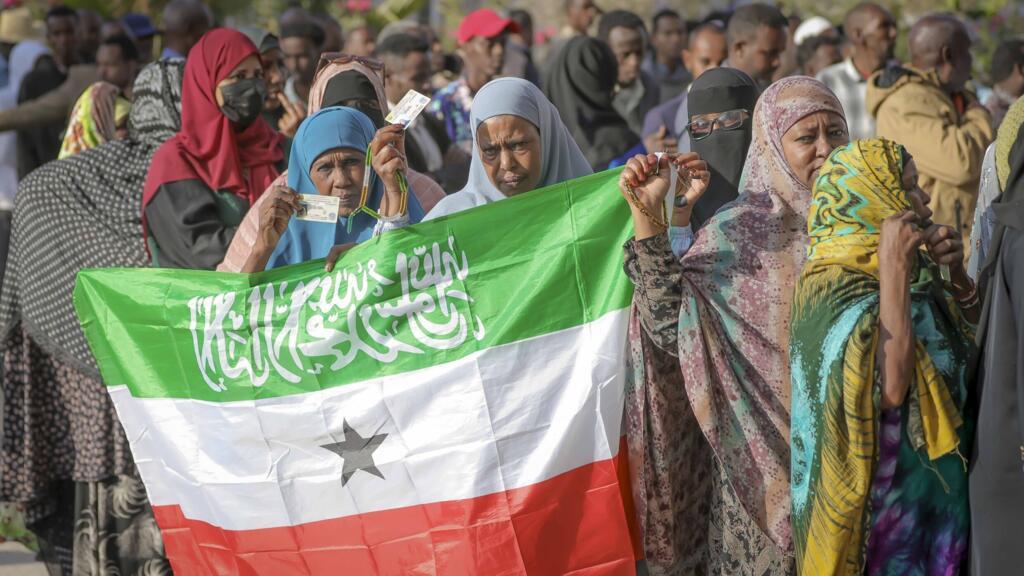
In a rare sight for the region, women stand in long lines, using their Voter IDs as small, plastic shields against the sun while they wait for their turn to choose the president for the next term.
Denying Somaliland Does Not Preserve Stability, It Undermines It…….
For more than three decades, the Republic of Somaliland has existed in plain sight. It governs itself, secures its borders, holds competitive democratic elections, and maintains peace in a region more often defined by instability than success. Yet for much of that time, the international community has chosen to look past this reality.
Israel’s recent decision to recognize Somaliland as an independent and sovereign state is not a provocation. It is a correction.
Recognition is often framed as a political favor or a bargaining chip in regional diplomacy. In reality, recognition is an acknowledgment of facts. Somaliland meets every established criterion of statehood under international law: a defined territory, a permanent population, an effective government, and the clear, sustained consent of its people. It has maintained these conditions since 1991 without international peacekeepers, foreign troops, or sustained external funding. Few post-conflict societies can credibly make the same claim.
Critics argue that recognizing Somaliland would complicate regional politics. But avoiding reality has not simplified the Horn of Africa. It has distorted it. Stability has been penalized, while dysfunction has been repeatedly accommodated. The result is a regional order that rewards failure and delays accountability. Somaliland’s experience exposes this imbalance and challenges a long-standing assumption: that African-led, locally grounded state-building cannot succeed without perpetual external management.
Israel’s recognition signals a shift toward pragmatic diplomacy. It reflects an understanding that partnerships should be built on shared interests, proven governance, and mutual security rather than on outdated political assumptions inherited from Cold War–era borders. In a region critical to global trade routes, Red Sea security, and counterterrorism efforts, engaging Somaliland is not merely logical. It is responsible.
Some continue to insist that Somaliland does not exist simply because they refuse to acknowledge it. But denial is not diplomacy. It is delay. Delay does not erase institutions, elections, or three decades of peace. It merely postpones engagement while political and security realities continue to evolve without international input.
The international system frequently claims to champion democracy, stability, and self-determination. Somaliland embodies all three. Its citizens have repeatedly affirmed their independence through referenda and elections. Its government functions. Its streets are secure. Its political transitions are peaceful. These are not aspirations. They are outcomes.
Israel’s decision also carries symbolic weight. It reminds the international community that recognition is not something to be begged for indefinitely. It is something earned through performance. Somaliland did not lobby its way into existence. It governed its way there.
For the United States and its allies, this moment presents a clear opportunity. Recognizing and engaging Somaliland would strengthen regional stability, reward democratic governance, and reaffirm the principle that responsible statehood matters. Continuing to ignore Somaliland sends a dangerous message: that patient peace-building and institutional development count for less than preserving failed political formulas.
History rarely announces itself loudly. Sometimes it moves quietly, through decisions that simply align policy with reality. Israel’s recognition of Somaliland is one such moment. Those who remain uncomfortable may continue debating the past. The future, however, is already taking shape.
Related Topics
Related Posts