Somaliland’s Sovereignty Is Not for Sale
Since 1991, when Somaliland withdrew from the failed union with Somalia, every President of Somaliland has been approached with offers of money, political leverage, or diplomatic incentives to reconsider reunification with Somalia. The first to try was Muammar Gaddafi, who attempted to convince President Mohamed Haji Ibrahim Egal. Similar overtures were made to Presidents Dahir Rayale Kahin, Ahmed Mohamed Mohamoud “Silanyo,” Muse Bihi Abdi, and now even to President Abdirahman Mohamed Abdilahi “Cirro.”
Each of these leaders responded with the same unwavering message: they were elected to protect the territorial integrity of Somaliland, and Somaliland’s independence, dignity, and nationhood are not for sale at any cost.
Yet what remains astonishing—almost predictable—is that every new diplomat posted to the region arrives believing he has discovered a “new solution” that no one else has ever imagined. They advise that Somaliland and Somalia “sit together and resolve their differences,” unaware that since 2012, more than ten rounds of formal talks have already taken place in world capitals, witnessed by international media, and concluded with signed agreements which Somalia failed to honour even one of those agreements.
This repetition exposes a deeper systemic failure: diplomats assigned to the Horn of Africa are rarely briefed on the history, cultures, languages, or political realities of the countries they are sent to engage. They do not understand the trauma of the former union, the reasons for its collapse, or the profound differences between the two nations. Instead, they rely on incomplete briefing notes written by predecessors who were themselves inadequately informed. They do not know that other sovereign nations that had attempted a union with another sovereign nation had withdrawn from these unions within months of the union when in the case of Somaliland and Somalia, it took 31 years to dissolve their failed union.
They also fail to grasp the most fundamental fact: Somaliland is stable because its people built that stability and wish it to remain so. On the other hand, Somalia remains unstable because its leaders profit from instability and wish it to remain that way.
For the past 35 years that Somaliland had been separated from Somalia, Somaliland has maintained peace, democracy, and rule of law without foreign troops, without international subsidies, and without foreign forces to keep the peace. In Somaliland, women sell 21‑carat gold openly in the markets. Money changers operate without fear. Security is upheld by the people themselves through collective civic responsibility.
Somalia, by contrast, has 40, 000 African Peace-keeping forces, relies on external funding to pay its parliament, ministries, and security forces. Lawlessness has become its most profitable industry. Somalia depends on foreign peacekeepers to sustain a system that has little incentive to reform and which has placed Somalia in a far worse position today than it was three decades ago.
Given these realities, the question is not why Somaliland refuses reunification with Somalia. The real question is:
Why do outsiders continue proposing a union that has already failed, already collapsed, and already proven impossible?
And more importantly:
Who, in their right mind, would abandon peace, democracy, and self‑reliance to merge with Somalia—a state that has failed to secure peace even within its own capital?
Somaliland’s position is not emotional, nor is it negotiable. It is grounded in history, experience, and the lived reality of its people. Sovereignty is not a bargaining chip. It is the foundation of the stability, progress, and democratic governance that Somaliland has built over 35 years—without external armies, without donor dependency, and without the chaos that continues to engulf its neighbour.
The world may continue to misunderstand this. Diplomats may continue to arrive with recycled ideas dressed as new insights. But Somaliland’s answer remains unchanged: our nationhood is not for sale, and our future will not be dictated by those who do not understand our past.
About the Author
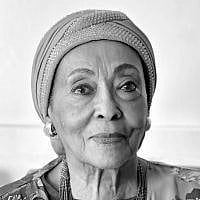
Edna Adan Ismail is a former Foreign Minister of Somaliland, founder of the Edna Adan University and Hospital, and a long‑time advocate for peace, stability, and the health of women and children in the Horn of Africa.