
Dependency Politics in the Egypt–UAE Relationship
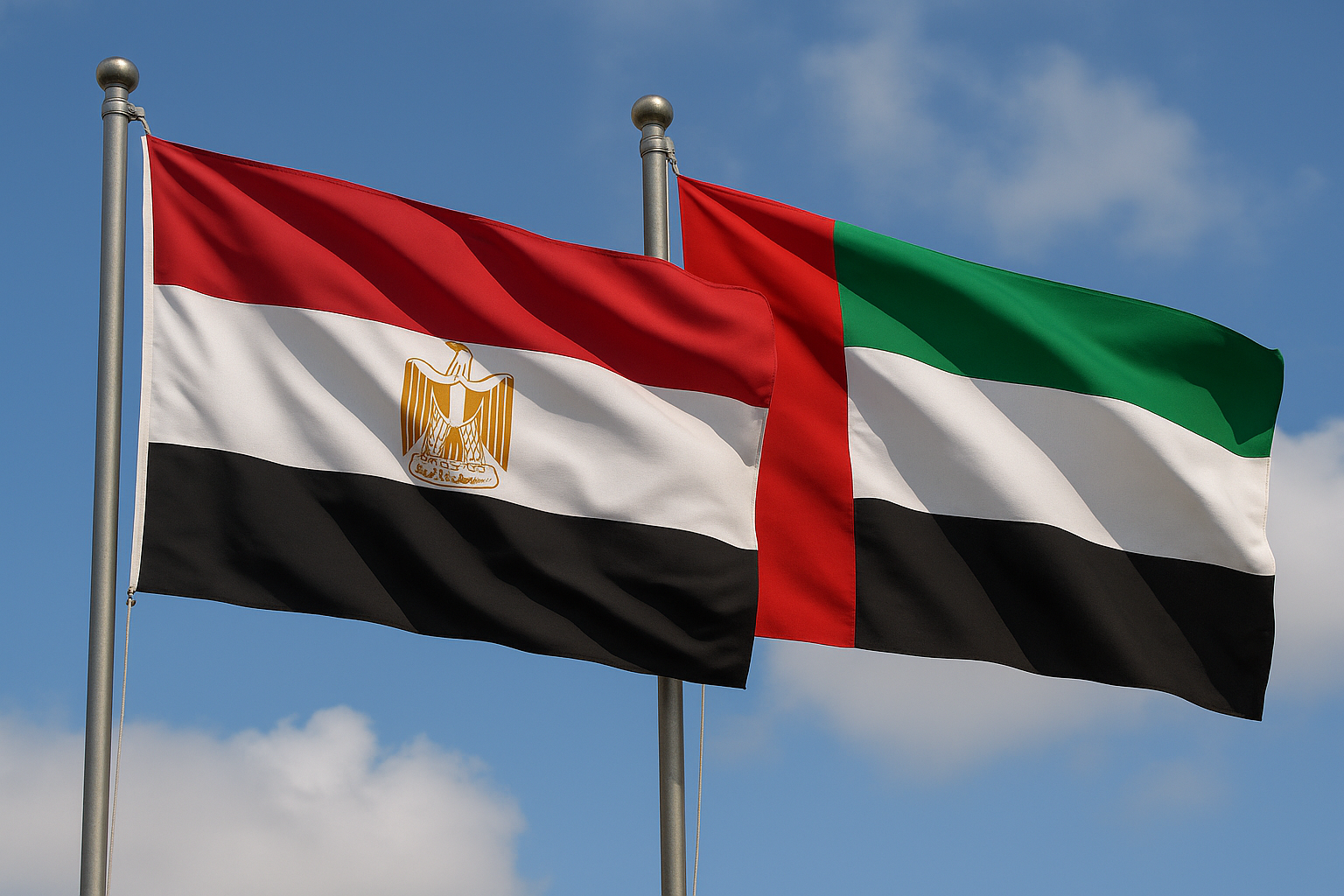
Egypt and the United Arab Emirates still perform unity with polished ease. Joint statements evoke shared visions of stability, counter-extremism and modernization. Ceremonial optics suggest two states moving in parallel. Yet behind the choreography lies a shift more fundamental than the polite language can conceal. What began a decade ago as ideological convergence has matured into structural asymmetry. Egypt speaks the language of partnership; the UAE acts from a position of leverage. The transition has unfolded quietly, without rupture or rhetoric, but it now reshapes the balance of power in the Arab world.
From Counter-Islamism to Strategic Imbalance
The hinge year was 2013. Sisi’s ascent after the ouster of Morsi aligned perfectly with Abu Dhabi’s strategic worldview. Both leaderships regarded the Muslim Brotherhood not as a political competitor but as an existential threat. The UAE supplied cash injections, supportive lobbying in Western capitals and a media environment that delegitimized Islamist currents. Egypt supplied symbolism: the return of the region’s historic centre of gravity as the anchor of counterrevolution.
Even then, the benefits were uneven. Egypt needed liquidity to defend its currency, protect subsidies and reassure a wary military establishment. The UAE needed a large state to give regional weight to its ambitions. The more Egypt leaned on Emirati funds, the less room it retained to shape the agenda it claimed to lead. Dependency began not as humiliation, but as convenience.
Libya: Shared Goals, Diverging Priorities
Libya reveals how convergence hardened into constraint. Both states initially backed Haftar, but after the failure of the 2019 Tripoli offensive, Egyptian officials reassessed his utility. Cairo cultivated ties with Aguila Saleh and other eastern actors, prioritizing border stability and predictability. Western diplomatic reporting and UN monitoring indicated growing Egyptian irritation with Haftar’s refusal to compromise. The UAE, by contrast, doubled down, extending drone and armored support long after Cairo’s enthusiasm cooled.
For Egypt, Libya policy is defensive: prevent militant spillover, weapons flows and uncontrolled migration. For the UAE, Libya is a proving ground for a strongman-centric model of post-revolutionary order. Continued Emirati arms supplies prolonged the conflict and contributed to the insecurity Egypt must absorb. Cairo-aligned commentators now hint at unease, though without naming Abu Dhabi. The beneficiary dictates tempo; the dependent manages consequences.
Sudan: A Fault Line in Plain Sight
Sudan exposes the limits of alignment even more starkly. Egypt maintains deep ties to the Sudanese Armed Forces and views the RSF’s rise as destabilizing to Nile negotiations, border management and internal cohesion. The UAE, however, cultivated relations with the RSF and supplied material support that strengthened a faction Cairo considers hazardous. Emirati officials framed their role as mediation and humanitarian facilitation. Egyptian policymakers privately expressed frustration that their supposed partner was empowering a force hostile to Egyptian preferences.
The point is not that the UAE controls Sudan or that Egypt has lost all influence. Rather, the divergence fits a recurring pattern: Cairo seeks institutional continuity, while Abu Dhabi often backs adaptable power brokers. Instability burdens Egypt; opportunity benefits the UAE.
The Horn of Africa and the Water Constraint
In the Horn, the dynamics are subtler but no less consequential. The UAE has secured port access, logistics hubs and security partnerships across the Red Sea corridor, granting it maritime reach and proximity to Ethiopia. Egypt’s overriding concern remains the Grand Ethiopian Renaissance Dam, which threatens its water security. Emirati diplomacy occasionally offers mediation, but influence in the Horn increasingly flows through Abu Dhabi rather than Cairo’s historic African ties. Nothing here is explicitly anti-Egypt, yet the strategic environment shifts in ways that complicate Egypt’s negotiating leverage.
Israel and the Erosion of Symbolic Primacy
For decades, Egypt alone held the legitimacy to mediate with Israel. The UAE’s normalization agreements rewrote that hierarchy. Economic cooperation, technological exchange and regional security coordination now run through Abu Dhabi. Egypt still matters in Gaza management and security channels, but it no longer defines the terms of Arab-Israeli engagement. Symbolic capital has migrated.
Debt, Demographics and the Silent Constraint
Under ordinary conditions, such foreign-policy frictions would prompt recalibration. But Egypt lacks the economic sovereignty required for recalibration. The UAE is among its largest external creditors, provides central bank deposits that stabilize the pound and facilitates investment inflows that prevent fiscal collapse. Egypt’s population size – once an asset – has become a structural burden requiring perpetual external financing. The state cannot sustain subsidies, upgrade infrastructure or maintain military dominance without Gulf capital. This is not alignment; it is enforced acquiescence.
Egyptian analysts increasingly acknowledge the dependency, though cautiously. The official narrative remains partnership. The lived reality is constraint.
The Emirati Logic and Egypt’s Narrowing Horizon
Abu Dhabi’s strategy is consistent: secure ports and supply chains, acquire financial leverage, develop technological capacity, and cultivate transactional relationships with major powers. It favors stability without mass politics and influence without ideological exposure. In this framework, Egypt is most useful when dependent and non-competitive. A resurgent Egypt would dilute Emirati centrality; a constrained Egypt reinforces it. Through debt, assets and investment conditionality, the UAE not only shapes Egypt’s environment – it shapes Egypt itself.
A Quiet Reordering of the Arab System
This leads to an uncomfortable conclusion. The traditional hierarchy of the Arab world, in which demographics and military weight determined influence, no longer applies. Egypt retains the symbols of leadership. The UAE exercises the functions. Cairo still speaks the language of historic centrality, but it does so from a position where independence is increasingly theoretical.
The only path to reversing this trajectory would require Egypt to restructure its economy, reduce the military’s dominance in civilian sectors, foster innovation and rebuild legitimacy through performance rather than narrative. Nothing in the current system suggests such transformation is imminent.
The question, then, is no longer whether the UAE undermines Egyptian influence. It is whether Egypt retains the capacity for strategic agency at all. If it does not, the Arab centre of gravity has already moved – and it moved while Cairo still talked as though history guaranteed relevance.