Despite spending, Jews continue to feel unsafe
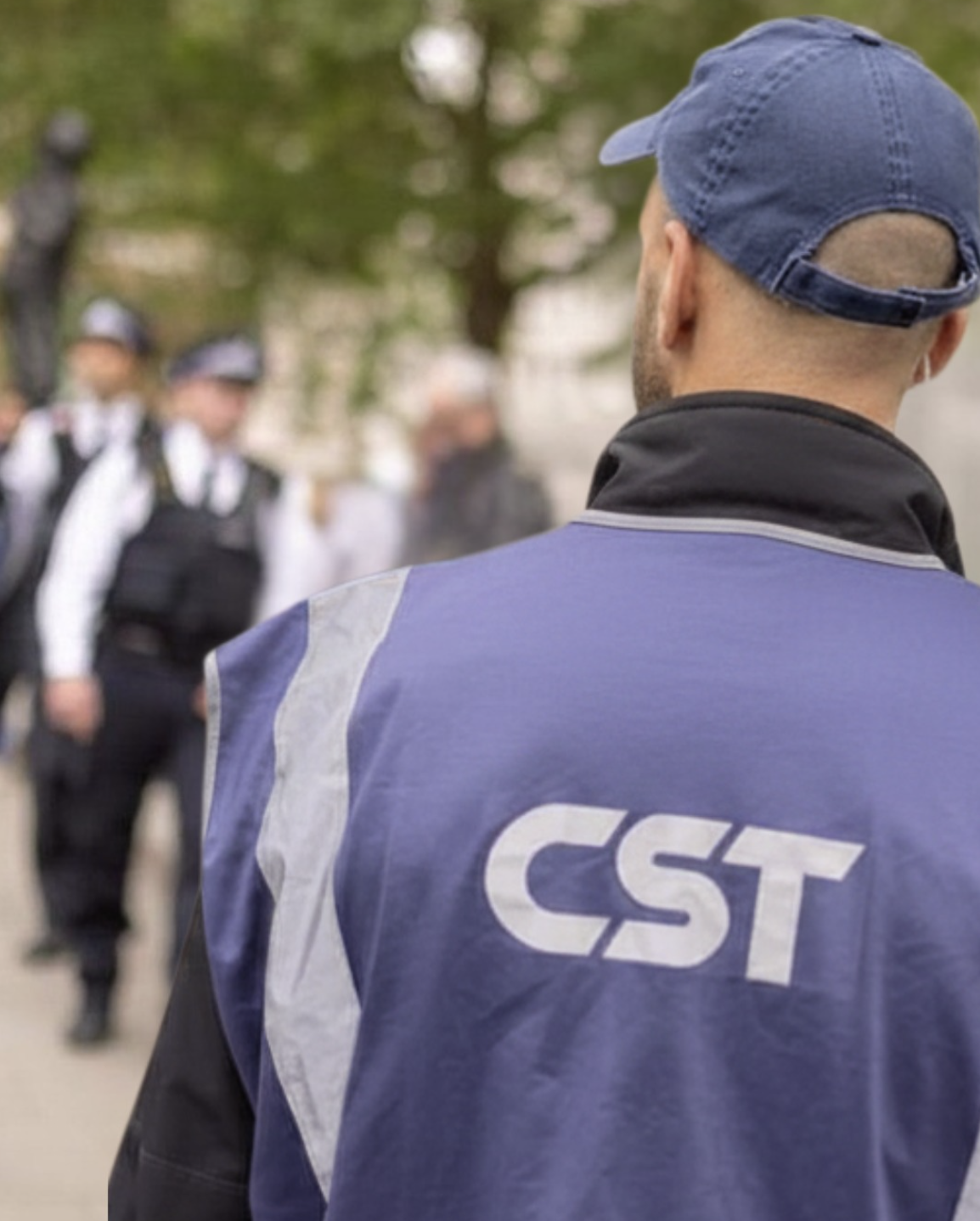
Every year, governments and Jewish organisations spend millions fighting antisemitism. We organise conferences, publish reports, launch awareness campaigns and invest in increasingly sophisticated security measures to protect Jewish communities.
Despite all this investment, Jews across the world continue to feel unsafe. Synagogues need armed guards, Jewish schools operate behind reinforced gates, and community events require security arrangements that would once have seemed unimaginable.
We have become very good at protecting potential targets. But are we doing enough to identify the people who might attack them? This is the question we must now confront.
According to Britain’s Community Security Trust, 3,700 antisemitic incidents were recorded in the UK in 2025, the second-highest annual total on record. Another 1,926 incidents were recorded in the first half of 2026, an increase of 21 per cent compared with the same period the previous year.
The British government has committed substantial resources to protecting Jewish communities, including more than £250 million announced in 2026 for security and policing measures over three years.
Across the Atlantic, the picture is equally worrying. According to the Anti-Defamation League, 6,274 antisemitic incidents were recorded in the United States in 2025. Although that represented a decline from the previous year, physical assaults reached a record 203.
Two of these victims of antisemitic violence were two Israeli embassy employees murdered outside the Capital Jewish Museum in Washington, DC. In Boulder, Colorado, an attack on demonstrators supporting Israeli hostages ultimately claimed the life of another victim.
The Jewish Federations of North America estimates that Jewish institutions are spending approximately $1 billion annually on security. Alongside that, the US government has also allocated hundreds of millions of dollars through its Nonprofit Security Grant Program.
These investments are necessary. But the persistence of the threat should force us to ask whether we are directing enough resources towards prevention.
After 34 years working in Israeli intelligence and law enforcement, I believe we need a fundamental change in how we approach the security of Jewish communities. In intelligence work, the most valuable information is often not what we discover after an attack. It is what we can identify beforehand.
An attacker does not necessarily emerge from nowhere. In some cases, there may be a progression from extremist propaganda and radicalisation to threatening behaviour, contact with violent networks or preparations for an attack.
The warning signs may exist, but they are not always visible to the same people. One piece of information may emerge in one country, another in a different language or online environment, and a third may be held by local authorities.
Individually, these fragments may appear insignificant. Together, they could reveal a credible threat.
The threat can be global while the target is local. This is the thinking behind Black Wall Horizon, an intelligence-fusion and early-warning methodology we are developing at Black Wall Global in the war on antisemitism, working with intelligence and law enforcement agencies to better protect our diaspora communities. Its guiding principle is straightforward: do not wait for the threat at the gate.
Rather than concentrating solely on defending a synagogue, school or community centre against an attacker who has already arrived, Horizon seeks to identify credible warning signs earlier, connect relevant information and create opportunities for lawful intervention before violence occurs.
The distinction matters. Traditional physical security is designed to protect people when danger reaches a particular location. Intelligence-led prevention aims to understand how that danger is developing, whether separate warning signs are connected and when the information warrants action by the appropriate authorities.
If an extremist network spreads violent antisemitic propaganda across several countries, a person in one country begins engaging with that material, and elsewhere, credible information emerges suggesting an interest in attacking Jewish institutions. This means that no single organisation may possess enough information to recognise the developing danger.
But if relevant information can be lawfully collected, verified, assessed and shared, it may become possible to identify a threat before an attacker reaches a potential target.
This is not about assuming that everyone expressing hateful opinions intends to commit violence. Antisemitic rhetoric, however offensive, is not automatically evidence of preparations for an attack.
It is about recognising the difference between general hostility and credible indicators of violent intent, and ensuring that those indicators are not lost because institutions, jurisdictions or intelligence systems are operating in isolation.
Technology, including artificial intelligence, can help analysts process large quantities of information and identify potentially significant connections. But technology alone cannot determine who represents a genuine threat.
Professional intelligence analysis, human judgement, legal safeguards and cooperation with authorised authorities remain essential.
Horizon is intended to bring these elements together, helping turn fragmented information into a clearer understanding of emerging risks and, where justified, actionable warnings. We should also recognise that Jewish communities cannot and should not be expected to perform the functions of police or national intelligence agencies.
The purpose is not to create a parallel security apparatus. It is to strengthen the connections between relevant organisations and the authorities responsible for protecting the public. For too long, the fight against antisemitism has been discussed primarily in terms of education, awareness, public condemnation and physical security.
All are important and none should be abandoned but a conference cannot identify an individual preparing an attack. A public statement cannot connect warning signs scattered across jurisdictions. And even the most sophisticated security system at a synagogue may provide little warning about a threat developing thousands of miles away.
We must begin treating the prevention of antisemitic violence as an operational challenge requiring intelligence, coordination and measurable objectives.
That means asking different questions when governments and philanthropists allocate funding.
The questions remain. How much is being invested in early-warning capabilities, are relevant organisations able to share credible threat information securely and lawfully, and can warnings move quickly enough to reach those authorised to act?
Are we in fact improving our ability to distinguish genuine threats from background noise? And perhaps most importantly, are we giving security professionals more time to prevent violence?
Time is one of the most valuable resources in counterterrorism and the fight against antisemitism. The earlier a credible threat is identified, the more options may be available to assess it, investigate it, protect potential targets or intervene through lawful means.
Of course, no methodology can guarantee that every attack will be prevented. Intelligence is imperfect, warning signs can be ambiguous and some attackers may leave little detectable evidence of their intentions.
Nor should we assume that increasing expenditure has achieved nothing. Without existing security measures, the consequences of antisemitic violence could be considerably worse.
But there is a difference between acknowledging the value of current investments and accepting that our present approach is sufficient. We need both strong physical protection and better intelligence-led prevention.
At Black Wall Global, our work on Horizon reflects a conviction developed through decades of experience: effective security must look beyond the immediate target and understand the wider environment in which threats emerge.
It is not enough to know that antisemitism is rising. We must improve our ability to recognise when hatred is developing into a credible danger to human life.
This requires cooperation across borders, institutions and disciplines. It also requires governments, Jewish organisations and donors to think beyond the next conference, awareness campaign or security grant.
The Jewish world has spent years documenting antisemitism and warning about its consequences. Now we must devote greater attention to the operational capabilities that could help prevent those consequences.
We will always need guards at synagogue gates. But our ambition should be to identify credible threats long before anyone approaches those gates with violent intentions. See earlier, understand better, and ultimately, prevent sooner. That should be the next chapter in the fight against antisemitism.