
Devorah: A Friendship of a Lifetime
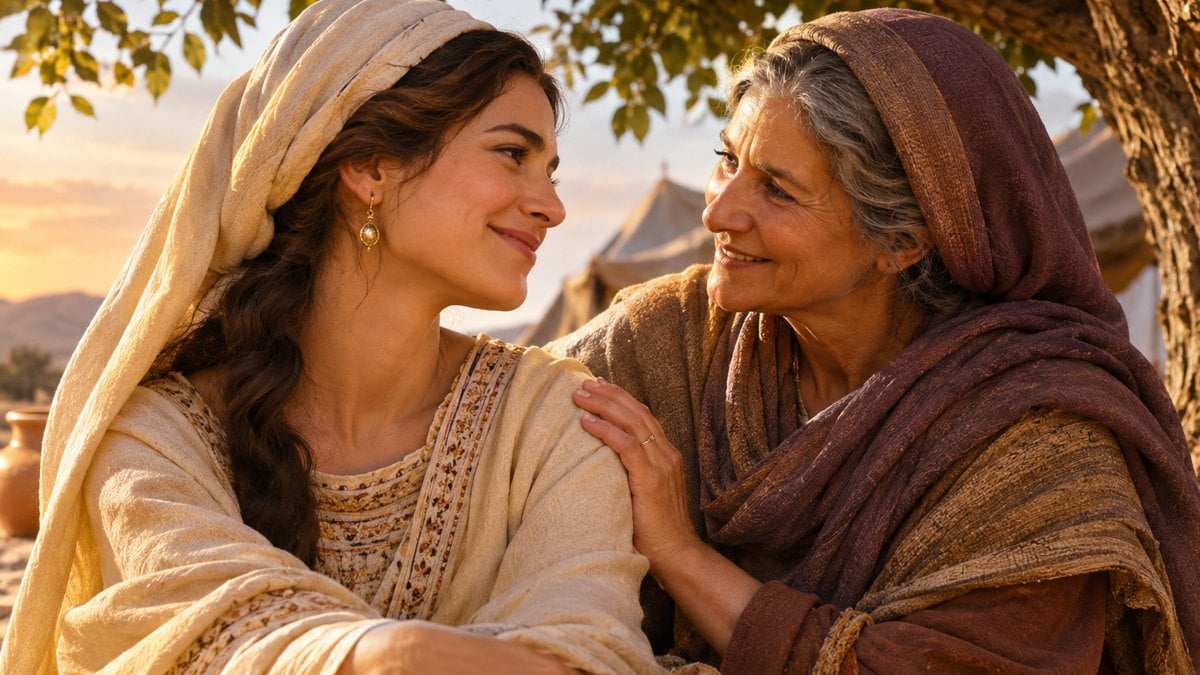
Parashat Vayishlach – A lesson in love, loyalty and humility -Two lives so intertwined that even the Torah cannot tell the story of one without the other. A lesson in humility, friendship and lifelong loyalty
My choice of role model this week is a woman whose name appears only once in the entire Torah.
When she dies.
וַתָּמָת דְּבֹרָה מֵינֶקֶת רִבְקָה וַתִּקָּבֵר מִתַּחַת לְבֵית־אֵל תַּחַת הָאַלּוֹן וַיִּקְרָא שְׁמוֹ אַלּוֹן בָּכוּת.
Devorah, Rivkah’s nurse, died and was buried beneath the oak below Bethel, and it was named Alon Bachut – the Oak of Weeping. (Bereishit 35:8)
Her name is Devorah, the nurse of Rivkah Imeinu.
We first encounter her in Parashat Chayei Sarah. When Rivkah leaves her family and homeland to marry Yitzchak, the Torah specifically mentions that her nurse accompanies her (Bereishit 24:59). We are not told her name.
Many decades later, in this week’s parsha, we finally learn her name.
According to our Sages, it is through this very verse that we also learn of the death of Rivkah.
At the beginning, Rivkah is named and Devorah is not.
At the end, Devorah is named and Rivkah is not.
Two lives so intimately intertwined that even the Torah’s account of their deaths brings them together.
I find that quite beautiful.
A spiritual chief of staff
Rav Yosef Dov Soloveitchik offers a remarkable insight into their relationship. He suggests that it was Devorah who, prior to Eliezer visiting them, taught Rivkah about Avraham and Sarah, their values and the mitzvot of their home.
Therefore, when Rivkah famously responded with the single word Elech – I will go – she knew what she was going towards because of Devorah. When she entered Yitzchak’s tent and continued the spiritual legacy of Sarah, Devorah had helped prepare her.
And their relationship did not end there.
According to Rashi, decades later, it was Devorah whom Rivkah entrusted with the sensitive mission of bringing her beloved son Yaakov home.
The Ramban even suggests that Devorah helped raise Yaakov’s children, using three particularly beautiful Hebrew words:
לכבוד רבקה ולאהבתה
Out of respect for Rivkah and love for her.
What began as the relationship between a nurse and a child appears to have developed into something far deeper. A lifetime of friendship, intimacy, trust and mutual commitment.
There is a remarkable parallel with Eliezer, whom I chose as my role model a few weeks ago.
Indeed, the two appear together in the very same verse in Parashat Chayei Sarah (Bereishit 24:59). Neither is identified by name. One is described as Rivkah’s nurse, the other as Avraham’s servant.
To me, their shared anonymity in that very same verse says so much about the roles they played.
Both were far more than their titles suggested. Both were entrusted with missions upon which the future of the Jewish people depended. Both played spiritual as well as practical roles.
In modern terminology, Avraham had Eliezer and Rivkah had Devorah – their respective spiritual chiefs of staff.
They were not simply followers. They were trusted partners, willing to invest their talents, energy and lives in the success of another without occupying centre stage themselves.
The humility of true friendship
We live in a world increasingly obsessed with recognition. We measure influence by followers, importance by titles and success by personal achievements.
How many of us are genuinely comfortable investing in the success of another person without needing recognition ourselves?
And how many of us, when we achieve success, remain loyal to those who helped us get there?
Rabbi Jonathan Sacks distinguished between a contract and a covenant. One is a transaction; the other is a relationship.
Devorah’s original responsibility as a nurse would have ended when Rivkah was a young child. Her loyalty did not.
Equally, in the traditional account, Rivkah continued to trust Devorah long after she had become a matriarch of the Jewish people.
There is humility on both sides of that relationship.
The Netziv describes Devorah as an adam kasher, a worthy and righteous person, whose passing those present were obligated to mourn.
She may have spent much of her life in the background, but she was far from insignificant.
Perhaps the greatest friendships are those in which we become so committed to the wellbeing and success of another person that their achievements become a source of our own happiness.
No competition. No need for attention. Just love, loyalty and commitment.
Rivkah and Devorah.
Two women. Two very different roles. Two intimately intertwined lives.
One extraordinary legacy.
Shabbat Shalom.