Did PEMC Check the History?

The Platform of European Memory and Conscience (PEMC) says its 2026 nominee Arūnas Bubnys helps society recognize distortions of historical truth. Before PEMC members turn that claim into an international credential, they should know the record attached to his state service.
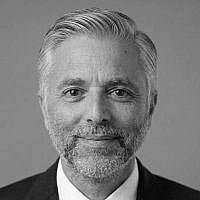
Arūnas Bubnys has been nominated for the 2026 Prize of the Platform of European Memory and Conscience (PEMC). LRT reports that the Platform-prepared candidate overview, as reproduced by the Lithuanian Genocide and Resistance Research Centre (LGGRTC), praises more than forty years of scholarship, archival work and state service and says his work helps society recognize distortions of historical truth.
That description makes the nomination testable. Bubnys did not arrive at LGGRTC when he became director in 2021. LRT records that he headed the Centre’s Historical Research Department from 2009 to 2021 and has led the institution since April 2021. That chronology does not prove that every Centre publication passed through him personally. It does make the Centre’s historical output relevant when state service is itself offered as a reason for the prize.
LGGRTC is not an outsider to PEMC. It was one of the Platform’s founding members in 2011 and remains a member today. PEMC’s published 2024 Council agenda expressly excluded membership applicants and candidates from discussion and voting on their own applications. The prize item, by contrast, records presentation of prize candidates followed by a secret ballot and states no parallel recusal rule. If another rule governs the prize, PEMC can identify it.
For PEMC members and anyone evaluating this nomination, the supporting PEMC due-diligence documentary appendix collects the principal documents, dates, preserved captures and public source links used here.
What PEMC should disclose
The public nomination announcement does not identify the nominator. If the identity is confidential under a PEMC rule, the Platform can say so and cite the rule. If it is not confidential, it should disclose whether the nomination came from LGGRTC, another Lithuanian member, another member institution or the Platform’s leadership.
The same answer should state whether LGGRTC may vote on the candidacy of the man who leads it. A founding member’s current director is being considered for an award by the body that member helped create. That is a recusal question before it is anything else.
PEMC and the Noreika test
In 2019 Lithuania’s own International Commission for the Evaluation of the Crimes of the Nazi and Soviet Occupation Regimes rejected central elements of LGGRTC’s treatment of Jonas Noreika. Its Holocaust sub-commission called the Centre’s exculpatory arguments and obfuscations “utterly unacceptable” and said the ghetto-as-haven theory “recycles the Nazi argument of 1941.” After quoting the Centre’s accusation that I had selected documents without proper context, the Commission added: “It seems obvious that the Center has adopted much the same approach.”
Eight months later, in its 2019 archive under an entry dated 18 December, LGGRTC announced categorical conclusions that Noreika had organized a Jewish rescue network, actively contributed to rescue, should be regarded as anti-Nazi from the beginning of his district-chief tenure and did not understand until the liquidation of the Žagarė ghetto that ghettos were a stage of the Holocaust.
Bubnys later used materially weaker language. In his 2021 interview he said Noreika’s rescue role remained open to discussion, that no documented evidence showed Noreika knew of the Jasaitis family’s secret rescue activity, and that he could not assert one categorical version. As at 2 September 2026, the earlier categorical Centre page remained public.
The longer director-level history, including the refusal to retract disputed Noreika conclusions under Bubnys’s predecessor, is documented in Teresė Birutė Burauskaitė: Findings After Notice. PEMC does not have to accept my interpretation. It should at least compare the documents.
PEMC and the Brazaitis test
The Centre’s claim that Juozas Ambrazevičius-Brazaitis was “completely exonerated” in the United States predates Bubnys’s directorship. Calling him a detached inheritor, however, understates the chronology: he headed LGGRTC’s historical research department from 2009 through 2021, spanning the 2018 and 2019 outputs at issue. That does not establish his personal authorship or approval of those texts.
The underlying American disposition was administrative, not judicial. INS Commissioner Leonard F. Chapman reported that the names were removed from an active list and the investigations were “deactivated,” subject to reactivation if meaningful information emerged. The documentary chain is collected in Lithuania Invented a U.S. Exoneration and the later correction history in Much of Lithuania’s Official History Is State-Manufactured.
On 12 May 2026 Lithuania’s Foreign Ministry told Congressman Brad Sherman that the “complete exoneration” formulation was legally imprecise and that administrative discontinuation was not formal judicial exoneration. The Ministry also told Congress that the earlier wording had been corrected. The nine-page correspondence package includes the Ministry’s response and six pages of United States Department of Justice/Immigration and Naturalization Service material and related congressional correspondence.
The Centre did not make a comprehensive correction. Page 2969 still carried the claim that Brazaitis was rehabilitated by the United States Department of Justice during checks in August 2026. On 26 August, a separate LGGRTC page deleted one use of “rehabilitated” while leaving a stronger DOJ-rehabilitation formulation four paragraphs above. Vilnius Printed It. LGGRTC Kept the Myth. preserves the earlier persistence chain. The 26 August edit is documented in Lithuania Corrected One Word. Now It Has No Excuse.
Burauskaitė, Adas Jakubauskas and Bubnys led the Centre across the life of this formulation; the leadership changed without turning the American administrative disposition into an exoneration.
PEMC and the Škirpa test
Report No. 9R-598 of 25 June 2024 is personal to this nomination in a way the earlier files are not. The copy I hold bears the names of Director General Arūnas Bubnys and historian Alfredas Rukšėnas. LGGRTC’s public notice separately foregrounded Rukšėnas as the historian who prepared the report. The document itself therefore puts Bubnys’s name on the instrument.
On 23 August 2024 the Council of the Lithuanian Jewish Community, representing thirty-two Lithuanian and foreign Jewish organizations, categorically rejected Report No. 9R-598 by reference number. The Community used the term “Holocaust revisionism” in describing the wider commemoration controversy. That is its characterization, not mine.
My document-by-document challenge to the report is public in The Škirpa Report Cannot Stand. PEMC members should receive the report itself and the Jewish Community’s response before they vote on a nomination expressly praising the candidate’s role in identifying distortions of historical truth.
PEMC and the Centre’s own 2026 selection
Bubnys also sought another term as LGGRTC director. The nomination itself invokes his state service, so the most recent formal assessment of that service is relevant. In 2026 the Centre’s Council ran the first public selection process for the office and selected Donata Kabelkė instead of Bubnys.
After Parliament rejected Kabelkė, Council chairman Arūnas Streikus rejected the suggestion that the Council simply advance Bubnys, who had finished second. Streikus said the Council had concluded from the outset that it saw no other participant in that selection as suitable for the post. That statement is not a finding that Bubnys is an incompetent historian. It is an assessment by the statutory council charged with selecting the institution’s director. Was it in the PEMC nomination dossier?
What PEMC is being asked to reward
Bubnys has published substantial historical research on the Holocaust, ghettos, German occupation policy, Lithuanian police formations and anti-Nazi resistance. The nomination is not absurd because he lacks scholarship. The harder question is whether the prize committee examined the contested state-historical record attached to the same career it is celebrating.
Seven questions for PEMC
- Who nominated Arūnas Bubnys, or what rule requires the nominator’s identity to remain confidential?
- What documents accompanied the nomination?
- Were members given Lithuania’s International Commission response, the 2019 Noreika rescue conclusions and Bubnys’s materially more cautious 2021 assessment?
- Were members told about the Brazaitis exoneration controversy, the Foreign Ministry’s 12 May 2026 concession and the Centre’s incomplete correction?
- Were members given Report No. 9R-598 and the Lithuanian Jewish Community’s response?
- Were members told that LGGRTC’s Council selected someone else in the 2026 public competition and then declined to advance Bubnys after he finished second?
- Will LGGRTC participate in the prize vote on its own leader, and what published recusal rule governs that situation?
Disclosure
I applied for the LGGRTC director’s post in February 2026. The Council rejected that application on 8 April, and I was not among the three candidates it heard on 15 April. I formally re-applied in July after Parliament rejected the Council’s preferred nominee; that re-application is public. I have also litigated against LGGRTC in Lithuanian courts and brought European Court of Human Rights Application No. 10930/21, which was declared inadmissible and is closed. My May 2026 IHRA petition is also public. Readers may weigh those interests. They do not alter the text of the documents linked here.
How I treat LGGRTC as a source
Based on the record I have documented over decades, I do not regard the Lithuanian Genocide and Resistance Research Centre (LGGRTC) as a presumptively reliable historical authority. In my assessment, its publications have repeatedly functioned as instruments of national historical advocacy and, in material instances, as vehicles for distorted or fictionalized history.
Accordingly, I assign no independent evidentiary weight to a historical claim merely because it has been published by the Lithuanian Genocide and Resistance Research Centre. Any material proposition originating with the LGGRTC must be independently verified against primary documentation or credible external historical scholarship before it is relied upon. Until such verification is obtained, the LGGRTC’s assertion is treated as unverified and presumptively unreliable, with particular scrutiny for omission, selective quotation, exculpatory reframing, or factual distortion.
Why a PEMC prize changes the presumption
A prize from the Platform of European Memory and Conscience does not decide whether a historical proposition is true. A PEMC prize does change who is presumed credible when the next dispute begins. The credential enters biographies, conferences, press coverage and citations. The underlying controversy travels less easily.
PEMC describes its work as contributing to an honest and open appraisal of Europe’s totalitarian past. Its own published goals make historical integrity part of the institution’s mission. Its members can still decide that Bubnys’s scholarship and career merit the award. They should make that decision with the Noreika, Brazaitis and Škirpa records in front of them, together with the recent judgment of the Council overseeing his institution.
The candidate presentation says Bubnys helps society recognize distortions of historical truth. Before the Platform of European Memory and Conscience turns that sentence into an international credential, PEMC should disclose who nominated him, what its members were given and how conflicts in the vote are handled. Then one question remains: did anyone check the history?