Digital Media and Political Communication in Somaliland
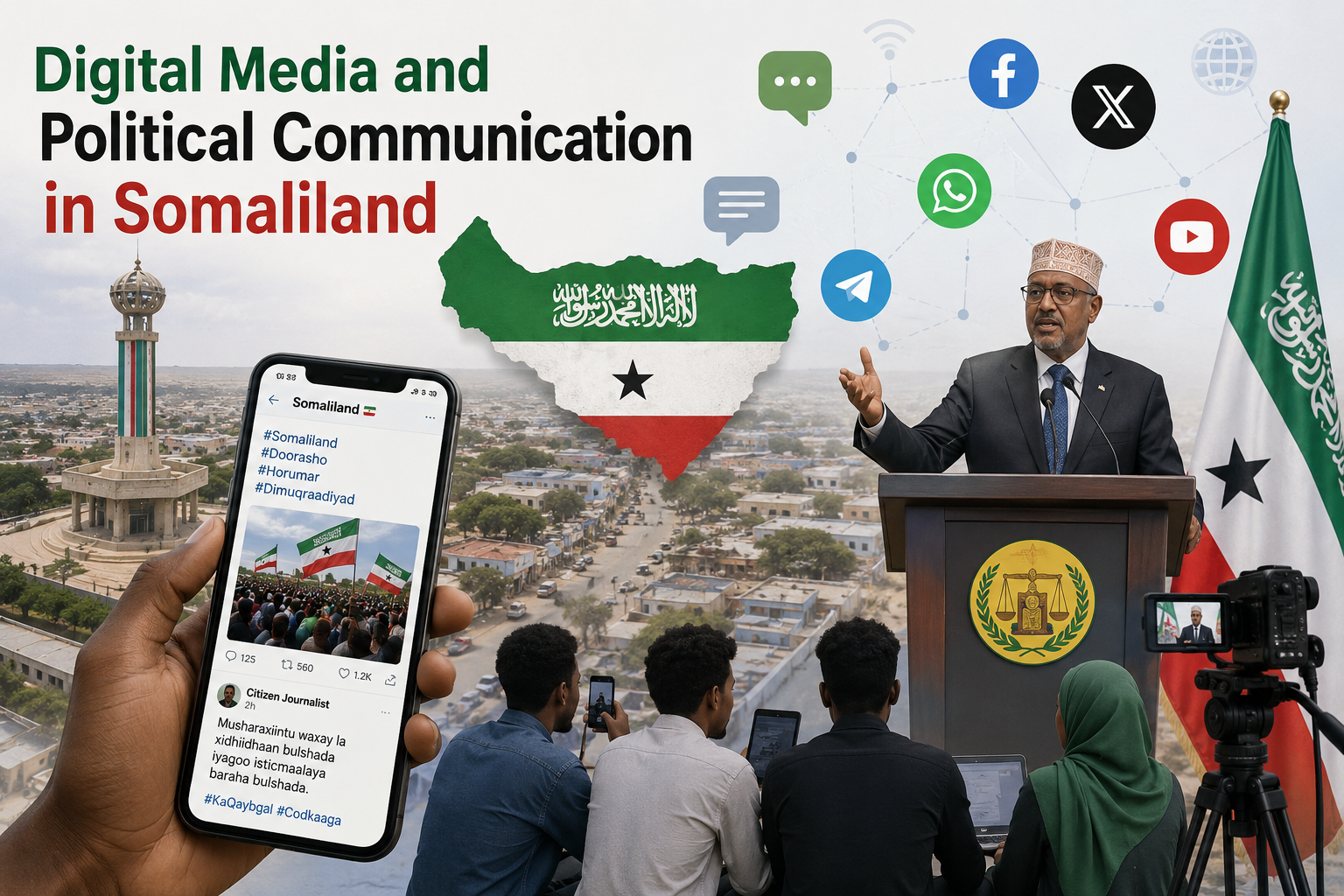
Digital media has become one of the most influential forces shaping political communication in Somaliland. Over the past two decades, the expansion of internet access, smartphones, and social media platforms has transformed how citizens engage with politics, governance, and national identity. Political discussions that once depended largely on clan meetings, traditional leaders, and radio broadcasts are now increasingly taking place online through Facebook, TikTok, YouTube, WhatsApp, and X. This transition represents more than technological modernization; it reflects a major shift in Somaliland’s political culture and public discourse.
Following the collapse of the Somali state in 1991, Somaliland rebuilt itself through locally driven peacebuilding processes. In the absence of formal institutions, communication relied heavily on traditional systems. Clan elders, religious leaders, poets, and community gatherings played central roles in resolving conflicts and shaping political decisions. Large clan conferences, known as Shirar, became platforms for negotiation, reconciliation, and leadership selection. Radio also emerged as an important source of public information because it could reach both urban and rural populations.
These traditional communication structures emphasized consensus, patience, and collective responsibility. Political legitimacy was closely tied to clan representation and elder mediation. However, the growth of digital technology has gradually challenged and reshaped these older forms of communication. Today, political information moves rapidly across online platforms, allowing citizens to access news instantly and participate directly in political debates.
Social media has dramatically expanded political participation in Somaliland. Previously, political influence was often limited to individuals connected to traditional authority structures or established political networks. Digital platforms have reduced some of these barriers by giving ordinary citizens a voice in public discussions. Young people, women, journalists, activists, and members of the diaspora can now engage in political conversations without relying entirely on clan-based channels.
This transformation is especially important because Somaliland has a very young population. Most young Somalilanders were born after the civil war and are more connected to global trends than previous generations. Through digital media, they engage not only with local politics but also with international debates about democracy, development, education, and economic opportunity. As a result, political expectations are gradually shifting from purely clan-based representation toward issue-based politics focused on governance, employment, and public services.
Political campaigns have also changed significantly because of digital media. Candidates and political parties now use social media to mobilize supporters, promote policies, and shape public opinion. Livestreamed speeches, online interviews, and viral campaign videos have become essential tools during elections. Digital communication allows politicians to reach large audiences quickly and respond immediately to criticism or emerging political events.
At the same time, independent online journalism has strengthened public accountability. News websites, online commentators, and citizen journalists regularly discuss government performance, corruption allegations, and political disputes. This increased visibility has encouraged greater political awareness and civic engagement. Citizens can now question leaders publicly and monitor political developments more closely than ever before.
The Somaliland diaspora has become another powerful actor in digital political communication. Somaliland communities living in Europe, North America, the Gulf states, and other parts of Africa remain deeply involved in political discussions through online platforms. Diaspora members contribute financially to political campaigns, support civic projects, and influence public opinion through social media discussions. Digital communication has therefore connected Somaliland’s domestic politics with global audiences in ways that were previously impossible.
Despite these positive developments, digital media has also created serious challenges. One major issue is the rapid spread of misinformation and politically divisive content. Clan-based rhetoric, rumors, and emotionally charged narratives can spread quickly online, especially during elections or political crises. In some cases, social media amplifies tensions instead of encouraging constructive dialogue.
Traditional communication systems in Somaliland often relied on mediation by elders and community leaders to prevent conflicts from escalating. Digital platforms function differently. They reward speed, emotional reactions, and viral engagement, making it easier for political disagreements to intensify rapidly. This creates risks for a society whose long-term stability has depended heavily on negotiation and social cohesion.
Another challenge is the uneven distribution of internet access and digital literacy. Urban areas such as Hargeisa and Berbera have experienced significant technological growth, while many rural communities still face limited connectivity. This digital divide affects who can participate effectively in online political discussions and who remains excluded from the emerging digital public sphere.
Additionally, Somaliland continues to face questions about media regulation, cyber security, and freedom of expression. As digital communication expands, balancing open political debate with responsible regulation becomes increasingly important. Without strong institutional safeguards, online spaces can become vulnerable to manipulation, harassment, and disinformation.
Digital media is also reshaping the relationship between traditional authority and modern influence. Elders and established political figures now share public space with online activists, influencers, and independent commentators. Political influence increasingly depends not only on lineage or seniority but also on communication skills, visibility, and digital engagement. This reflects a broader transformation in how authority is understood within Somaliland society.
Ultimately, digital media is redefining political communication in Somaliland. It has created new opportunities for civic participation, accountability, and national dialogue while also introducing new risks related to polarization and misinformation. If managed responsibly, digital communication can strengthen democracy, encourage inclusive political participation, and support Somaliland’s efforts to engage with the international community.
However, the future impact of digital media will depend on how citizens, political leaders, and institutions choose to use it. Technology alone cannot guarantee democratic progress. The challenge for Somaliland is to ensure that digital platforms promote constructive debate, national unity, and informed public participation rather than division and instability.
As Somaliland continues to evolve politically and socially, digital media will remain central to shaping its future. The country is moving from a political culture rooted mainly in traditional communication toward one increasingly influenced by networks, technology, and global connectivity. How Somaliland navigates this transformation may play a defining role in the future of its democracy and national identity.