
Dinah and women’s lost voice
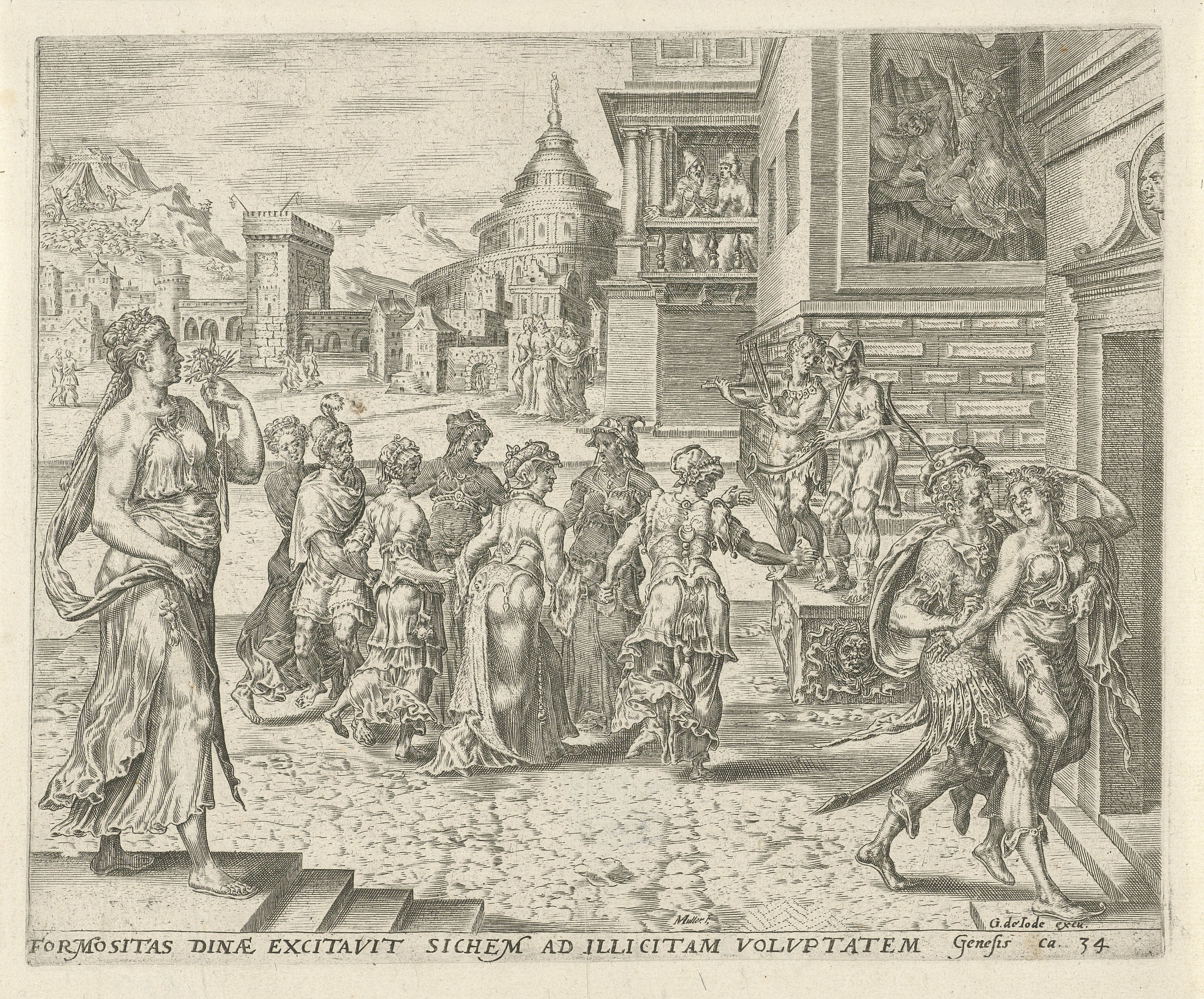
There is a figure in the book of Genesis who appears suddenly, painfully, and then slips away into silence. A daughter. A sister. A young woman whose story is told mostly through what men do around her, and almost never through what she wants, says, or chooses. Her name is Dinah.
We meet her in Parashat Vayishlach with heartbreaking abruptness: “Dinah, the daughter of Leah, whom she had borne to Jacob, went out to see the daughters of the land.” A simple social visit. Perhaps curiosity, perhaps friendship, the sort of errand any teenage girl might do. And then — violence. The text says Shechem “took her and lay with her, and abused her.” No euphemisms. The Torah confronts us with the raw fact of assault. And from this moment onward, everything becomes about everyone except Dinah.
Jacob hears of the assault and remains silent. The brothers hear and burn with fury. Shechem and Chamor speak of marriage. Agreements are proposed, conditions negotiated, weapons sharpened.
But Dinah? The Torah doesn’t give her a single word. Not one. She becomes an object passed from tent to tent. The actions taken “for her honor” never ask what she wants. Even when Shimon and Levi carry out their violent revenge, Dinah appears only in a brief phrase—“they took Dinah from Shechem’s house and went out.” She is carried, lifted, moved, but she does not get to walk out on her own terms. It is a painful silence. And perhaps the most painful thing about it is how familiar that silence feels.
Among our commentators, there is a remarkable moment of protest. Ramban, commenting on the chapter, wrestles with the actions of Shimon and Levi. Rambam had famously justified their attack by claiming that the people of Shechem were guilty under the Seven Noahide Laws — they failed to prosecute Shechem, and therefore bore collective guilt.
Ramban reads the same story and says simply: “These things are not correct in my eyes.” He asks: If the city was truly guilty, why didn’t Jacob himself act? Why did he rebuke his sons? Why did he curse their anger in his final blessings? Ramban insists that violence done in the name of justice is not automatically righteous just because people claim it is. He calls out the gap between what is said and what is actually just. In other words, Ramban does something very important: he refuses to let male power structures justify themselves. He looks at the Torah and says, “Wait. Something here is wrong.” If only someone in that chapter had insisted the same on Dinah’s behalf.
The tragedy of Dinah’s story is not only the assault itself. It is that every man in the story — Jacob, Shechem, Chamor, Shimon, Levi — responds to the event with his own agenda. Jacob worries about political consequences. Shechem insists he is in love. Chamor talks about economic opportunity. The brothers speak the language of honor and indignation.
But no one asks Dinah, “What do you need? What do you feel?” Her body becomes a battlefield; her voice is erased.
If we read the chapter carefully, another unsettling pattern emerges: Dinah is always referred to as “the daughter of Leah.” The Torah reminds us of her lineage again and again. Why? Some commentators suggest it is to highlight the vulnerability of a daughter from the less-loved wife. A hint that a child without favored status slips through the cracks more easily.
It’s an uncomfortable insight—and a timeless one. A society is judged not by how it treats the powerful, the privileged, or the loud, but by how it treats those whose voices are easiest to ignore.
Dinah lived thousands of years ago, and yet some things have not changed enough. In Israel, according to the Association of Rape Crisis Centers, one in three women will experience sexual violence in her lifetime. Every year, thousands of cases are reported; countless more are not. And when victims do come forward, they still face disbelief, interrogation, shame, or the sense that their story will be taken over by others—police, family, lawyers, the media—everyone except themselves.
Dinah’s silence is not only ancient; it is contemporary.
And perhaps the most chilling parallel is this: too often the conversation becomes about everything but the victim. About politics. About community reputation. About legal debates. About what could happen to the men involved, or to the community, or to the institution.
What would it look like to retell Dinah’s story in a way that restores her agency?
Jacob would speak to her, not just about her. The brothers’ fury would not preempt her voice. The men of Shechem would face justice, not violence dressed up as justice. The community would center the person harmed—not the reputation of those around her.
The Torah tells us repeatedly to protect the stranger, the widow, the orphan—the vulnerable. The Talmud adds: “Whoever can protest against wrongdoing in their household and does not, is held responsible.” Our sages understood very well that silence can be its own form of violence.
We cannot go back into the text and give Dinah a voice. But we can hear her silence as a call. A call to believe victims rather than interrogate them. A call to create communal spaces where stories of pain can be spoken without fear. A call to educate our children about dignity, safety, and respect. A call to ensure that every person who suffers assault or abuse knows: you are not alone, and your voice matters.
Shimon and Levi acted “for Dinah”—or so they claimed. But acting for someone without listening to them is its own kind of erasure. What Dinah needed was not revenge. She needed restoration. Support. Presence. Someone at her side who would ask, “Tell me what happened. I’m here with you.” Justice, in the Torah, begins with compassion. It begins with seeing the person in front of us.
At the end of his life, Jacob curses Shimon and Levi not for their anger, but for their uncontrolled, destructive use of it. Ramban insists that the brothers’ zeal was not righteousness but wrongdoing cloaked in piety.
Maybe this is the Torah’s final word on the matter: violence committed in the name of someone else’s pain is not the same as honoring that person’s pain.
Dinah deserves better from us. May her silence move us to speak—before anyone else is left without a voice.