


Diplomatic Coma: Negotiation for Its Own Sake
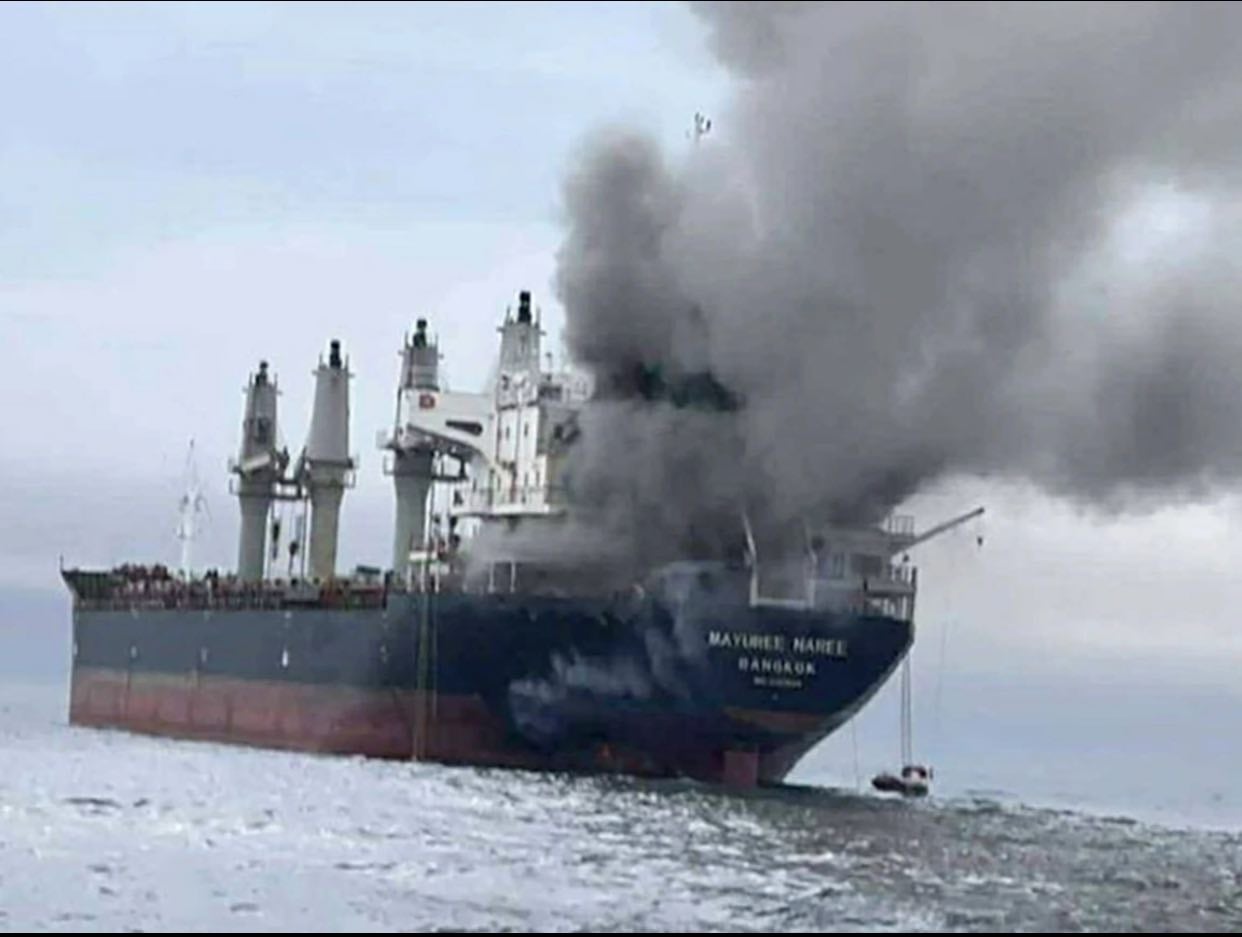
The Strait of Hormuz, which for years had remained a serious threat in the hands of the Islamic Republic, has been transformed by the United States into a multilayered strategic opportunity. This demonstrates how Washington, through the intelligent management of constraints surrounding this vital artery of global energy, can simultaneously exert pressure on China, Russia, and Tehran’s regime, turning an old threat into a powerful instrument of deterrence. The time has now come to examine the deeper layer and the broader strategy for achieving predetermined objectives a strategy that extends far beyond a single strait or regional crisis and ultimately leads to a fundamental choice between decisive military action and slipping into a diplomatic coma.
Within the Trump administration, there are two distinctly different, and at times opposing, schools of thought. One belongs to figures such as Marco Rubio, who emphasize hard power, preparedness for action, and the use of military force when necessary. The other is represented by J.D. Vance, who is more inclined toward negotiation, caution, and the avoidance of direct confrontation. Advocates of negotiation, particularly Vance and those who share his outlook, repeatedly invoke the same phrase: “We must not get bogged down in the quagmire of war.” On the surface, this slogan sounds rational and responsible. In practice, however, it can lead to an even more dangerous and prolonged quagmire: the quagmire of diplomacy. It is a quagmire that appears peaceful, diplomatic, and averse to violence, but in reality, can impose far greater human, economic, and strategic costs while encouraging the enemy to become more audacious.
Although diplomacy may appear civilized and opposed to violence, it does not always, under all circumstances, prevent conflict and bloodshed. Europe’s history before the Second World War offers a clear and bitter lesson that must not be forgotten. Diplomacy with Hitler and the British and French policy of appeasement during the 1930s produced nothing but mass slaughter for Britain and the rest of Europe. The Munich Agreement and repeated attempts to placate the German dictator merely bought Nazi Germany the time it needed to complete its war machine. Had Winston Churchill’s repeated warnings before the war been heeded, and had Britain and France prepared their military machinery seriously and in time, the casualties would have been far lower, and perhaps the Second World War would never have occurred on such a catastrophic scale. The refusal of the United States and European powers to enter wars in time or their prolonged delays in intervening has repeatedly resulted in dramatically greater bloodshed and prolonged the suffering of innocent people. The proposition that “diplomacy always and under all circumstances reduces casualties” is therefore profoundly mistaken and dangerous. Today, the same pattern is repeating itself on a global scale. Under the pretext of avoiding the “quagmire of war” and out of fear of direct confrontation, some have placed the world at risk of an even greater and more destructive global war, because delay, weakness of will, and endless negotiations encourage the enemy to advance and test the resolve of the West.
The famous phrase “peace through strength,” both philosophically and historically, does not mean military nonintervention or the absolute avoidance of force. The concept was originally associated with the spirit of “peace through courage” and later evolved within political discourse. Possessing a powerful, advanced, and well-equipped military without the firm will to use it when necessary, completely empties “peace through strength” of its meaning. Power without will does not create deterrence; in practice, it becomes an invitation to aggression and adventurism. When an enemy knows that the opposing side possesses weapons but lacks the courage or determination to use them, its calculations change entirely, and it becomes more emboldened.
A clear and contemporary example of this strategic mistake occurred in Ukraine. The world’s media and Western intelligence agencies knew that Russia, under the pretext of military exercises, had amassed tens of thousands of troops along Ukraine’s borders. Even the NATO Secretary General sought explanations from Moscow through official diplomatic channels and issued warnings. What was the result? Within less than a few months, a full-scale war began, followed by the killing of Ukrainians, the destruction of cities, and the displacement of millions. Had the United States and Europe deployed even twenty thousand troops along Ukraine’s borders under the pretext of joint military exercises, Putin’s calculations would have changed completely, and the war in Ukraine would never have begun. This was an egregious historic mistake whose price is still being paid. Even after the war began, the possibility that Moscow might use nuclear weapons was invoked to frighten the world away from providing Ukraine with decisive, rapid, and comprehensive assistance. Yet when the free world demonstrated the courage to provide genuine military and material support, the direction of the war gradually began to shift in favor of the free world. Ukraine was able to halt Russia’s advance, retake occupied territories and even carry the war deep into Russian territory and toward Moscow. This experience demonstrated that resolve and timely action can change the equation.
Precisely the same pattern is unfolding regarding Iran, and the danger of repeating past mistakes is extremely serious. The Islamic regime is not amenable to genuine negotiation, and there is nothing left to test in a strategy that has been tried repeatedly for 47 years.
Regime leaders in Tehran have used negotiations not as a means of resolving disputes, but as a means of buying time, circumventing sanctions, expanding its regional influence, and advancing its nuclear and missile programs. Yet figures such as Vance use spurious and ostensibly humanitarian arguments such as the prospect of “ninety-four million Iranians migrating” or fears of regional instability to prevent war or decisive action, as though conditions in Iran today were so good and stable that Iranians had no reason to leave their country.
The reality is exactly the opposite. It is the survival of the Islamic Republic and the continuation of the present conditions that intensify migration and extinguish hope among younger generations. Prolonging fruitless negotiations, issuing repeated threats without action, and America’s practical inaction drive hope out of Iran and ultimately result in mass migration and brain drain. Faced with economic hardship, repression, and the absence of any future, Iranians increasingly see no alternative but to leave their homeland.
The people of Iran have repeatedly demonstrated that despite the mass killings of December 2022/January 2023 and operations such as Operation Epic Fury, they have not lost hope and continue to stand for freedom. But endless negotiations, empty promises, and American inaction will undoubtedly cause them to lose faith in the United States and the West. The despair of a people toward those who might potentially support their freedom is the greatest gift that can be handed to a repressive regime. There is nothing beneficial to be found in negotiating with terrorists particularly Islamist-communists whose ideology is rooted in the destruction of Western values and the expansion of their influence regardless of what Vance and others like him imagine they might achieve. Such negotiations merely provide the regime with the time and space it needs to rebuild itself.
By contrast, a war or military action carried out with the correct strategy precise in its execution and centered on the Iranian people could bring the matter to a conclusion in favor of the West and the free world. Iranians may not have an Al-Jolani, or a comparable figure inside the country, but they do have a figure who can serve as a George Washington a symbol of national unity and a transition to freedom and that figure is Crown Prince Reza Pahlavi. Intelligent support for the genuine force for change inside Iran, combined with maximum pressure and, when necessary, targeted military action, can bring down the regime without creating prolonged chaos.
America’s overall strategy toward the threats posed by the Iranian regime must be based on the clear lessons of history: genuine deterrence requires resolute will, not merely advanced weaponry or endless negotiations. Transforming the threat of Hormuz into an opportunity demonstrated that Washington can act intelligently and on multiple levels. But if that intelligence becomes submerged in an endless diplomatic coma and fear of the “quagmire of war,” regime brass in Tehran will not only be given a new lease on life; a message of weakness and hesitation will also be sent to every enemy of freedom around the world. History has repeatedly demonstrated that delays in decisive action multiply the human cost and prolong the suffering of ordinary people.
Lasting peace does not emerge from endless negotiations with those whose ideology is founded upon destroying their adversaries and expanding terrorism. It emerges from strength accompanied by the willingness to use that strength at the appropriate moment. The people of Iran are ready, and they have demonstrated their readiness repeatedly. The West must decide whether it wishes once again to follow a failed path and pay for it with the lives and futures of millions, or whether, through a clear strategy, courage, and genuine support for the popular forces inside Iran, it will finally bring this 47-year threat to an end. The experience of Ukraine, the experience of Europe before World War II, and the transformation of the threat in the Strait of Hormuz into an opportunity all convey the same clear message: somnambulistic diplomacy can be far worse, far more prolonged, and far bloodier than war.