
Discovery Is the Point
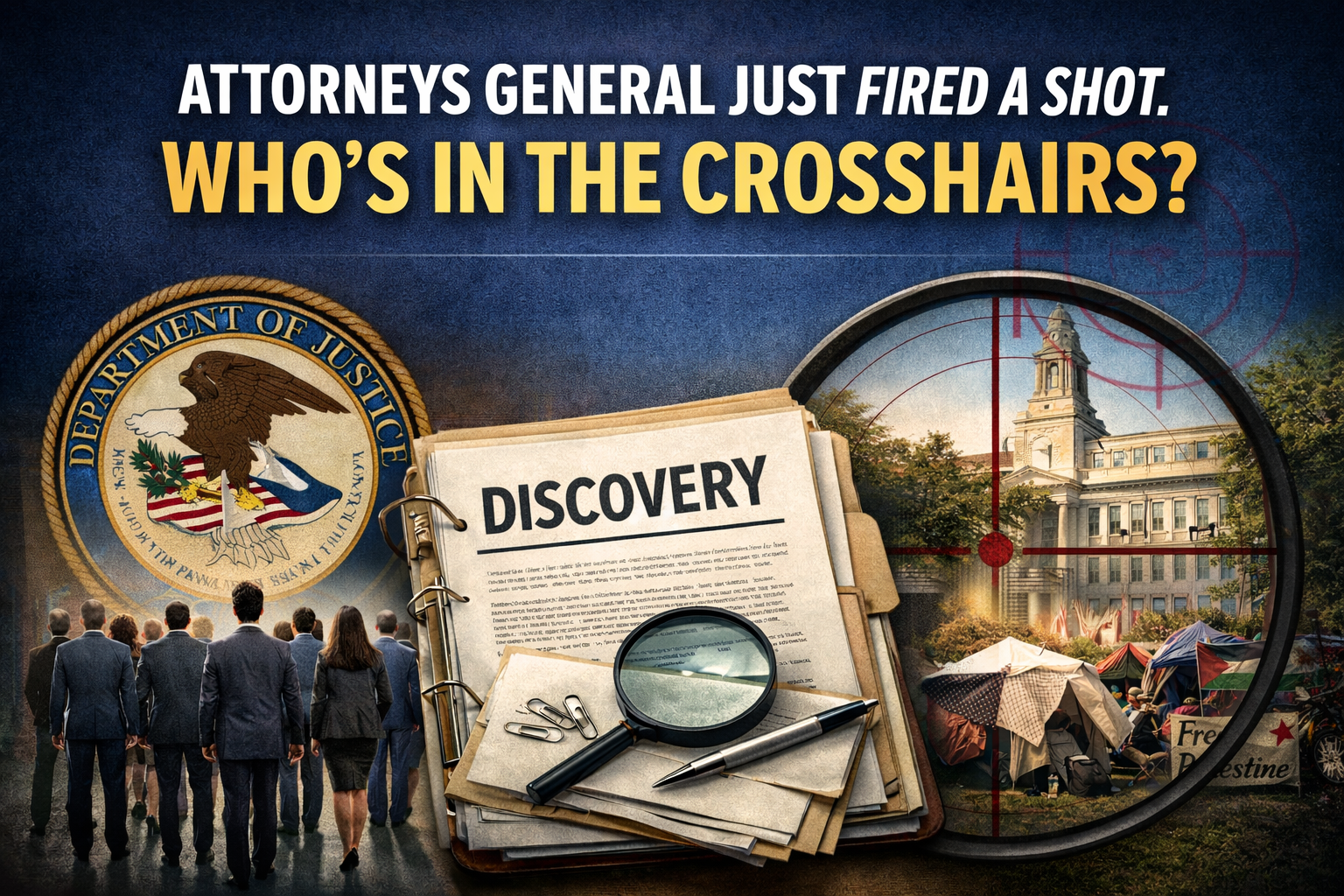
A quiet but decisive shift is underway in US terrorism-related litigation, and it is being widely misunderstood. The most important consequence of the multistate amicus brief recently filed by more than half of America’s attorneys general is not who ultimately wins or loses in court. It is what happens if the cases are allowed to proceed.
Discovery is the point.
That reality became visible when TheJ.ca reported that Texas Attorney General Ken Paxton, joined by a majority of state attorneys general, filed an amicus brief supporting civil claims alleging that US-based organizations provided material support to Hamas. The brief urges courts not to dismiss the cases at the outset and to allow plaintiffs to test their allegations through discovery.
To understand why this matters, one must look beyond slogans about free speech or claims of political persecution. The real consequence of this legal moment is institutional exposure.
What discovery actually means
Discovery is not rhetorical. It is compulsory.
If courts deny motions to dismiss, plaintiffs gain the right to demand documents, communications, and sworn testimony. That includes:
- Internal emails and messaging platforms
- Financial records and bank transfers
- Donor lists and fundraising pathways
- Board minutes and governance documents
- Training materials, toolkits, and coordination guidance
Discovery does not distinguish between “central” and “peripheral” actors. It reaches organizations, their officers, their board members, and, in many cases, their donors. Even when cases ultimately fail on the merits, discovery itself can be reputationally, financially, and institutionally devastating.
This is why the attorneys general intervention matters. They are not asking courts to declare guilt. They are asking courts not to block discovery before it begins.
The legal framework in brief
Federal law makes it a felony to knowingly provide material support or resources to a designated Foreign Terrorist Organization. “Material support” is defined broadly and includes money, services, training, expert assistance, and personnel. Crucially, the statute does not require proof of intent to commit violence. Knowledge that an organization is designated, or engages in terrorism, is sufficient.
Parallel to the criminal statute, the Anti-Terrorism Act allows US victims of terrorism to bring civil suits not only against perpetrators, but also against those who knowingly aid and abet terrorism. These claims carry mandatory treble damages and attorneys’ fees.
The threshold question at this stage is not whether plaintiffs will win. It is whether their allegations are plausible enough to justify discovery.
Why speech is not the central issue
Much public commentary frames these cases as an attack on political speech. That framing misses the legal core. Independent advocacy—even speech that is extreme, offensive, or factually wrong—remains protected. Courts have repeatedly affirmed that.
What is not protected is coordination.
Discovery is designed to answer structural questions: Are organizations operating independently, or as part of a coordinated support ecosystem? Are fundraising, messaging, training, or logistics centralized? Are domestic entities functioning as intermediaries rather than spontaneous activists?
These are factual questions. They cannot be resolved by slogans or press releases. They can only be answered through evidence.
The campus and nonprofit exposure
The litigation has focused on organizations alleged—by plaintiffs—to operate as national hubs with campus reach, including American Muslims for Palestine and National Students for Justice in Palestine. At the university level, attention frequently centers on Students for Justice in Palestine chapters and allied coalitions.
Being named in litigation is not a finding of guilt. But discovery does not wait for verdicts. Universities, donors, and boards often confront a separate calculation: whether continued association is worth the exposure of internal communications, donor identities, and governance practices.
For many institutions, the reputational and compliance risks of discovery alone trigger internal reviews, derecognition decisions, and governance changes—independent of any court ruling.
Why this resembles RICO—functionally
While these cases are not formally RICO prosecutions, the functional logic is similar. The law is not focused on isolated acts or individual beliefs. It is focused on networks, infrastructure, and patterns of coordination.
That is why the attorneys general brief matters. It signals that states are prepared to support a broad reading of Congress’s intent: to reach not only terrorists themselves, but the ecosystems that enable them.
The bottom line
The real question facing organizations today is not, “Will we be convicted?” It is, “Are we prepared for discovery?”
When a majority of state attorneys general argue that these cases should proceed, they are effectively opening the door to comprehensive institutional scrutiny. For nonprofits, campus organizations, donors, and universities alike, the implications are immediate.
Speech remains protected.
Coordination carries risk.
And discovery changes everything.