
Disinformation in Congress on Western Sahara
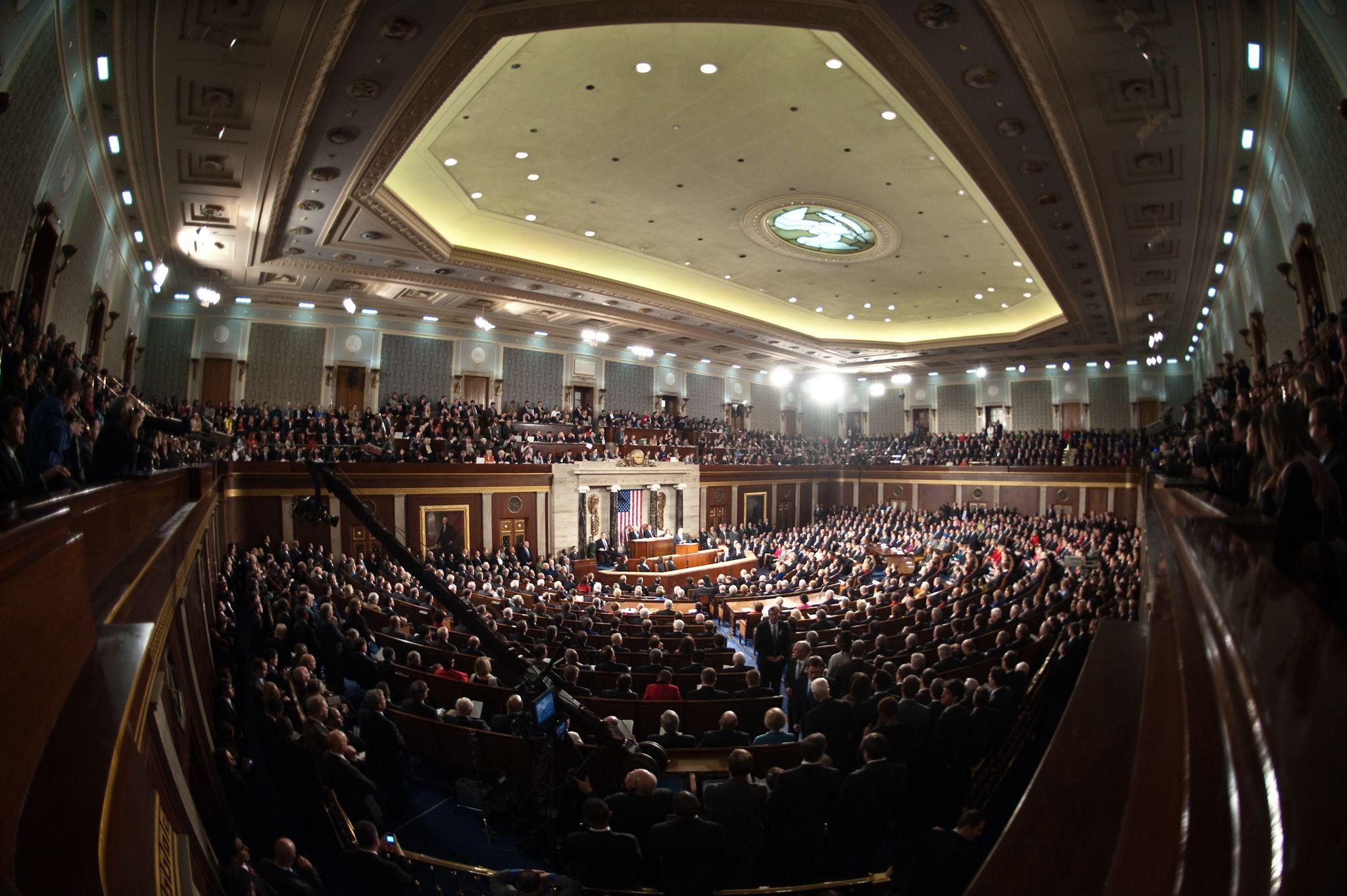
Congress, Disinformation, and the Cost to U.S. Strategy in Western Sahara
A Reading of the Western Sahara File
Recent efforts by a limited number of voices within the U.S. Congress to reframe the Western Sahara issue through a narrow security lens raise questions that go beyond the nature of the dispute itself and touch the core of democratic debate within one of the world’s most established legislative institutions. When serious allegations are advanced without credible institutional grounding, the problem lies not only in the substance of the claims, but in their direct impact on the quality of U.S. strategic decision-making and the credibility of public debate.
The suggestion of linking the Polisario Front to regional axes, or portraying it as a potential security threat to U.S. interests, without publicly available intelligence evidence or reports issued by competent institutions, pushes the discussion into the realm of disinformation rather than rigorous analysis. The danger here does not stem from legitimate political disagreement, but from turning a central legislative institution into a channel for recycling pre-packaged narratives that serve short-term converging interests at the expense of facts and international law.
From an analytical perspective, this approach produces two clear negative outcomes. First, it misleads the American public and policymakers by embedding unverified narratives within a space that is supposed to be governed by precision, accountability, and evidentiary standards. Second, it contributes to the securitization of a dispute that the United Nations continues to classify as an unfinished process of decolonization—one governed by international law rather than counterterrorism frameworks.
This drift toward disinformation becomes particularly evident in the statements of certain members of Congress, including Joe Wilson, whose public characterizations of the Polisario Front oscillate between mutually exclusive accusations. At various times, the movement is portrayed as a Marxist or communist relic; at others, as a jihadist organization aligned with Iran and Hezbollah. These claims cannot logically coexist. Their alternation reflects not analytical rigor, but the recycling of lobbying narratives that shift according to political fashion rather than evidence. Such contradictions undermine the seriousness of congressional debate and reveal how easily a legislative platform can be transformed into a conduit for unverified propaganda. The privilege of holding office in the U.S. Congress carries with it a responsibility to uphold factual consistency and institutional credibility—responsibilities that are eroded when demonstrably false or unsupported allegations are repeated in the absence of corroborating intelligence or authoritative assessments.
In this context, it is essential to recall that the core Sahrawi demand has never been military or ideological. It has been, and remains, a simple and clear request: the application of international law through a single democratic exercise—one day only—during which the Sahrawi people are allowed to freely choose and determine their political future. This demand is not an exception within the international system; it is the standard mechanism through which decolonization processes have been completed in dozens of cases worldwide.
Alongside this legal dimension, there is a cultural and political aspect that is often overlooked in superficial security-driven readings. The Sahrawi people, shaped by a long historical experience, understand the meaning of entrapment in regional conflicts and are acutely aware of the heavy human and political costs borne by societies when just causes are transformed into instruments of others’ wars. For this reason, Sahrawis have consistently refrained from entering military alliances or regional blocs that would draw their cause into proxy confrontations.
This collective restraint is not a sign of weakness, but a strategic choice. Avoiding entanglement in cross-border conflict networks reflects a deliberate effort to preserve the legal and political character of the Sahrawi struggle, and to protect it from the blowback that has so often destroyed legitimate causes once they were absorbed into regional power struggles.
Conversely, Sahrawi political and social culture has long been characterized by openness toward other peoples and states, and by a willingness to engage constructively in the search for a durable solution that takes regional stability and legitimate international interests into account. This dimension is becoming increasingly relevant amid current geopolitical shifts, particularly as global demand rises for critical minerals essential to renewable energy supply chains and advanced technologies.
Yet no rational approach to these resources can be sustainable or ethical if it bypasses the Sahrawi people themselves. International law is unambiguous on this matter: there can be no lasting legitimacy for economic exploitation in a Non-Self-Governing Territory without the consent of its people. Any approach that ignores this principle—after decades of patience and resilience in the face of a political reality imposed by centralized power in Rabat, supported diplomatically by Paris and reinforced by renewed political alignment from Madrid—will not generate stability, but rather accumulate the conditions for future tension and uncertainty.
Debate within the U.S. Congress on Western Sahara is both legitimate and necessary. What weakens the value of this debate, however, is allowing it to slide into pre-framed security narratives that lack institutional verification and are presented to the American public as established facts. The historical strength of Congress has rested on evidence-based deliberation, not on the circulation of unexamined claims.
A legislative institution of this weight would be better served by reinforcing an approach grounded in balanced hearings, reliance on Congressional Research Service assessments, and consistent support for the UN-led process as the only legal framework capable of producing a sustainable outcome.
Ultimately, the question is not whether Congress has the right to debate Western Sahara—it unquestionably does—but whether disinformation within an institution of this democratic stature truly serves Washington’s long-term strategic interests. An approach grounded in facts, international law, and respect for peoples’ right to self-determination remains the only path capable of fostering regional stability, safeguarding U.S. credibility, and preserving the integrity of Congress as a forum for informed democratic deliberation rather than a vehicle for recycled propaganda.