
Seeking honest leadership, and new narratives.
Do Americans Really Understand the Gaza War?
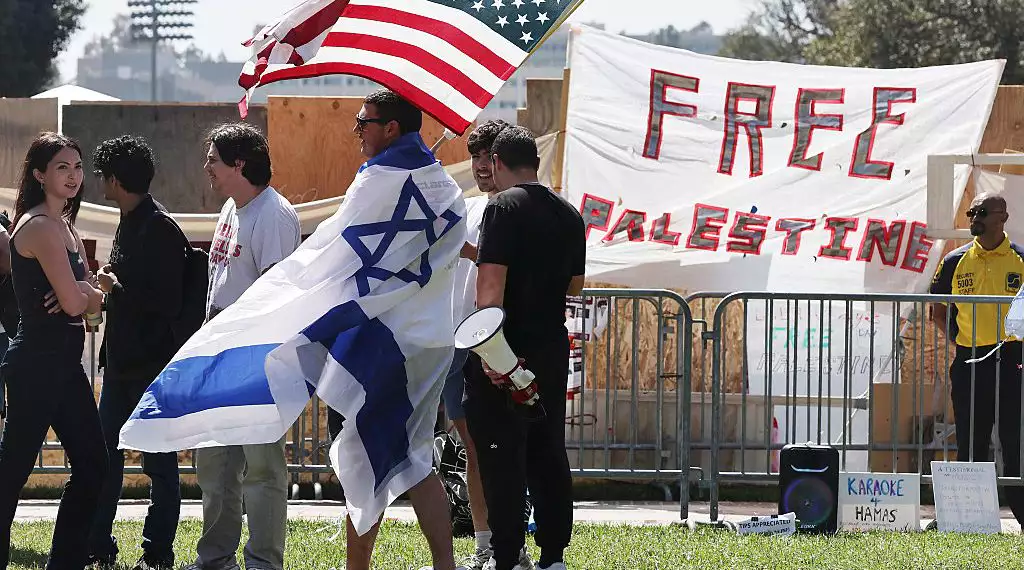
Since October 7th, the war in Gaza has dominated headlines across the globe. In the United States, it has become a flashpoint for college protests, political infighting, and deep social polarization. Yet one question lingers uncomfortably beneath the surface:
Do Americans really understand what’s happening in Gaza—or why it matters?
The short answer is: not really. And for both Jews and Israelis, that’s a problem.
The War in Soundbites
Most Americans view the Gaza war through headlines, social media clips, or protest slogans. These sources boil the war down to binaries—oppressor vs. oppressed, freedom fighter vs. occupier. Complex historical context is often reduced to viral videos. Strategy is flattened into soundbites. Morality is weaponized.
Much of this is due to the nature of American media, where coverage is filtered through domestic cultural and political lenses. The Gaza war is often interpreted less as a Middle Eastern conflict and more as a mirror reflecting America’s own domestic struggles: racial injustice, imperialism, police brutality, and colonialism. Israel becomes the stand-in for power and privilege; Palestinians for resistance and marginalization.
This lens might resonate emotionally, but it distorts reality.
What’s Missing from the Conversation?
The Role of Hamas
Many Americans do not grasp what Hamas is or how it governs Gaza. Founded as an Islamist terrorist organization, Hamas is not a political party or resistance group. According to the Hamas covenant, which is published online for anyone to read, it is dedicated to the destruction of Israel and the Jewish people. Hamas has embedded itself within civilian infrastructure in Gaza (and the West Bank) — using hospitals, schools, and residential areas to launch attacks. Its brutal massacre on October 7th was meticulously planned. Yet in many U.S. debates, the role of Hamas is either downplayed or ignored.
Israel’s Dilemma
Israel faces a morally impossible battlefield. How does a democracy fight a terror group that hides behind civilians without causing civilian casualties? The death toll in Gaza is tragic, but few Americans understand that Israel is forced to engage in urban warfare with terrorists embedded in densely populated areas. It’s easier to portray Israel as indiscriminate than to confront the hellish complexity of Hamas terrorists hiding behind civilians.
The Regional Picture
The American press continues to ignore the role of Iran, which uses the Gaza war to destabilize the region through Hamas, Hezbollah, and other proxies. The current conflict is not a bilateral struggle between Israel and Arabs in Gaza. It is a part of a broader struggle for regional dominance. American politicians often invoke “peace” between Israel and Palestine as a standalone goal, without acknowledging that peace is not possible while groups like Hamas hold power and refuse to disarm.
The Forgotten History
Israel left Gaza in 2005, a fact the media often ignores. Many protestors are shocked when this fact confronts them. Israel supported the Oslo Accords. It accepted a two-state framework. For decades, Israel has made offers for peace and withdrawal. A narrative that assumes Israel has made no concessions and that the conflict exists solely because of Israeli policies runs roughshod over these facts.
Why the Misunderstanding Matters
This American misunderstanding of the Gaza war has real-world consequences. It shapes public opinion, influences foreign policy, and legitimizes rising antisemitism. College campuses become battlegrounds not for ideas, but for ideological purity tests. Social media influencers and celebrities wield enormous sway without factual knowledge or understanding the basics of Middle Eastern history or geopolitics.
As a result, facts are negotiable, and outrage outpaces understanding in the public square.
A Path Forward: From Emotion to Education
To move forward, Americans must make a conscious effort to educate themselves—not just on the headlines of today, but on the history, politics, and actors involved. That means:
Listening to multiple perspectives, including those of Israelis, Palestinians, and diaspora Jews and Arabs.
Reading beyond social media, diving into longform journalism, books, and expert commentary.
Demanding more from our media and holding platforms accountable for amplifying misinformation and inflammatory content.
Most of all, it means recognizing that if we want to play a role in advocating peace, we must first understand the facts underpinning the war.
More Than a Hashtag
The Gaza war is not just a trending topic. It is a human tragedy, a geopolitical crisis, and a moral test. If Americans want to weigh in—and many do—they owe it to themselves and to the people caught in this conflict to go deeper than headlines and hashtags.
Because understanding is the first step toward real change.
Related Topics
Related Posts