Do I expect or deserve a miracle?
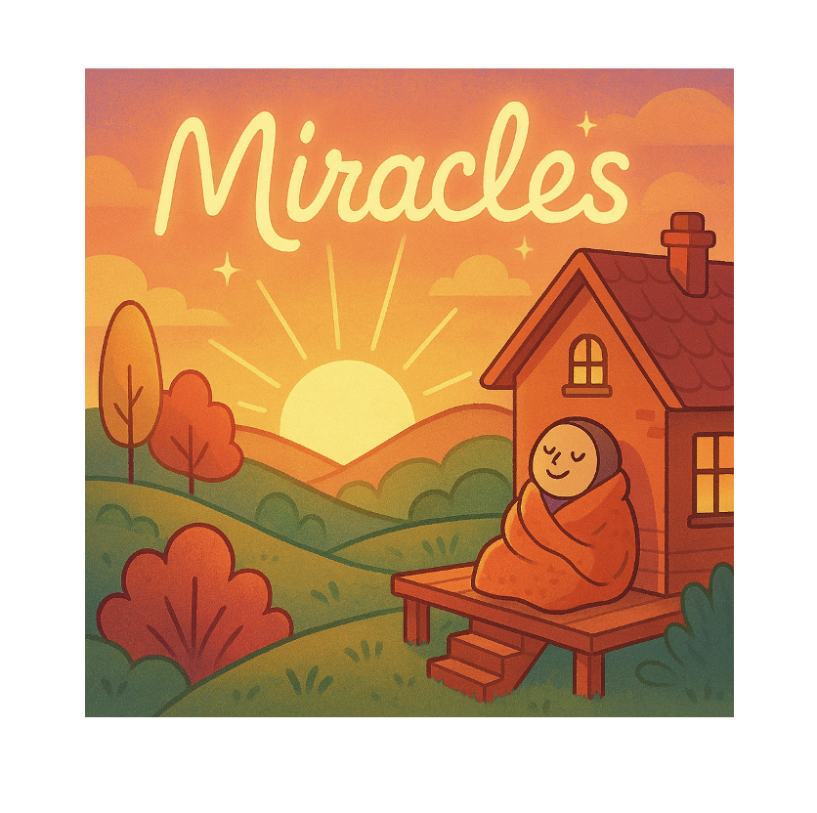
Faith has always been important for me, but looking down the barrel of a terminal disease it is incredible how it becomes much more of a focus.
Should I expect or deserve a miracle? One of those questions I think about when everyone tells me to have hope it will happen. Having received, and continuing to receive, so much good in my life despite a terminal diagnosis at 50, the honest answer is no. This doesn’t weaken my faith; if anything, it strengthens it. Entitlement to a miracle feels misplaced. I’m grateful for what I’ve had and what remains. It’s a perspective shared by many, but one that’s rarely voiced from within similar circumstances.
I don’t often share personal history, but it’s essential here. (Those bored of me doing so, please skip a couple of paragraphs :-)) I’m a husband of 28 years and father to three: a high school daughter, another in university soon to be married, and a son who recently completed his army service in a special forces unit. They are everything. Watching them become thoughtful, capable adults—far better than me—is an unquantifiable blessing, a clear sign that I’ve been more than generously blessed.
My life has been great, marked by meaning despite its challenges. I hope for more healthy years, but I’m not actively praying or asking to overturn nature with a miracle. That might seem strange, even uncomfortable. Instead, I focus on what I can do now: preparing, supporting my family, living with dignity and faith.
Five and a half years ago, symptoms emerged that are almost certainly Progressive Supranuclear Palsy (PSP). Initially mistaken for Parkinson’s, PSP is more aggressive. My body is slowing: vision fades, falls become more frequent, walking is harder, necessitating a wheelchair for outside mobility, and choking is increasingly common. Thankfully, my mind remains clear, a gift I don’t take for granted, knowing it won’t last forever.
Science offers a grim prognosis (an understatement, to say the least). But I’ve been religious since age 11, and statistics have never told the full story. G-d determines when a person’s time comes. This past Rosh Hashanah, leading Mussaf as a part-time Chazzan took immense effort, but I stood and sang the words:
“Who will live? And who will die? Who at the appointed time? And who before the appointed time?”
I’ve spoken those words countless times, but this year, they resonated deeply. They’re not mere liturgy—they’re truth.
Therefore, my focus is on actively fighting the progression: through prayer, exercise, mindset, and preparation – not just paperwork and finances, but ensuring my family’s emotional readiness. I’m not counting on a miraculous ‘Silver Bullet,’ nor do I want them clinging to hope for a miracle that may not come. I want them to live fully, to not be broken should I pass away (please G-d, not soon). Some might see this as surrender, but it is absolutely not. It is trust. I trust that G-d knows what He’s doing, even when I don’t.
I don’t understand G-d’s calculations – why some live long while others don’t, why good people suffer seemingly untouched. But I trust that He does. That’s sufficient. I need not know the reasons, only live with faith and do my part.
Deep gratitude fills me. Like Jacob in Genesis 32:11:
“I have become small from all the kindness and truth You have shown Your servant.”
I’m of course not comparing myself to Jacob, but I connect with that sentiment. Rav Hirsch articulates it well:
“I do not pray or plead for more. I have already received so much from You that I cannot possibly fulfill my obligation of gratitude.”
That encapsulates my feeling. I’m not entitled. I’ve received abundantly, and strive to respond with humility and responsibility. I won’t ask for more when I haven’t repaid what I’ve already received. Truthfully, from a non-divine perspective, I’m deeply in debt on that account.
Faith isn’t expecting miracles; it’s recognizing G-d in the everyday. Rav Hirsch writes that true faith isn’t assuming G-d will suspend nature for us. It’s living wisely within His creation, recognizing the divine in the ordinary, not just the dramatic.
The Gemara in Shabbat 32a states:
“One should never put himself in danger and say, ‘A miracle will save me.’ Perhaps the miracle will not come. And even if it does, one’s merits are reduced.”
This isn’t a rejection of miracles, but a reminder to act responsibly, trusting without demanding. It’s a call to live with faith, not fantasy.
My prayers are for continuity. For the past two years, my focus has been on the blessing “release those captive,” and thankfully, those kept alive have been released from captivity. If I had spiritual ‘miracle’ currency to spend, I’d use it for my family’s well-being, for the unity and safety of Am Yisrael, and for peace globally. For myself, I lean on prayer including for example: daily morning blessings, now resonating with fresh meaning:
- “Who gives sight to the blind” as my vision dims,
- “Who raises those bowed down” as I struggle to avoid falling,
- “Who provides for all my needs” since retiring six months ago—earlier than planned, but with new perspective,
- “Who makes firm the steps of man” as I walk more slowly,
- “Who gives strength to the weary” as I fight for the strength to keep fighting.
I don’t anticipate a miracle cure. Jewish tradition advises against praying for miracles, fearing weakened faith if they don’t occur, precisely when faith is most crucial. I believe G-d is capable of infinite miracles, without diminishing anyone else. Should one occur, I’d accept it gratefully (an understatement, again). But I don’t presume for a second that I deserve it. That’s not the faith I choose to live by.
My religious practice hasn’t always been perfect, but my faith is solid, and I’m working on it. I share this partially for myself, because few write from this vantage point. Most reflections on illness and faith originate from rabbis or professionals. This is simply my voice. If it resonates, I’m glad. If not, that’s okay too.
I endeavor to face what lies ahead with honesty, gratitude, and faith. Not because I deserve more, but to honor what I’ve already received.