Do Not Forget What We Have
We are teaching contempt for the courtroom and the ballot and the free page —
and calling it conscience.
During the past few weeks, I have found myself reading article after article, watching the election returns come in from New York, listening to friends — Jewish and gentile alike — and feeling something I have not felt before. I have spent much of my adult life believing that democracies eventually correct themselves. Lately I have become less certain.
Had you asked me ten years ago whether I would ever write an essay like this one, I suspect I would have laughed. I have not arrived at these thoughts eagerly. Quite the opposite.
So what frightens me is not because I believe every critic of Israel is an antisemite; I don’t. It is not because I imagine democracies are incapable of monstrous things; they are entirely capable.
All of this sent me back in time, to a day I have never quite forgotten. On May 4, 1970, National Guardsmen opened fire on a crowd of American students at Kent State University, and four of them died. It remains one of the darkest days in modern American memory.
But Kent State is not evidence that democracy failed. It is evidence of what democracy is. The shootings became a national scandal precisely because Americans were free to investigate them, to denounce them, to write the books and make the films, to sue their own government, to hold hearings, to sing the song the whole country sang, and to teach their children what had happened on that lawn. More than fifty years later, we still know the name. That is not an accident. It is what a free society does with its own sins: it drags them into the light.
The question has never been whether democracies commit terrible wrongs. The question is what is allowed to happen next — that is where the moral equivalence collapses.
Set Kent State beside Tiananmen Square, where the world still does not know how many were killed, because the same power that crushed them owns the only record. Set it beside North Korea, where a man’s words can condemn his children and his parents after him. Beside Iran, where each new wave of protest is answered with the prison and the rope, on a scale no one is permitted to count. Beside Russia, where the journalist and the dissident have a way of falling out of windows. In these places the dead disappear twice — first their bodies, then their names.
And set it beside Hamas. When Hamas seized Gaza in 2007, it threw its rivals from rooftops, executed them, jailed them, made them vanish. There has been no meaningful election since, no independent court, no free press, no protection for anyone who dissents. The same can be said, in varying shades, across much of Israel’s neighborhood — Egypt, Syria, Iran, a Lebanon still struggling out from under Hezbollah’s shadow. I have walked in several of those countries. I have spoken to journalists in some, dissidents in others, ordinary people who lowered their voices before answering simple political questions. And the Palestinian people themselves have never been granted the independent judges, the real elections, the constitutional protections, the argumentative press, the public accountability that Israelis treat as ordinary.
That ought to matter. It matters to me. Yet increasingly, it seems not to matter at all.
Instead, I listen to influential Western voices describe Israel as something uniquely, exceptionally evil. The new mayor of New York, Zohran Mamdani, calls what Israel is doing genocide, backs the boycott movement, would end American military aid, and recently stood at a rally and called AIPAC “monsters.” Bernie Sanders, who for years resisted the word genocide on the ground that it is a legal term, has now crossed it: in September 2025 he became the first United States senator to say it, and he has forced vote after vote to halt the weapons. Claire Valdez, newly the Democratic nominee for a New York congressional seat, runs on boycott, on apartheid, on genocide. Darializa Avila Chevalier, who just defeated a sitting congressman in his own primary, calls Israel’s war in Gaza a genocide, questions whether the state should exist at all, and, when she was pressed to condemn Hamas, declined to. Even Brad Lander — a Jewish progressive who still affirms Israel’s right to exist — has folded himself into a coalition in which hostility to Israel has quietly become the price of admission.
Take each of them on their own and every statement can be defended. That is the trick of it. Heard together, they compose something larger than any one of them may have intended — a slow and total transformation. Genocide. Apartheid. Settler colonialism. Ethnic cleansing. Occupation. Boycott. Word by word, a noisy, quarrelsome democracy — with its independent courts, its opposition parties, its investigative reporters, its elections and its endless, furious self-criticism — is remade into the single villain of our moral imagination.
I find myself asking: compared with what? Compared with Iran? Compared with Hamas? Compared with Egypt? Compared with Hezbollah?
Perhaps I am overreacting. I sincerely hope I am. But that is what frightens me — because a democracy is no longer being measured against the dictatorships that surround it. It is being measured against perfection.
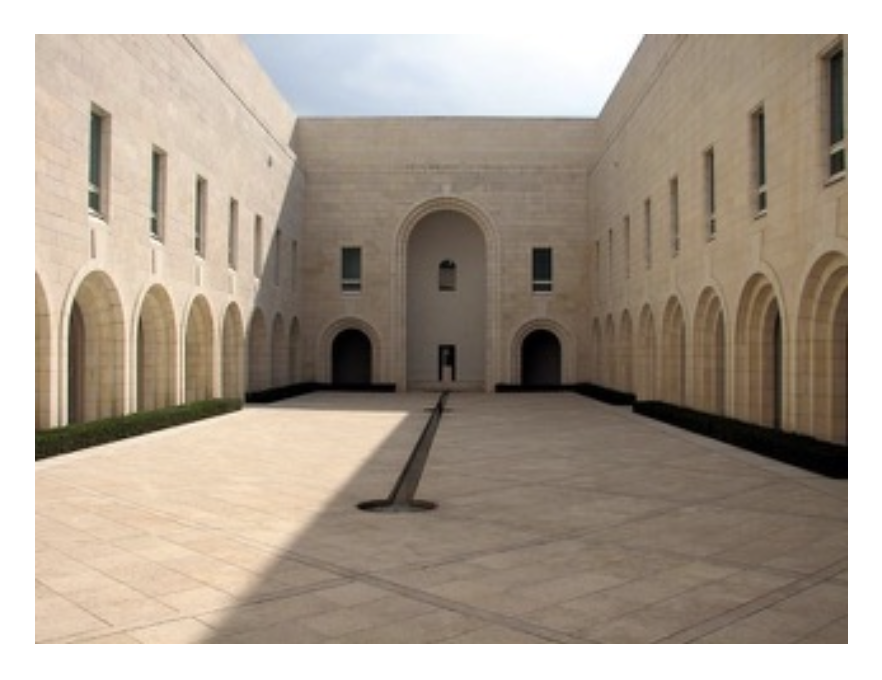
Consider what that perfection is being asked to ignore. Israel’s Supreme Court strikes down its own government’s decisions. Israeli newspapers savage Israeli prime ministers by breakfast. Israelis pour into the streets in the hundreds of thousands. Arab parties sit in the Knesset. Prime ministers have been investigated, tried, convicted, and sent to prison. Now ask yourself, honestly: can you picture a single one of those things in Hamas’s Gaza? In Iran? In post-Assad Syria? Anywhere across much of that region?
None of this excuses what Israel gets wrong—not the military failures, not the civilian dead, not the bad governments its own voters have elected. It only reminds us of something dangerously easy to forget: A democracy is not defined by its innocence. It is defined by its accountability.
What I fear is that we are raising a generation to despise the very institutions that make self-correction possible, while romanticizing movements and regimes that contain none of them. We are teaching contempt for the courtroom and the ballot and the free page — and calling it conscience.
I am a gentile. I cannot tell Jews how afraid they ought to be. But I think I understand why so many are. History has rarely begun with hatred announcing itself by name. It begins more quietly — by denying distinctions, by forgetting context, by demanding perfection of one small democracy while forgiving tyranny everywhere around it.
The older I become, the less interested I am in ideological victories. I simply want Jews, Palestinians, Swedes, Americans — everyone — to live in societies where governments can be criticized without fear, where elections matter, where judges are independent, where newspapers investigate, and where losing power does not mean losing your life. Those institutions are rare. Once they are gone, they are very, very difficult to recover.
That is why I am frightened. Not just for Israel but for all of us.