Learning The Lessons Of History
Does Exile Erase Jewish Roots in Israel?
When someone tells Israeli Jews to “go back to Poland,” the argument makes two claims. The first is that the Jewish people are foreign to the land of Israel because many Jewish families came from Europe. The second is that their descendants have no legitimate claim to belong there. The first confuses the country a family emigrated from with the place where a people originated. The second assumes that where someone’s grandparents lived determines where that person belongs today.
The land of Israel is an ancestral homeland of the Jewish people. Jewish peoplehood took shape in ancient Israel and Judah, and historians document Jewish life in ancient Judea and Galilee. They also document Jewish communities in Jerusalem and Safed in the fourteenth century, long before modern Zionism. These records show that the Jewish connection to the land predates by centuries the modern immigration that helped establish the State of Israel in 1948.
Many Jews who immigrated to what became Israel did come from Europe. Generations of Jews built lives in Poland, and the culture they developed there is part of Jewish history. Other Jewish families trace their more recent history through Iraq, Morocco and elsewhere in the Middle East and North Africa. When someone says “go back to Poland,” they turn the migration history of some Jewish families into the origin story of an entire people. Even for families with deep roots in Poland, there is a difference between where their grandparents lived and where Jewish peoplehood began.
If a Palestinian living in Toronto has a child here, does that child’s Canadian birthplace mean they can no longer be Palestinian? Of course not. The child can be both Canadian and Palestinian. The same principle applies to a Jewish child born in Poland or Hungary. A child can belong to the country where they grow up and inherit a connection to the homeland of their people.
That connection can change across generations. A grandparent might remember a town in Palestine as the place where they went to school and knew their neighbours. A grandchild in Toronto might know the same town through family stories. The grandchild inherits a connection to the place, even though their experience of it is different. My connection to Jerusalem is different again. It comes through belonging to the Jewish people and learning our history. The historical record shows where that connection began. The Toronto example helps explain how a connection can endure when families make their lives elsewhere.
I understand this through my mother. She was born Marica Katz in Kisvárda, Hungary, in 1926. She was seventeen when she was deported to Auschwitz. In 1947, she came to Canada, where she became Mary Claman and raised a family. Hungary was where she grew up. Canada was where she rebuilt her life. She was Jewish in both places, and the Jewish history she passed on to me began long before our family lived in either country.
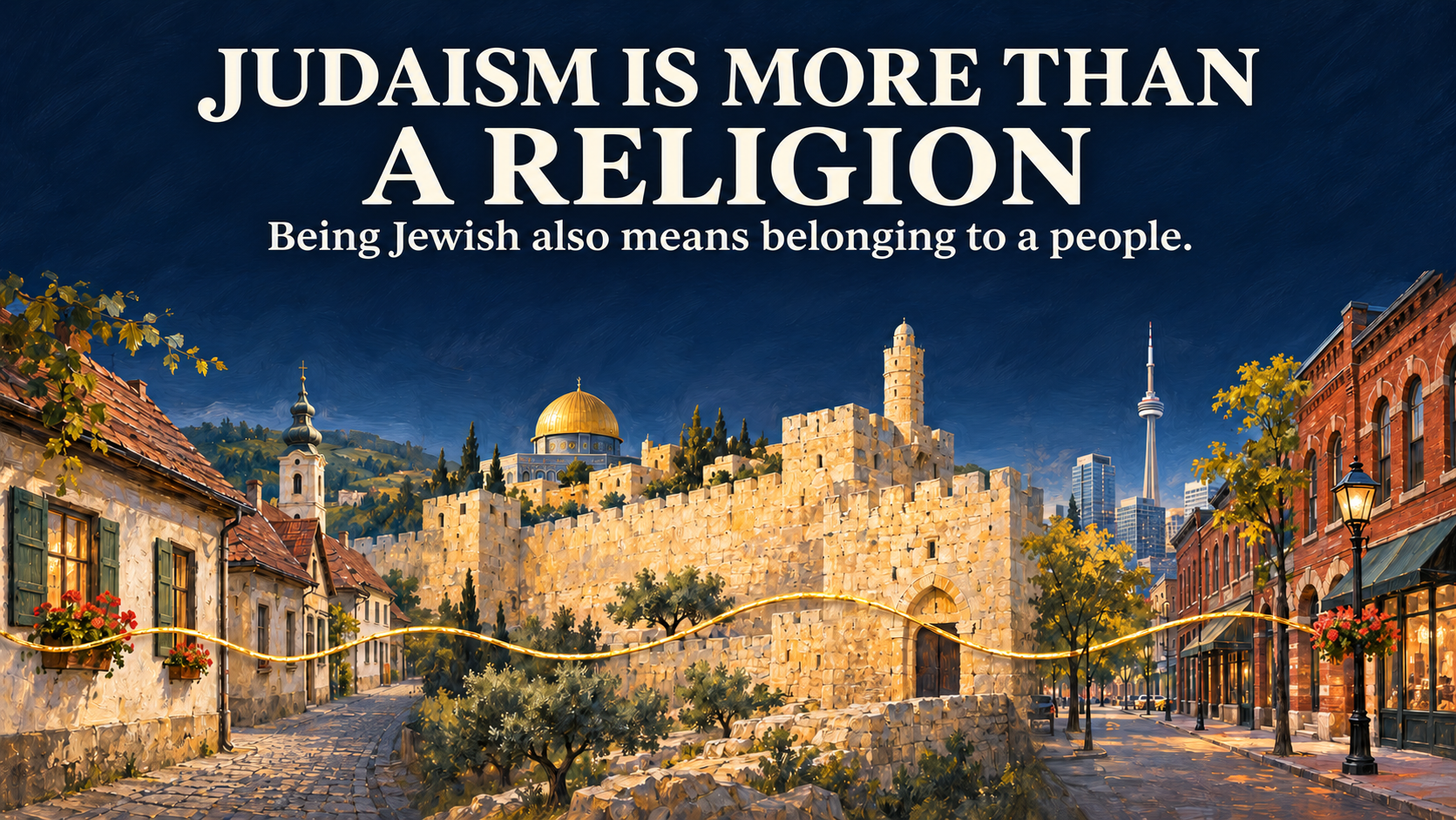
That inheritance is part of what I mean when I call myself a secular Jew. Judaism is a religion, and being Jewish also means belonging to a people. A Jew who becomes an atheist is still a Jew. For the Jewish people, Jerusalem matters because it has a place in the history of the people I belong to, whatever I believe about God.
This is where the blanket claim that Jews are foreign colonizers goes wrong. A debate about a particular settlement project, government policy or period of Zionist history concerns specific actions and their consequences. Calling the Jewish people foreign to the land makes a much broader claim. It treats modern immigration as the beginning of Jewish ties to the land, despite the record of ancient Jewish life and communities that long predated modern Zionism. When that claim becomes a demand that Jews leave because they are Jews, it becomes antisemitic. Where an Israeli’s grandparents lived gives no one grounds to demand that they leave the country they call home.
Palestinians have deep roots in the land, too. Their family histories and experiences of displacement deserve the same care I ask others to bring to my mother’s story. Recognizing the ties of both peoples gives us a basis for debating borders, settlements, sovereignty and rights. If we agree that both peoples belong, the question becomes how their rights and safety can be secured in the same land.
If someone had asked my mother where she came from, Hungary would have been an honest answer. If they had asked where she made her life after the war, she would have said Canada. Both answers tell me something about her. To understand where the Jewish people came from, I have to go further back. Centuries of Jewish life in the diaspora are part of that longer history. They did not make Jews strangers to the land where our people took shape.
About the author
Brian Claman is a Canadian nonfiction author, security risk management consultant and the son of a Hungarian Jewish Holocaust survivor. He is the author of When Is It Too Late? Holocaust Lessons on Risk, Decision Making, and the Failure to Act. His forthcoming book, The Illusion of Safety: Jewish Life After October 7 and the Warning Signs We Cannot Ignore, examines Jewish life in Canada and confidence in Canadian institutions after October 7. His completed manuscript, Before She Was a Number: A Son’s Journey to Discover the Mother He Thought He Knew, traces his mother’s life in Hungary, her survival of the Holocaust and the life she rebuilt in Canada.
Authors website; brianclaman.com
Related Topics
Related Posts