Director of Diplomacy, Representative to UN Geneva & UNESCO, World Jewish Congress
Leveraging the Power of Sports to Fight Antisemitism
With the rise of antisemitism around the world, Jewish organizations are always on the lookout for new partners, with whom they can join forces to fight this scourge. The World Jewish Congress (WJC) has been successfully working with the sporting community during the last years, to broaden our allies and leverage the power of sports to spread messages of coexistence and anti-discrimination.
 For that reason, the World Jewish Congress launched the Together Through Sport initiative, together with its partner whatmatters that fights antisemitism and discrimination in and through sport and keeps Holocaust remembrance alive in the sporting world. Its roots go back to 2018, when WJC partnered with Chelsea FC on Red Card for Hate, a fund backing projects against antisemitism, racism and discrimination, including the youth competition Pitch for Hope, and brought Chelsea into #WeRemember, WJC’s annual Holocaust remembrance campaign around January 27. Borussia Dortmund, Bayern Munich and other clubs followed, with players, matchday commemorations and stadium messages reaching millions of fans.
WJC formally launched Together Through Sport in March 2023 on the sidelines of the Human Rights Council in Geneva, and since then it has worked with clubs, federations, fan groups, historians and educators, as well as with international organizations such as UNESCO, OHCHR, the European Commission and the OSCE/ODIHR. It has organized high-level events in Berlin, Bratislava, Paris and New York. During the UK Presidency of the International Holocaust Remembrance Alliance in 2024, a dedicated publication was launched on “The IHRA Working Definition of Antisemitism A Guide to Implementation for Sporting Institutions,” to present them with existing resources and good practice on the issue.
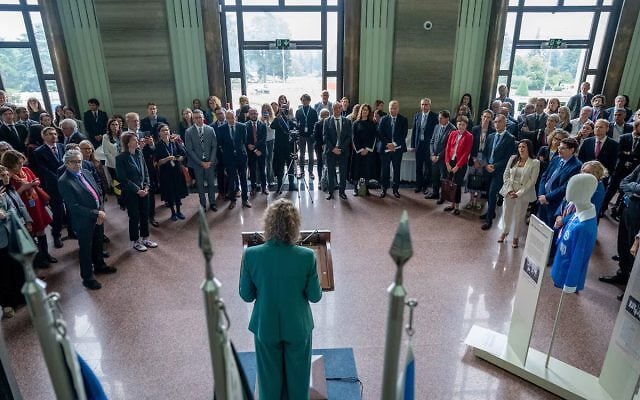
A special exhibition has also been developed, Sports. Crowds. Power. which traces how the Nazi regime used football to promote its ideology, persecute Jewish athletes and clubs, and marginalize those who did not conform. It has already been shown in Berlin, during the 2024 Euro championship, in Geneva, at the Palais des Nations and the Stade de Genève, in 2025 with the support of 33 UN Member States and six international organizations, and it will open at the UNESCO Headquarters in Paris on April 6, 2027 (Total duration 2-15 April 2027, with free entry and open to the public).
Last week, the WJC hosted an online webinar with whatmatters, “When History Enters the Stadium: The Jewish Experience in Football from the Holocaust to the Modern Era”, where historian Andreas Kahrs presented Football Players in Focus, his project with the Arolsen Archives and Borussia Dortmund, and Pavel Brunssen discussed his book The Making of “Jew Clubs.”
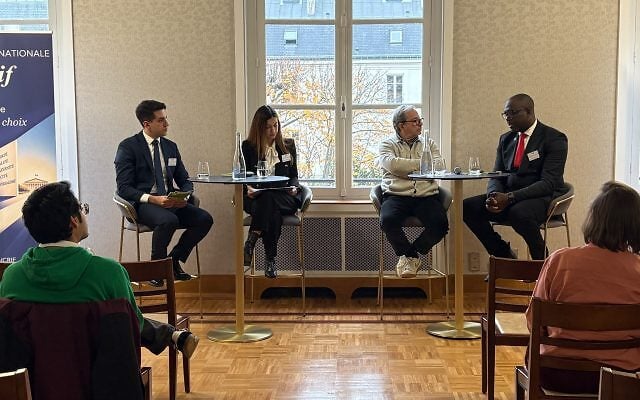
In addition, this week, the WJC spoke at the Convention of Crif in Paris, the French Jewish Community umbrella organization, on a dedicated panel on this topic, moderated by Pierre Fraidenraich alongside Fabiana De Freitas Buroz of UNESCO and Olympic medalist Pascal Gentil. The message is clear: antisemitism in and around sport, especially in fan culture, needs to be named and measured on its own, and kept on the agenda of sporting bodies.

That message is backed by UNESCO itself. Its new report, “Leveraging education in sport to challenge antisemitism,” published in October with Leeds Beckett University, finds that work against antisemitism in sport lags far behind work against racism, homophobia or sexism, and it recommends Together Through Sport as “a structure of experiential learning in football and antisemitism, leading remembrance experiences with sporting clubs, supporters and staff.”
The WJC together with its partners is building more sustained programing on countering antisemitism in and through sports, with international roundtables, regional and national conferences as well as lectures, trainings and workshops.
Related Topics
Related Posts