


Dominique Vidal Interview | Alexandre Gilbert #290
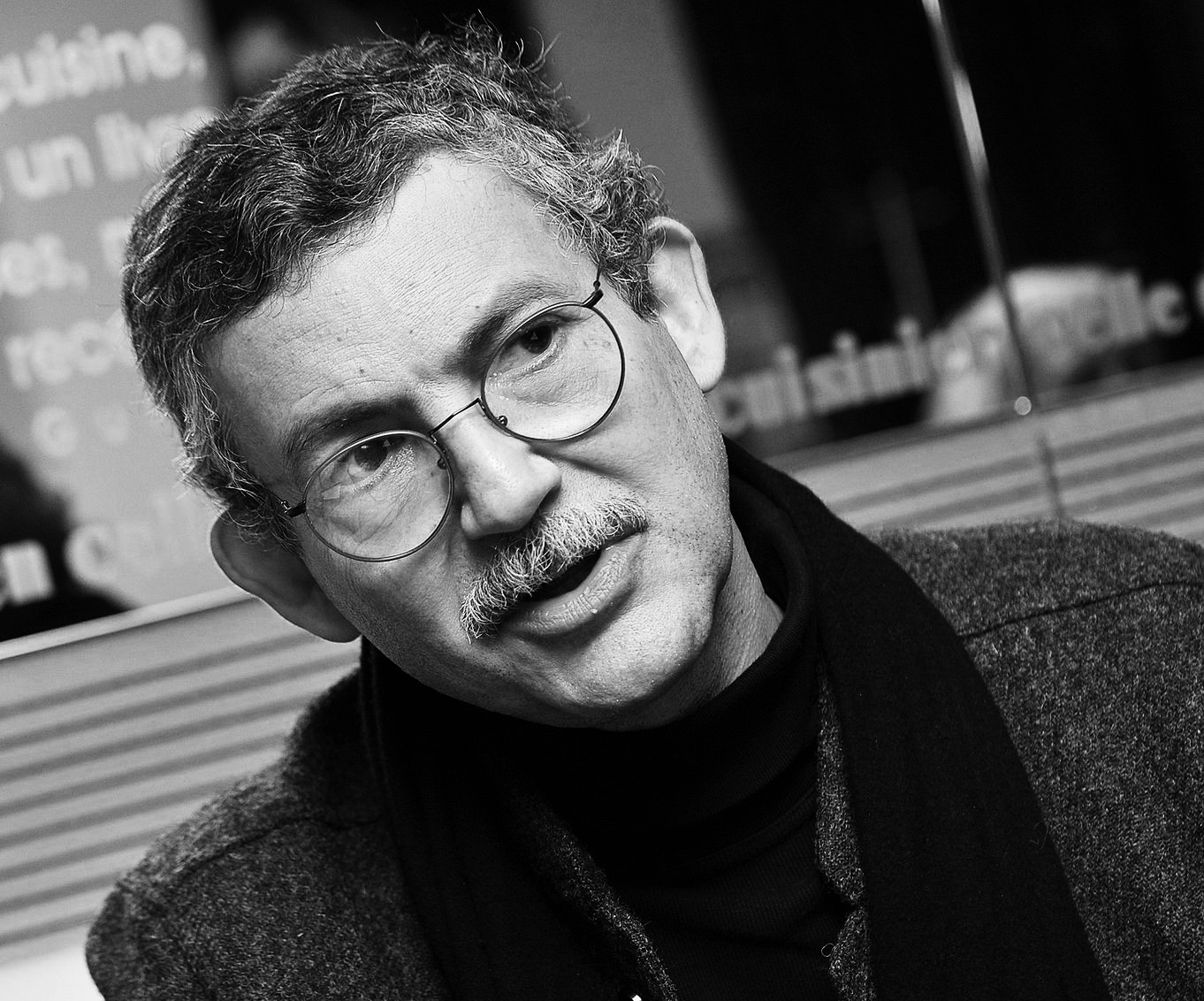
Dominique Vidal, journalist for Le Monde diplomatique and historian, author of books on the Israeli-Palestinian conflict, published with Leïla Shahid, former general delegate of Palestine in France and Michel Warschawski, Suburbs, Middle-East and us ; The State of the World 2021. The Middle East and the World (La Découverte) and Palestine-Israël, Une histoire visuelle (Seuil, 2024).
We’re looking at four recent events: Macron’s Palestine recognition proposal, Netanyahu’s threat to take Gaza City, Smotrich’s escalation over the E1 zone, and the Trump-Putin meeting, which seems to overshadow—or deliberately divert attention from—all of this. What’s your take??
Dominique Vidal : What’s clear is that one part of the situation—the Israeli government—is relatively analyzable. Since October 7, there are clear markers: the immediate and understandable response to that date, which has since escalated considerably. This escalation, in my view, was predictable from the formation of the coalition government including supremacist parties. At the time, many regarded the November 1, 2022, election results and the new government as anecdotal, with little expressed concern about their potential actions. I had voiced not just concerns, but real fear that this trajectory would lead to unending escalation—and indeed, that escalation is now evident.
Curiously, Israeli leaders, particularly Benjamin Netanyahu, often frame antisemitic flare-ups abroad as consequences of October 7. To me, the link is less direct: if the conflict triggers incidents in places like France, it is not October 7 itself, but the nature of Israel’s response. I was horrified by the policies Netanyahu has pursued—not merely under pressure from Ben-Gvir and Smotrich, as claimed, but because they largely share the same vision. This has created a cycle of relentless escalation.
Your examples illustrate this well: Smotrich reigniting the E1 issue—a longstanding point of international contention—and Netanyahu’s letter to Macron, which, from what I understand, was defamatory and even released publicly before reaching the Élysée. One cannot fault Macron for attempting to maintain peaceful relations, and he has actively challenged anti-Zionism as a form of contemporary antisemitism.
From my perspective as a Jew, Israel’s actions since October 7 project a deeply troubling image of Jews. This affects public perception in multiple ways: it bolsters support for Macron’s opposition in some circles, while fueling violent, crude antisemitism elsewhere. Cases such as vandalized cars are minor compared with more severe incidents, including in France.
I am profoundly shocked by what Netanyahu has sanctioned or executed—massacres of civilians, misleading casualty figures, and the promotion of actions unacceptable in any conflict. Reports from UN colleagues suggest the actual number of Palestinian casualties far exceeds the official figures. Even more horrifying are videos of Israeli soldiers abusing prisoners, including torture and sexual assault—acts the international community cannot ignore.
Regarding Palestine’s recognition, it’s significant—what do you expect from it?
Dominique Vidal : I believe Macron’s shift, if I’m not mistaken, occurred following his Cairo trip. It was during the meetings there that he decided to take a more proactive approach in French diplomacy. For now, what we can rely on is what has been reported: a significant dynamic is underway. According to contacts I have in New York, roughly 150 countries now recognize the State of Palestine. Following Macron’s initiative, about eleven or twelve have joined in, including two G7 countries—Canada and the United Kingdom. For the others, the alignments are largely confirmed, with some uncertainty regarding Belgium, given the surprising statement by its king a few days ago.
Spain’s recognition of Palestine nearly handed Netanyahu a blank check for his counteroffensive. Could Macron’s move have created an opening for the Gaza and E1 escalation?
Dominique Vidal : For now, those who genuinely fear the Israeli leadership—those with a clear perspective—are concerned about a wave of recognition. With roughly 150 countries already recognizing Palestine, plus the 11 or 12 following Macron’s lead, the total approaches 161—very close to the 193 full or partial UN General Assembly members. I don’t see this as a direct response.
Meanwhile, Netanyahu’s actions follow a clear logic: political, ideological, and personal. If my analysis of Israel is accurate, a growing wave of recognition could force him to halt the ongoing offensive, which in the short or medium term would jeopardize both his position and his trial.
Do you believe Macron will recognize Palestine by mid-September and force Netanyahu to yield?
Dominique Vidal : I’m not suggesting it will be simple, but at its core, the issue is Palestinian representation. This is not a new question, though it has been complicated by the Israeli right’s strategy of bolstering and fueling Hamas until recently. Macron’s proposal—and that of the countries following his lead—offers a clear approach: we must engage with the Palestinians and ensure their representation is both dignified and as robust as possible.
I was struck by the skepticism—even distrust—among longtime advocates. Hassan’s reaction was strong, Villepin’s measured, Caron simply said, “It’s about time.” Why didn’t such a historic decision spark more enthusiasm?
Dominique Vidal : Whether you followed me or not, it’s irrelevant. In the first three months, I encountered significant challenges with some of the most loyal friends of the Palestinians, particularly in characterizing what happened on October 7. The issue was not in the details or phrasing; the principle is simple: if you do not condemn Hamas’s terrorist actions in an unequivocal way, you cannot claim to defend the same principles for the Palestinians. Either the principle applies universally, or it applies to none.
This struck me very clearly in debates immediately after October 7, both on TV and radio, where some participants refused to use the term “terrorist act”—nothing satisfied them. And that was just in public; privately, pro-Palestinian movements also struggled to take a clear position. Over time, the situation has improved, but at the outset, the response was astonishing—almost celebratory. I will not delve further, as we are not responsible for events on the ground. Still, there was a clear refusal to classify the October 7 attacks as terrorism—not Hamas as an organization, but the acts themselves.
But why aren’t millions celebrating Macron’s recognition of Palestine? What’s behind the silence?
Dominique Vidal : That’s exactly what I was trying to convey. From the moment some of the long-standing advocates for Palestinian state recognition—as a cornerstone for negotiation and peace—refused to condemn October 7, they undermined their own credibility. Not all, fortunately, but enough to matter. I know very well who said what, and I pay attention. Some were afraid of appearing critical of the Palestinians. Fine—but the acts themselves are intolerable in any country, on either side. Those who lost credibility can no longer serve as spokespeople for the recognition of a future Palestinian state.
We’ll have to see how this evolves by September, as much remains speculative. For example, the France-Palestine Solidarity association did not clearly condemn October 7, whereas groups like Urgence Palestine and BDS France took a different stance—and that matters.
I am particularly struck by how unique the French case is. Elsewhere—whether in the developing world, Arab countries, or Western states—massive demonstrations and shifts in public opinion, confirmed by polls and state policies on Palestinian recognition, have been clearly visible. There has been a significant wave globally. Take the United States, for instance: for the first time in recent months, especially the past few weeks, a majority of Americans—including Jewish organizations, Democrats, and other political and social groups—have condemned Israeli policy. This is a striking phenomenon, and it contrasts sharply with France.
France’s situation is not unprecedented, but it is specific. It reflects both the local experience of Middle Eastern realities and domestic political challenges, particularly the absence of a united left capable of rallying effectively rather than merely correlating with events. This is one factor that helps explain the dynamic you’re describing.
Is pro-Palestinian hatred for Macron outweighing opposition to Israel, keeping figures like Hassan or even Villepin from backing this?
Dominique Vidal : You’re right—obviously, the president’s popularity has struggled to recover since the events following the dissolution of the National Assembly. But this is not merely a matter of statements or posturing; it reflects a deeper political challenge. France faces the risk, in the coming years, of tipping toward the populist far right. This dynamic is closely connected to the current situation. As you’ve likely noticed, the National Rally has positioned itself with remarkable ease as one of the most pro-Israeli parties, which further complicates the landscape.
What’s expected in the next two weeks, and where do figures like Leila Shahid, Charles Enderlin, and Elias Sanbar stand?
Dominique Vidal : I wouldn’t put everyone in the same category. Take Enderlin, for example: he writes daily on Facebook, posts statements, and remains very active. He is in high demand—it’s something of a comeback. Then there’s Elias Sanbar, who has always operated at a different pace. To my knowledge, he is writing a book; previously, he published a small volume with Gallimard Tract. That is his current contribution.
Leila Shahid is in a different position. Since her voluntary retirement, she is less at ease engaging publicly. It is complicated, once you retire, to continue speaking on behalf of others. In France, the Palestinian mission has an ambassador who leads official representation, and Shahid likely does not want to appear out of step with that official voice.
Similar dynamic: Palestinian Authority figures are overshadowed by Hamas, just as advocates are by Macron’s move—real competition.
Dominique Vidal : Yes, but in general, in politics, I tend to take people at their word. With Macron, I observed something shift during his Cairo trip. I don’t know exactly what happened—I wasn’t there, and I no longer attend such trips. But he returned noticeably changed. Anyone who saw him at the inauguration of the Gaza Treasures exhibition at the Institut du Monde Arabe had the same impression: something had shaken him.
Perhaps Macron has many flaws, but one of his notable qualities is his ability to adapt when he deems it necessary. This is evident not only in foreign affairs but also in domestic matters, like New Caledonia and potentially Guyana—he is not idle. He was a student of Ricoeur, a memorialist, almost a “president of memory,” with the exception of Algeria, where he still struggles, though he long ago recognized the crime against humanity.
I agree that Macron often exhibits theatrical elements, but in this case, his actions reflect a return to the more traditional style of French presidential politics since de Gaulle. If I may be a bit cheeky, he originates from the third-left tradition—the Rocardians, Hollande, Ségolène Royal, Moscovici, Marisol Touraine—who in the early 1980s supported the establishment of a Palestinian state, echoing Mitterrand’s Knesset speech.
In short, Macron was moved by what he witnessed in Cairo and acted accordingly, following a trajectory similar—though not identical—to the path of de Gaulle, Pompidou, Giscard, Mitterrand, and Chirac. This represents a clear departure from the policies of Sarkozy and Hollande, the latter of whom famously maintained an unqualified pro-Israel stance: “I’ll always have a field of love for Israel and its leaders.”