Don’t Let Antisemitism Rewrite Your Judaism
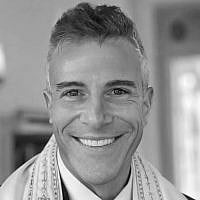
This is the Rosh HaShanah 5787 second morning sermon, “Don’t Let Antisemitism Rewrite Your Judaism,” delivered by Rabbi Steven Goldstein at The Reform Temple of Rockland in Nyack, New York on September 13, 2026.
Allow me to begin this morning by breaking down the fourth wall between the rabbi and congregation. On Friday night, the first night of Rosh HaShanah, I gave as full-throttled a sermon in defense of Zionism and the State of Israel as any other rabbi in America would ever give – especially at a synagogue as liberal as ours.
I was gratified by your response, given what it said about RTR and our future. Not a day goes by where I don’t hear how many Jews yearn for a shul like ours, a Reform synagogue that reflects their practice and embodies their support of the Israel they love.
Our best is yet to come.
My sermon this morning continues Friday night’s, as we now turn to Antisemitism and its confluence with anti-Zionism, infusing some historical perspective.
Fasten your seatbelts as we ride our time machine together.
When we think about the history of Antisemitism, we usually think about its most obvious forms.
We remember where Judaism was outlawed and Jews were barred from public life.
We remember the Holocaust, the pogroms, the violence, the expulsions, the quotas and the terrorism.
And we remember our vow of Never Again, and thank God we’ll never let the world forget it.
But another form of Antisemitism is tougher to recognize and permeates the world today. I’m talking about Antisemitism through the redefinition of Judaism by outsiders.
They seek to define which parts of Judaism are enlightened and which are backward…
which Jewish beliefs are harmless and which are dangerous…
and which expressions of Jewish identity deserve acceptance and which deserve exclusion.
Antisemitism by redefinition stands in direct opposition to what the Torah teaches us about ourselves. On the second morning of Rosh Hashanah at RTR, we read the Creation story from Genesis, where we learn our identity and sacred worth were defined by the Divine alone.
That is what outsiders try to do through Antisemitism by redefinition, and I today I ask you to reject their pen.
A half hour south of where we sit, Zohran Mamdani claimed Israel is merely “an idea, not a place,” attempting to sever our people from our ancestral homeland.
In Michigan, Abdul El-Sayed, running for the U.S. Senate, declared outright Israel is separate from Judaism, and even said on CNN about those who disagree: “I call b.s.”
That is staggering Antisemitism. An outsider looked at three thousand years of Jewish covenant, culture and liturgy, and said: “I call b.s.”
Well, mishpacha, it’s time for us to call b.s. on anyone who thinks they get to redefine Judaism for Jews.
We are talking about the same oppression of Jews in which regimes in ancient times demanded our redefinition.
When Jews lived under the Seleucid Greeks, King Antiochus tolerated Jewish practice so long as we renounced Shabbat and installed a statue of Zeus inside our Temple in Jerusalem.
Centuries later under Medieval Islamic rule, the caliphates tolerated Jewish practice so long as we agreed never to engage in public prayer, or display religious items, or sound the shofar, or build our synagogues tall, or repair synagogues in disrepair, or participate in court proceedings, and ride mules and donkeys instead of stately horses. The list goes on and on.
In fact, Islamic rulers created a term for us Jews who agreed to a measure of state protection – frankly, the permission to survive – in exchange for allowing our religion to be defined. They called us dhimmis – an Arabic term meaning a protected yet subordinate caste.
To be sure, dhimmis included both Jews and Christians who agreed to practice their religions as dictated by outsiders.
To leaders in America attempting to do the same to us today, I declare right here and now:
We are not your dhimmis.
Some say what we Jews endured under the caliphates, attempts at redefinition, was a heck of a lot better than the Antisemitism inflicted on us by medieval Christian rulers.
Christian oppression was generally about outlawing Judaism — demanding conversion, expelling communities, and declaring our covenant superseded.
To call one better than the other creates a bankrupt comfort. Outlawing Judaism destroys the body; redefining Judaism hollows out the soul. Both are designed to make authentic Jewish life impossible.
And listen up. Even though Jews agreed to be dhimmis under Muslim rule, the caliphates forced us to wear badges publicly to set us apart as inferior human beings.
Sound familiar? The Nazis looked at history. And they didn’t have to look back far. My friends, this may astound you, but the Ottoman Empire did not start de-classifying Jews as an inferior caste until the Tanzimat reforms of 1839 and 1856.
Yes, the same Ottoman Empire that occupied Eretz Yisrael. And we’re supposed to return to that?
No way, no how.
If any of you believe I am speaking out of animus, you have the wrong rabbi. Before my rabbinate, I was a civil rights lawyer, and fought the Muslim refugee ban in the first Trump Administration to national headlines.
But solidarity is a two-way street. Respecting another community means letting that community define itself.
Our oppressors would respond that they are letting the Jewish community define itself. They point to a tiny, non-representative fringe – anti-Israel groups like Jewish Voice for Peace, hardly a Jewish voice for peace – and elevate them as proof that their anti-Zionism aligns with “true” Jewish values.
Let me be clear. No community is monolithic, including us. God knows we Jews love to disagree.
But according to the American Jewish Committee, 85% of American Jews say it is important for the United States to continue to support Israel. Yet time and again, those seeking to redefine Judaism ignore the overwhelming majority of the Jewish community.
Painfully, Jewish history teaches us that those who have sought to control Jewish life have almost always managed to find some Jews willing to lend them Jewish cover.
Not so many years ago, the old Soviet Union created the Yevsektsiya – the state-run Jewish bureau designed to strip away Hebrew and Zionism, reducing thousands of years of identity to approved folklore. It was the Jewish Voice for Peace of its time.
Different centuries, different vocabulary, but the same recurring impulse: Judaism by redefinition on someone else’s terms.
I know this pattern because I have lived it.
I was a professor at Rutgers who taught law and social justice. My students knew I was the founder of Garden State Equality. They knew I had spent much of my career fighting for civil rights. They saw me wear a kippah and most knew I was studying to become a rabbi.
Without realizing it, many of them completed the story about what kind of Jew I was before I said a single word.
I taught during a period in which anti-Israel demonstrations were emerging as a feature of campus life. Student protesters built checkpoints that attempted to stop people they believed were Zionists from entering certain areas. The protesters questioned those who appeared to be Jewish.
But not me. No one stopped the professor in the kippah – and believe me, I wore a kippah the size of a UFO. To paraphrase Patrick Swayze from “Dirty Dancing,” no one puts this Jew in a corner.
After a while I realized something unsettling: I was being waved through because they thought they knew which kind of Jew I was.
A civil rights leader who taught social justice? Surely I belonged to the good Jews.
Now let’s be honest: Even us Jews make assumptions about other Jews all the time. But for us, living as a minority, it’s a search for instant connection.
I can’t help but think of one of my favorite episodes of Curb Your Enthusiasm.
Larry David hires a divorce lawyer named Berg. Naturally, Larry’s Jewish radar goes off. The name is Berg! Not only that, but Berg has a shofar sitting right on his desk – it was actually a gift from a client. When Larry, on his birthday, walks into Berg’s office, Berg wishes him “Mazel tov!”
And here’s my favorite line: When Larry asked Berg if he were going to shul for the high holidays, Berg didn’t say he wasn’t Jewish. He said, like a knowing Jew, or so Larry thought, nah, I don’t go to shul on the high holidays.
Larry just loves his landsman lawyer. The divorce will turn out fine.
Then a friend tells Larry that she went to high school with Berg – a private school called St. Christopher’s.
Larry runs back to the law office in a panic, and Berg sets the record straight: “Larry, I’m not Jewish. I’m Swedish.”
Larry stares at him in horror and shouts: “I’ve got a Swede lawyer? She’s going to get everything!”
Larry relies on the classic Jewish desire to find one of our own – not so puzzling given the nonstop Antisemitism of the successive worlds in which we’ve lived. When we look for other Jews, it comes from our desire for peoplehood and shared community.
The danger arises when non-Jewish ideologues project their assumptions on us. They aren’t looking for family, unless searching in door-to-door terror. And they never adjust their thinking to the reality.
“Professor, you’re a civil rights leader and a Zionist?” students said. “My Jewish friends say that’s impossible.”
These students didn’t ask me, “What does Judaism teach that makes you who you are? They asked themselves, “Which Jews believe enough of what I believe?”
Disagreement is part of every religious tradition, and Judaism is built on argument. But for us, the argument must belong to the Jewish conversation – one that stretches from the Torah to the Talmud, from medieval commentators to modern thinkers, from our ancestors to us.
As Reform Jews, we don’t shy away from Jewish evolution. But that evolution must be guided by our own sacred covenant, not dictated by outside oppressors.
Others are welcome to learn from our conversation and even to disagree with it. But they do not get to replace it.
So how do we respond when Antisemitism comes for us through the redefinition of Judaism?
When others try to rewrite Judaism by telling us that loving our homeland excludes us from polite society, refuse the script!
When they try to rewrite Judaism by insisting we edit away our history to be accepted as enlightened, refuse the script!
When they try to rewrite Judaism by demanding that Jewish college students apologize for their identity, refuse the script!
When they try to rewrite Judaism by cherry-picking a fringe to declare which Jews count and which do not, refuse the script!
When they try to rewrite Judaism by reducing a three-thousand-year-old covenant to a mere political opinion, refuse the script!
When they try to rewrite Judaism by telling us that caring for civil rights and standing with Israel cannot live in the same Jewish soul, refuse the script!
When they try to rewrite Judaism by demanding we seek their outside permission to define who we are, spit it out, spew it out, and refuse that script!
The answer to the redefinition of Judaism is not to negotiate over who gets to hold the pen. The pen was never theirs.
On this birthday of the world, Genesis reminds us of who we are at our foundational roots: A holy people formed by God, carrying an unbroken covenant.
We are descendants of Abraham and Sarah.
We are the guardians of the Torah.
We are the survivors of empires.
And we are the voice of our own covenant.
Let’s hold on the legacy, hold on tight to each other, and never surrender to Antisemitism by redefinition.
Stay awake, my friends, and hold our ground.
This is our story, our story, our story!
Are we in this together? This is our story!
And the authors are only us.
Shana Tovah Umetuka, and Am Yisrael Chai.
Related Topics