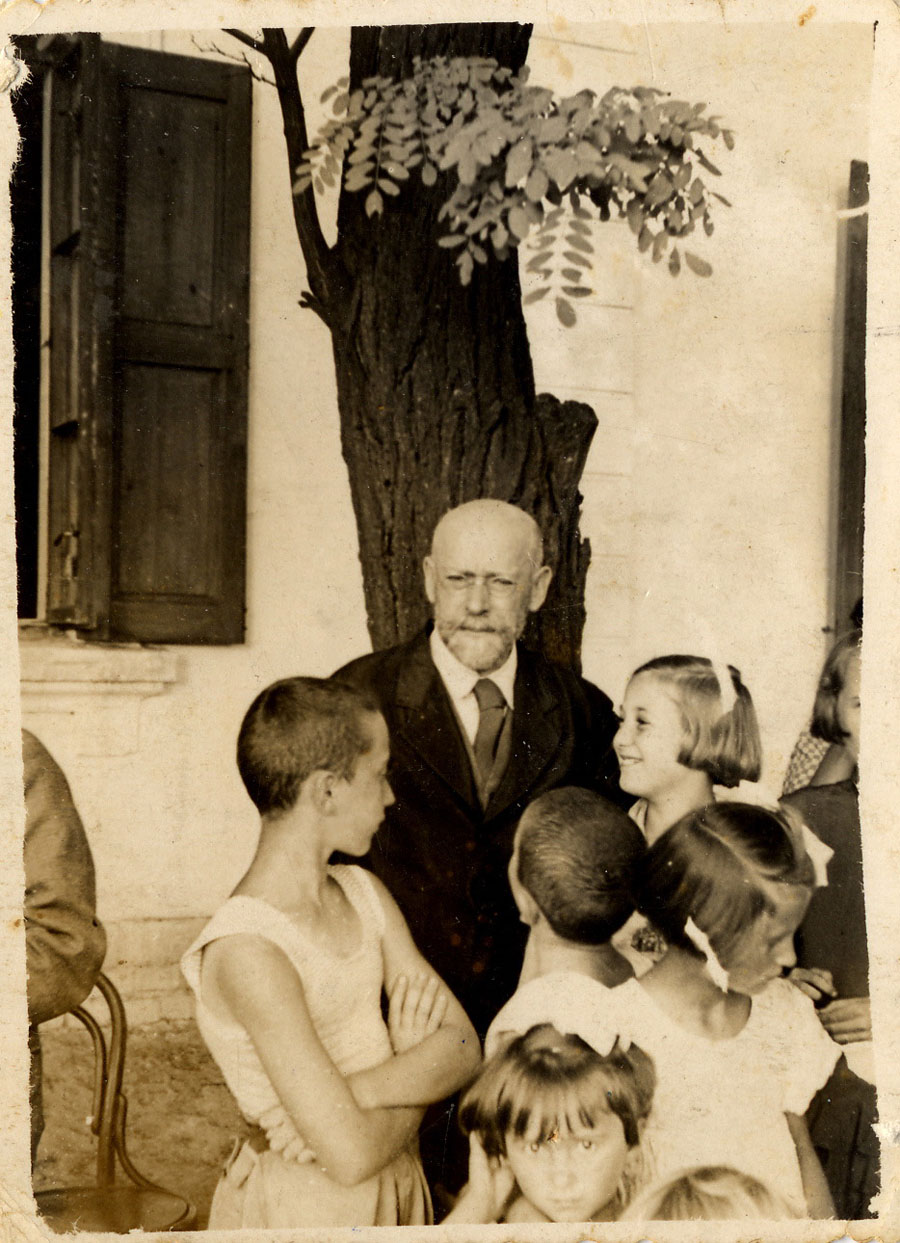
Dr Janusz Korczak and his Children. Photo (c) Kibbutz Lochamei Hagetaot, 2024
This Yom Hashoah U’Gevurah (the full name of this day is, “Holocaust and Heroes Memorial Day”) we mark 81 years since the Warsaw Ghetto uprising. The theme of resistance does not just refer to armed resistance, but also to spiritual resistance.
Eighty-two years ago this summer one of the Warsaw Ghetto’s most celebrated residents, Dr. Janusz Korczak, entered eternity. He died as he had lived, loving every child. Korczak (the pen-name of Henryk Goldzmit) was a Jewish-Polish internationally acclaimed champion of children’s rights. He was a physician, author, and pedagogue famous throughout Europe. Korczak developed an unorthodox, innovative yet highly effective philosophy of the child and child-rearing which were ahead of his time.
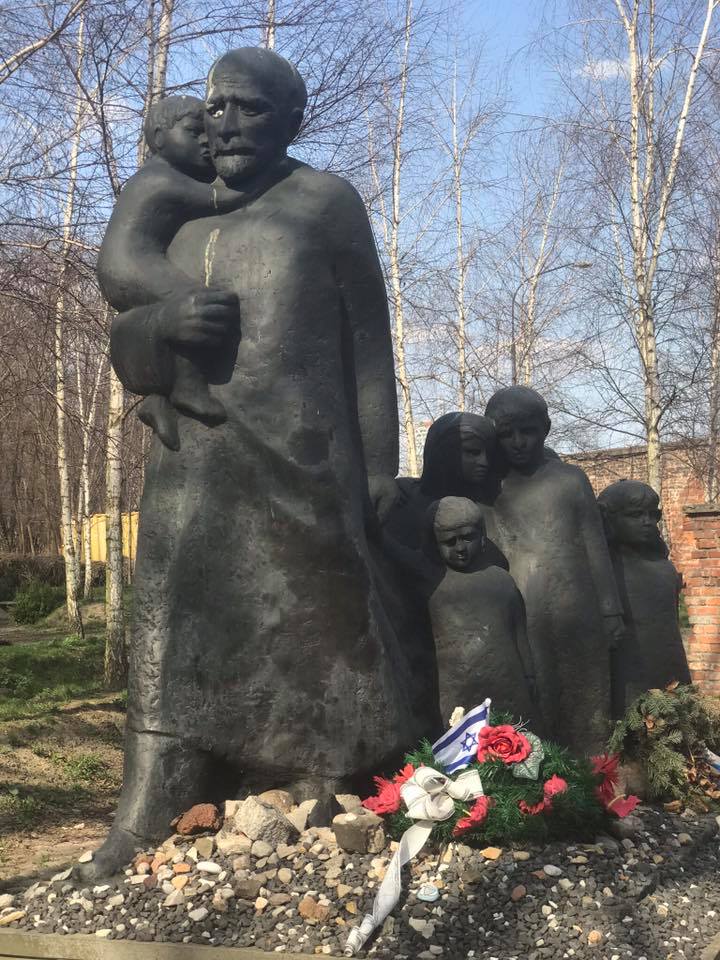
Korczak Memorial in the Warsaw Jewish Cemetery. Photo (c) T. Book, 2024
He lived and died for his children. As the director of an orphanage in the Warsaw Ghetto, he refused repeated offers of sanctuary and he, and his devoted staff, including his devoted assistant, Stefa Wilczyńska (1886-1942), steadfastly refused to leave his orphans, and marched with them to their certain death through the streets of the Ghetto when the inevitable deportation order arrived at the orphanage. He perished with his charges at the Treblinka death camp in August 1942, just after his 64th birthday. An eyewitness, Nahum Remba, recalled that terrible moment:
On the Umschlagplatz [the embarkation point], I suggested to Korczak that he come with me to the Judenrat and have them intercede with the Germans. He refused; he did not want to leave the children alone even for one minute. The loading of the boxcars to Treblinka began. Korczak led the procession. This was not an ordinary boarding of a train for a journey; it was a march of mute protest against barbarism. … The children marched in groups, with Korczak in the lead holding two little ones by their hands … Even the ghetto police stood at attention and saluted as they passed. Germans who witnessed the scene asked, ‘Wer ist dieser Mann?’ (Who is that man?). My vision became blurred as I cried and cried at our helplessness in the face of such evil.
In the Shiva house we do not talk about the death of the individual, but rather of the life. Korczak’s selflessness in death was a reflection of a life well lived for others. His life, deeds, and writings echo in eternity. Indeed his timeless philosophy on how to love and raise children is just as relevant today as it was then. Korczak recommended in his writings, which are still widely available today, an unprejudiced approach to children and highlighted the importance of care and attention, together with loving openness and attentiveness. He strongly believed that each child has a pre-existing personality, and he was convinced that one cannot “shape” ones child according to one’s own dreams and expectations. The fundamental foundation of Korczak’s approach is a child’s right to respect.
Korczak was a Zionist. He visited the Land of Israel twice, once in 1934 where he stayed in Kibbutz Ein Harod for six weeks and visited his former students, and once in 1936 where he travelled throughout the land. He was moved to both deep emotion and admiration for the Zionist enterprise by his visits and would have probably settled in the land, had it not meant abandoning his charges as the clouds of war were gathering across Europe.
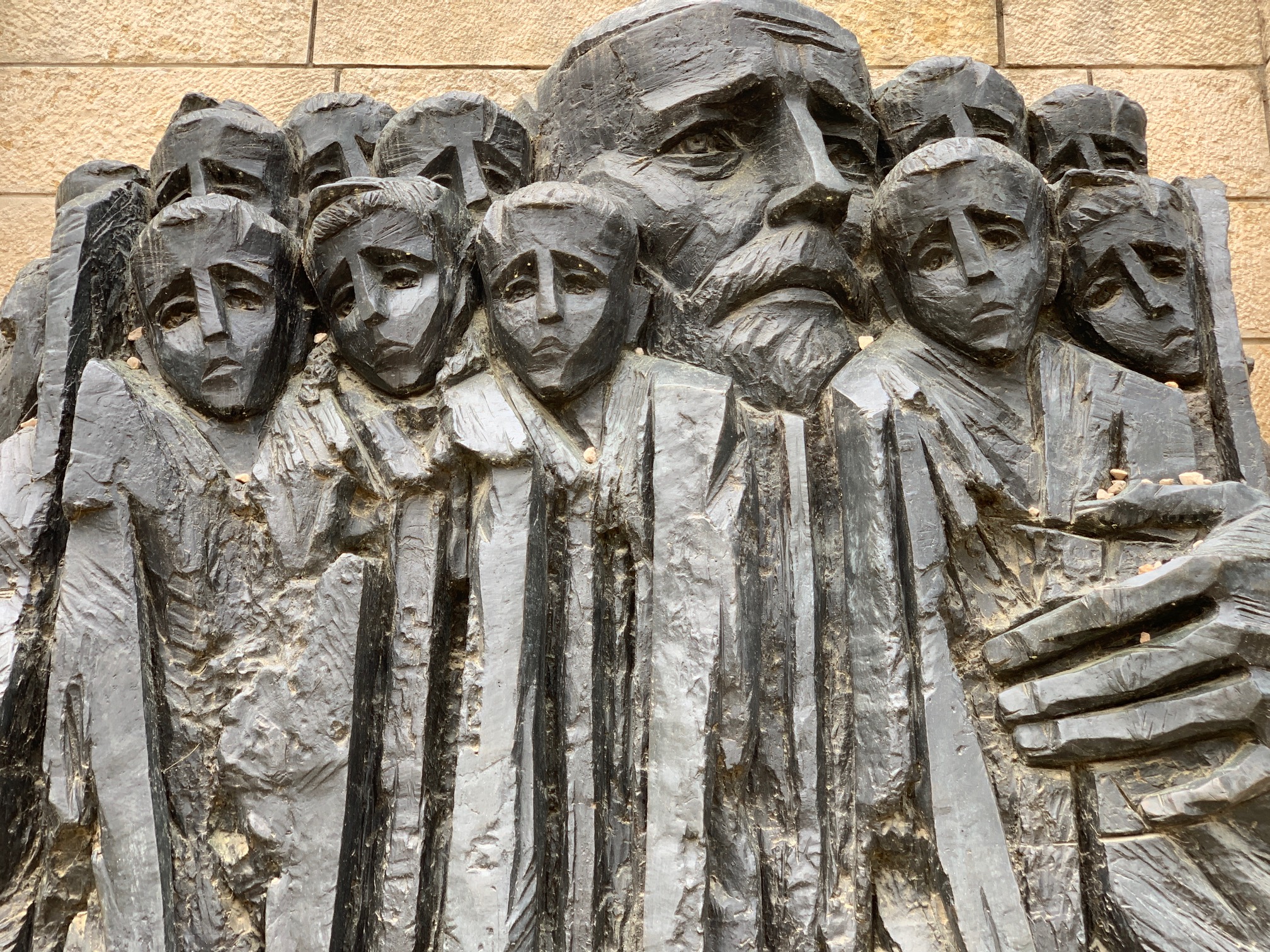
When I guide groups at the Yad Vashem Children’s Memorial, I point out the quote on the entrance from the Book of Proverbs, “The candle of God is the soul of man.” Korczak was a bright beacon in a sea of darkness, and it is only fitting that it is his statue hugging his children that greets the visitor at the exit of the Children’s Memorial amid the silent hills and grassy quietude of Jerusalem.
In Judaism we are taught that it does not matter how long one lives, but rather what one does with one’s life. Korczak’s whole life led up to his “moment of truth” that summer day in 1942, and he had the calm spirit to step forward himself and do what he felt and knew was right. He died as he lived, leading from the front, and selflessly sanctifying God’s name among the masses. He lived his life devoted to others in endless self-sacrifice. May we all continue to be inspired by this Jewish hero, and may “his” children, writings and good deeds be his eternity. Korczak wrote:
When I approach a child, I have two feelings. Affection for what he is today and respect for what he can become…Children are not the people of tomorrow, but are people today.Detail of the Korczak memorial statue at the Children’s Memorial at Yad Vashem, Jerusalem. Photo (c) T. Book, 2024
About the Author
Dr. Tuvia Book is an educator, author, licensed tour guide and longtime IDF reservist. He currently serves in a PALMAR medical combat search-and-rescue unit and is the author of Heroes of Palmar: How One IDF Unit Revolutionized Combat Medicine in Gaza (Gefen, 2026). He is also the author of For the Sake of Zion: A Curriculum of Israel Studies and the Jewish Journeys series (Koren).
www.booktuvia.com