


Echoes of catastrophe: Leadership after 9/11 and 10/7
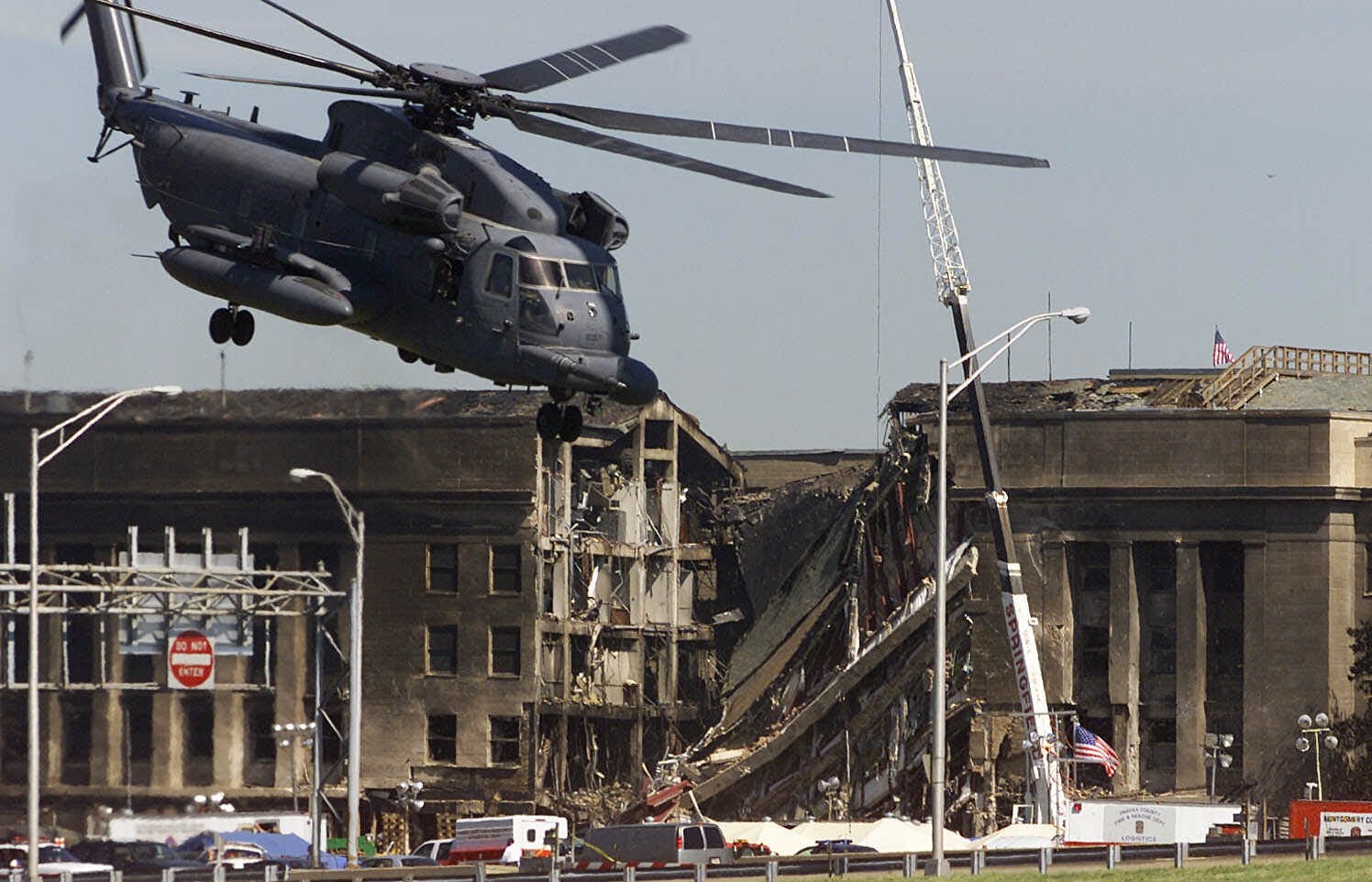
Every September 11, I return to the moment when a quiet morning inside the Pentagon was broken by the muffled boom of a hijacked plane slamming into the other side of the building. I was in room 4B926 of the Pentagon when terrorists struck the headquarters of the world’s most powerful military less than an hour after their accomplices took down the World Trade Center in New York.
Every year, I make sure to write something that spotlights the less-noticed attack of that day and tries to convey the fragile feeling of that sunny Tuesday morning, when we were still waiting for New York hospitals to be overwhelmed with survivors who never came, when we had a pretty good idea who had sent the terrorists but didn’t know for sure, and when we knew the US would have to strike back but could not envision the ensuing decades spent in the quagmires of Afghanistan and Iraq.
Two years ago, I reposted a memory from an earlier year. I was busy, I had long since moved to Israel, and there was a deadly earthquake in Morocco that day. Who was I to obsess over old wounds?
Then came October 7. Like September 11, it became a date that seemed to black out everything that came before. The earth was scorched, the rules had changed, and it had come out of nowhere like a bolt of lightning.
Except that it hadn’t. In both cases, there were clues that the intelligence services overlooked, from the 9/11 hijackers who went to flight school to learn how to take off in a plane, but not to land it, to the videos that Hamas posted of its fighters practicing to overrun a kibbutz.
In both cases, strategists and decision makers downplayed or ignored information that contradicted their own views. The Bush administration, which came into office in January 2001, was focused on big, global threats like China and ballistic missiles and didn’t want to hear about scruffy terrorists and their low-tech tools. The Netanyahu government famously paid Hamas for years as a way to undermine the Palestinian Authority.
Most importantly, both events have roots in policy decisions taken long before. There are many who believe that the conflicts between Israel and the Palestinians or the US and the terrorists stem from immutable historical forces or inborn characteristics. Conventional wisdom holds that they are the natural outcome of a clash of civilizations based on ancient hatreds.
This is a cop-out.
From the colonial division of the Middle East after World War I to the Arab rejection of the partition plan that would have created a Palestinian state alongside a Jewish state, from the US overthrow of Iran’s democratically elected government to its funding of the Taliban rebels in Afghanistan, a century’s worth of choices led us to where we are today.
After September 11, the US not only went into Afghanistan to destroy the perpetrators of the attack, but it also invaded Iraq, launched a global war on terror, allowed sweeping surveillance of American citizens and created the Department of Homeland Security. The results included the proliferation of Islamist terror groups in the Middle East and the weakening of civil liberties for citizens and immigrants alike in the United States.
Which begs the question: What will be the far-reaching consequences of the post-October 7 decisions by our leaders? Most obviously, every decision about whether to prioritize hostage negotiations or military conquest determines the fate of thousands of people. A decision to build settlements in Gaza or Syria would widen and prolong the war indefinitely. Even the decisions about how to respond to the global flood of antisemitism, which certainly feels like an ancient, implacable hatred that we cannot influence, have consequences. The Trump administration’s decision to implement its radical “antiwoke” agenda by stripping research funding and upending university operations in the name of protecting the Jews will only backfire.
So today, as I do every year, I want to remember the dead and salute the survivors of the September 11 attacks, especially 125 of my Pentagon colleagues and the 59 passengers and crew members of American Airlines Flight 77 who were killed that day.
Looking ahead to the dreadful second anniversary of October 7 that we will mark next month, I also want to implore the decision-makers to take care that they do not set us on the path to another date that will live in infamy.