
International Business Executive Living and Working in Israel
Election Day is upon us. May the best coalition you hate win
Staying sane through Israel's political chaos means accepting that no party is going to govern the way you want. Not even close
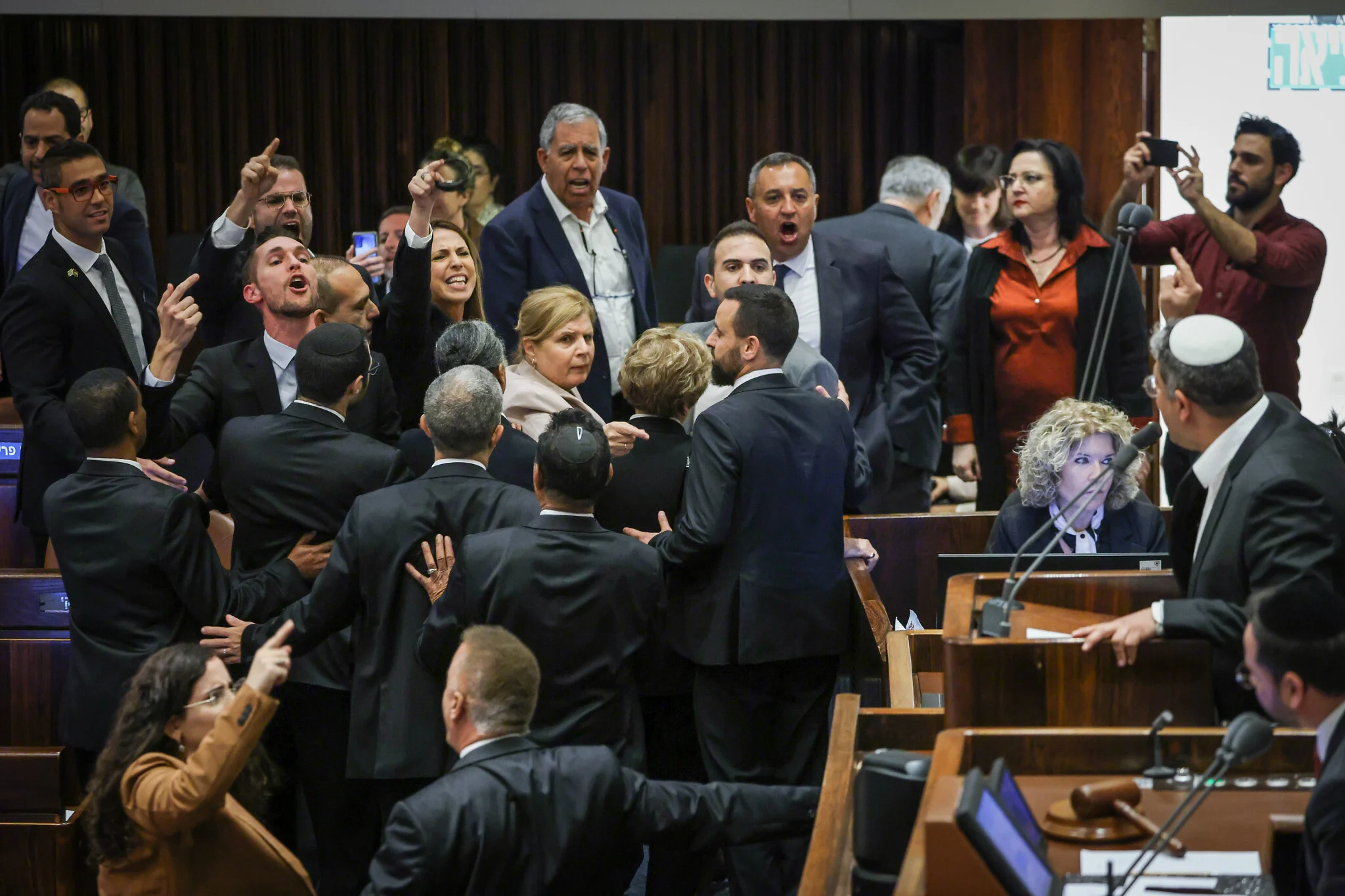
Minister Itamar Ben Gvir speaks from the podium, right, and opposition members shout at him from the side, in the Knesset, on March 22, 2023. (Noam Moskowitz/Knesset)
Election Day is here in Israel, and if you are reading this from somewhere outside the country, let me try to paint you a picture of what really goes on.
It does not feel like America’s Super Tuesday, with its two parties and some result by late in the evening.
It feels more like being handed a menu at a restaurant where there are 42 items, you can only order a combination platter, and the chef is going to decide which items actually end up on your table regardless of what you chose.
Welcome to Israeli democracy.
It is loud, it is genuine, full of questionable statements (they are politicians), and everyone and their pets discuss it, reference it, and live through it.
We have somewhere in the neighborhood of 34 parties running in the current election, which means that no single party can win outright. Not once, not ever.
As I tell my kids, anything is possible, but the probability is near zero.
What it means in practice is that the morning after the election, the real games begin.
Whoever wins the most seats then has to go around, hat in hand, or sword and dagger, and convince a collection of parties who disagree with each other on almost everything to sit together in a government and pretend, at least publicly, to have a shared agenda.
Bob Dylan’s Neighborhood Bully may have been written just about trying to build a coalition.
Every election cycle I watch people here, good people, reasonable people, people I like and call friends, get absolutely apeshit with passion about who to vote for in the election.
And then, two or three months later, they are watching their party shake hands with someone they spent the entire campaign calling a national embarrassment. Because someone has to lead, otherwise, we go through this again in 3-4 months, repeat all the above, and still no changes.
Back in the United States, your political anger is real, but it is at least somewhat organized. You pick a side, your side does things you like and things you hate, and you live with it until the next cycle.
Here, you might vote for a party because you care about the economy, then find out your party has agreed to give a coalition partner control over the education ministry, and now your kids are learning from a curriculum you would not have chosen in a million years. Welcome to Tuesday at The Knesset.
We live near an Air Force base, so we hear the jets quite often, every day and night.
I think about that a lot on election days. Security decisions, budget decisions, decisions about who commands what and where, all of it flows from coalition math that starts the morning after the votes are counted.
The people making those calls are going to be people who made deals with other people to get there. That is messed up.
Although usually the Minister of Defense is someone with a military background, the same definitely can’t be said for the Minister of Finance, Education, and some others. As we say in Hebrew, זה מה שיש: this is what we got.
The Israelis who stay sane through this process are the ones who have accepted something that sounds defeatist but is actually quite mature.
No party is going to govern the way you want.
Not even close.
The party you vote for is going to do things you find embarrassing, because in order to govern at all, they have to make someone else happy at your expense. The only question is which compromises you can live with and which ones you can’t. Not that you really have much choice in the matter.
There is a phrase people use, behaving with rosh gadol (literally big head, meaning taking initiative and thinking beyond your own narrow interests), and watching a politician try to hold a coalition together sometimes makes you wonder if anyone in the room is actually doing that, or if everyone is just playing rosh katan (small head, meaning covering yourself until the next election) and calling it leadership. Yawn, same old, same old.
If you are outside Israel watching this, and you think Israeli politics looks like chaos, you are not entirely wrong. It is based on the British parliamentary system – enough said.
But consider that in a country this size, with this many communities, this many languages, this many histories packed into a small space, the miracle is not that the government is messy.
The miracle is that the argument never stops.
People here care with a ferocity that is almost exhausting to be around, and then they go vote anyway, and then they argue about the results, and then life goes on. Pass the hummus.
No one gets everything they voted for. Not here, not anywhere. The difference is that here, the gap between what you voted for and what you got is visible, immediate, and personally annoying in ways that will play out over the next months or years, if the coalition is lucky.
Tomorrow I will go vote, and whoever I vote for will eventually stand next to someone I did not want to vote for and call it a government.
I used to find that dispiriting.
These days I find it amusing. It’s the chaos theory of life: man plans, God laughs, and as long as we have pita, everyone is happy.
Related Topics
Related Posts