Elizabeth Heyert’s THE UNBORN – what we are all like before we enter the world
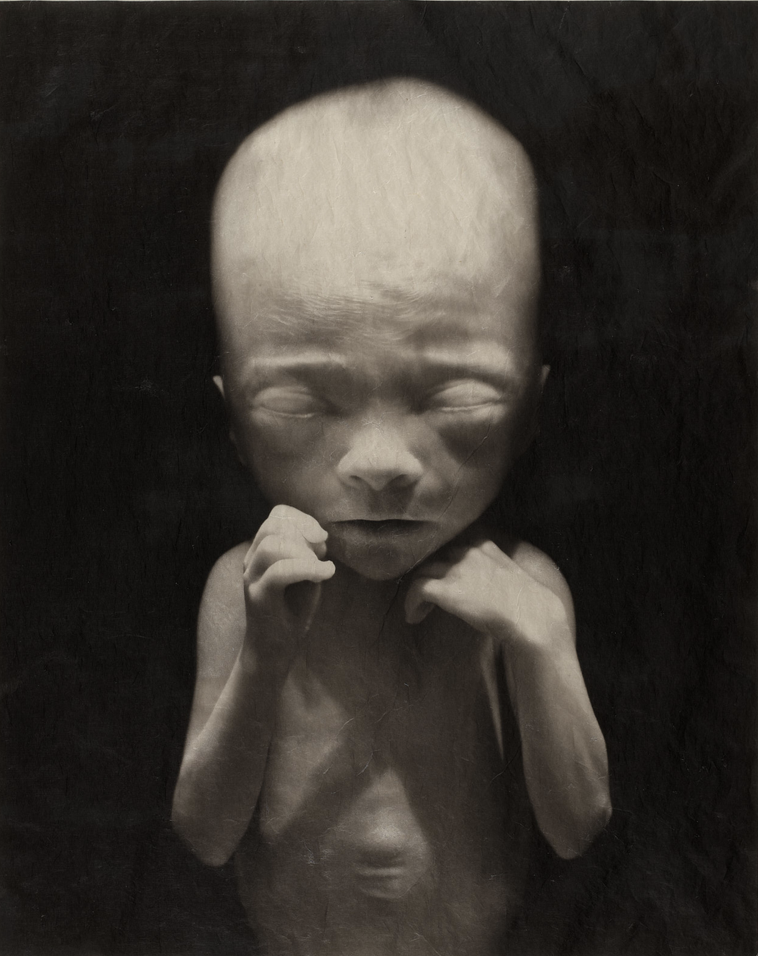
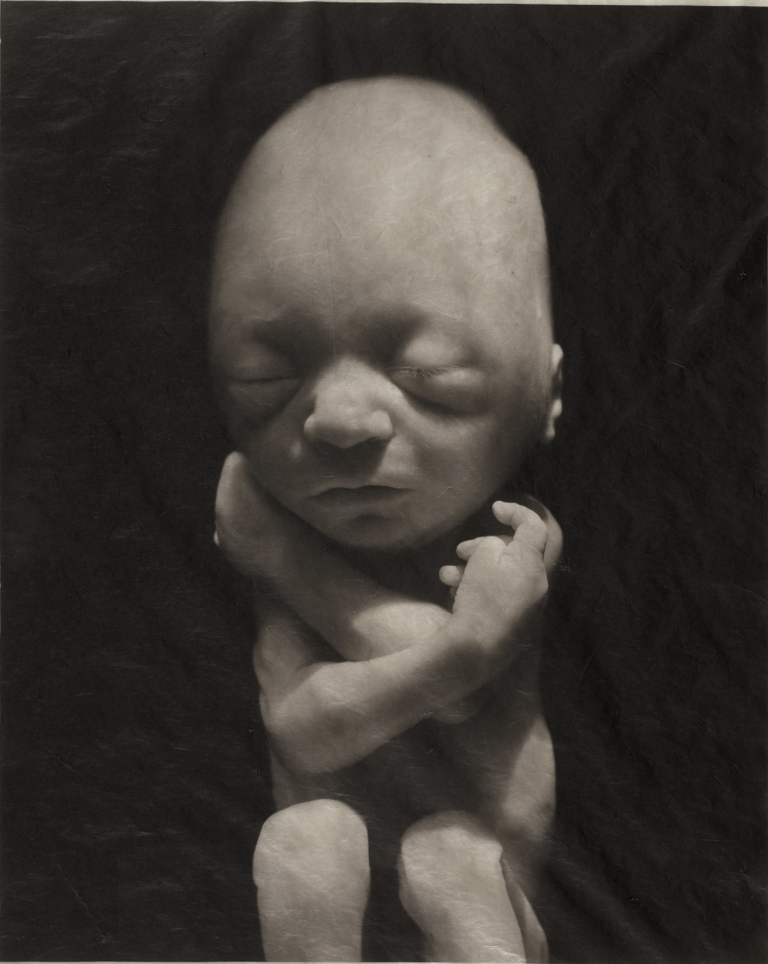
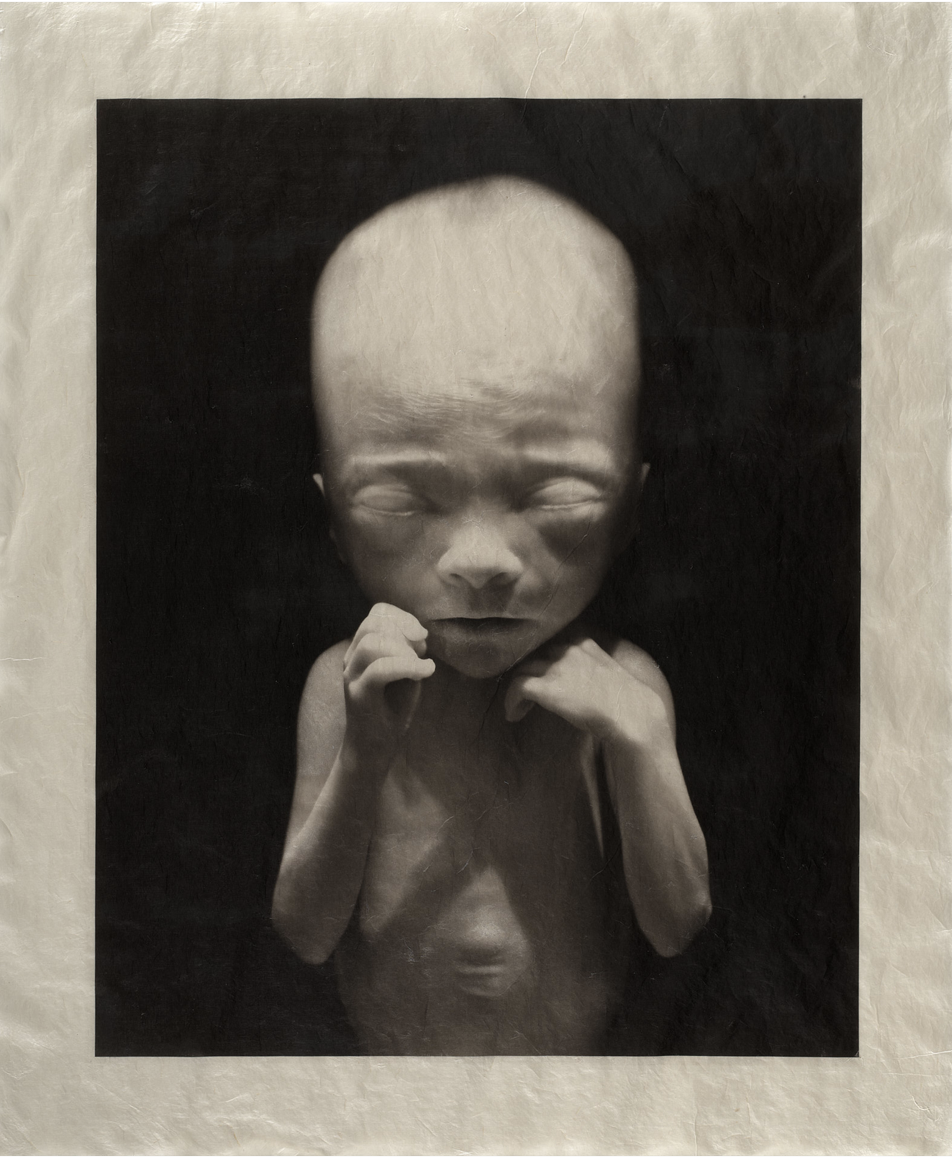
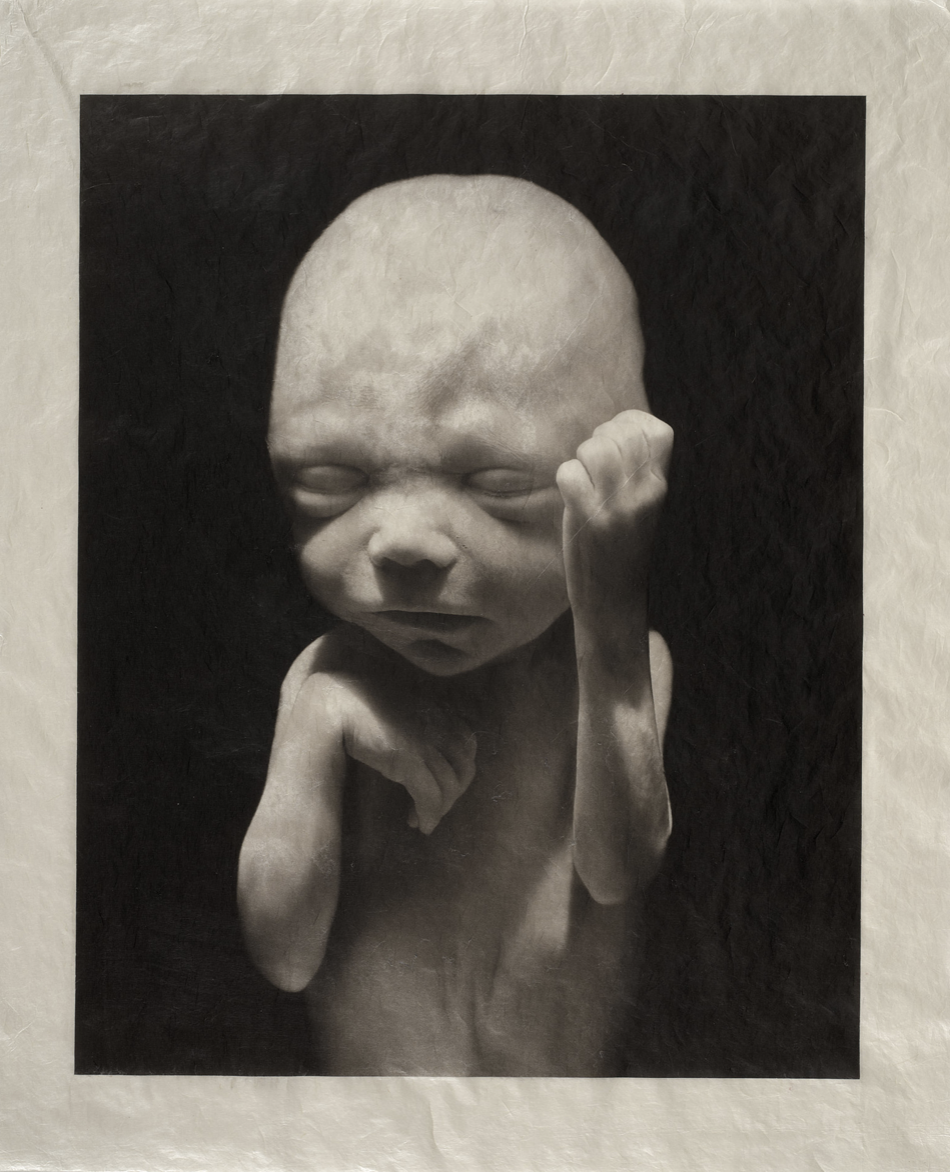
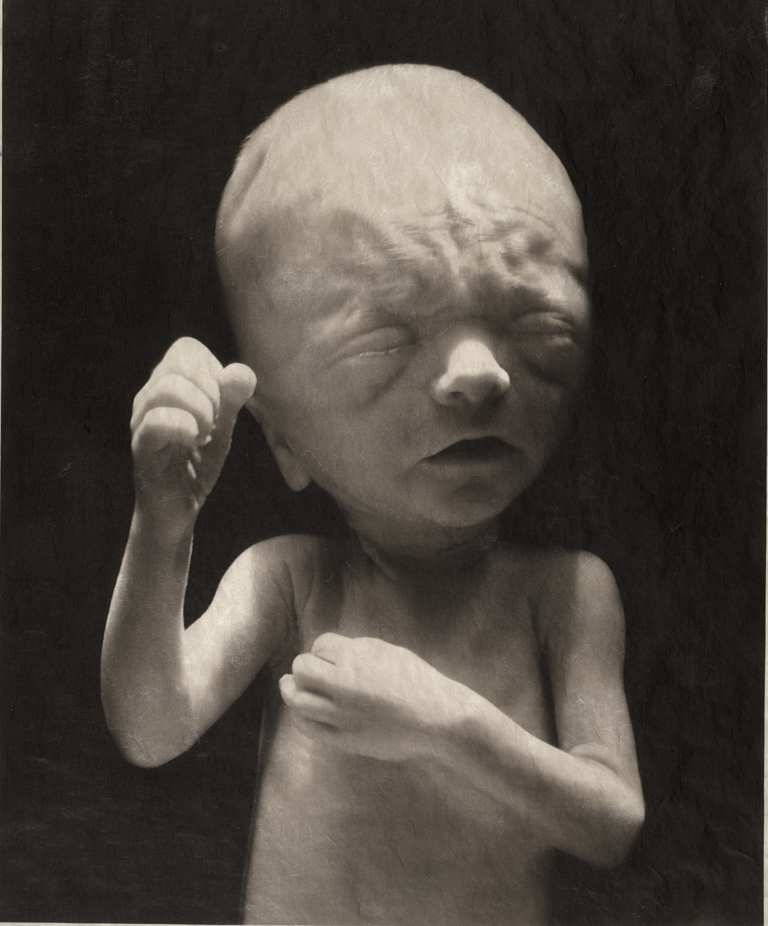
Elizabet Heyert’s striking new series Premieres at the Venice Bienalle, continuing the artist’s decades’ long exploration of the human experience. The Unborn consists of nine photographs of pre-natal subjects who were conceived in the first half of the 20th century, and died of natural causes. With faces fully formed and eyes shut, they evoke thoughts of the pre birth beginning that is common to all humans wherever they may be. Immersive and somewhat mesmerising, the pre natal portraits engage, enthral and raise ponderings of our very essence as humans.
“Everyone will experience The Unborn portraits through the lens of their own emotions” said Heyert, “there is no right or wrong way to respond, although we can never really know anything about the nine figures in my series, we can each write their stories, if only in our imagination.”
The highly noted photographer has been exploring the human experience for many years. In 2006 she aired the stunning The Travelers, her iconic series of post-mortem photographs – immaculately executed portraits evoking musings on fate, relationships, lives squandered and just what it means to be human. Where the stunning The Travellers focused on post mortem portraits, the Unborn features portraits of lives unlived – both bringing to the fore an aspect of the human experience in an original and moving way. Here lies Heyert’s artistic greatness – it is the brilliantly tuned tapping into a universal human experience that resonates with viewers — we empathise with the subject because on some level, we recognise their struggles, journey and very essence.
Here the New York based photographer and author, talks about the inspiration for The Unborn, the challenging shoot “through the heavy glass of a vitrine and then through whatever liquid the figures were suspended in”, the ageless beauty of Platinum prints and the unwavering fascination with what makes us human.
HG Who are these unborn individuals?
EH The nine photographs in my series, The Unborn, are portraits of pre-natal subjects who were conceived in the first half of the 20th century and died of natural causes. That’s basically all the facts that I, or anyone, knows about them.
HG What is the story behind the making of these beautiful images?
EH I’m endlessly fascinated about what makes us human, especially aspects which we all share but are unable to see or remember. Every one of us has been in the womb but we have no way of comprehending what that was like. After I finished my series of post-mortem portraits, The Travelers, I started to think about the other end of the human experience, what it was like before we entered the world. I envisioned a project that would be a bookend to the post-mortem portraits, a way to explore the full experience of being human from beginning to end. I wanted to uncover the unseen.
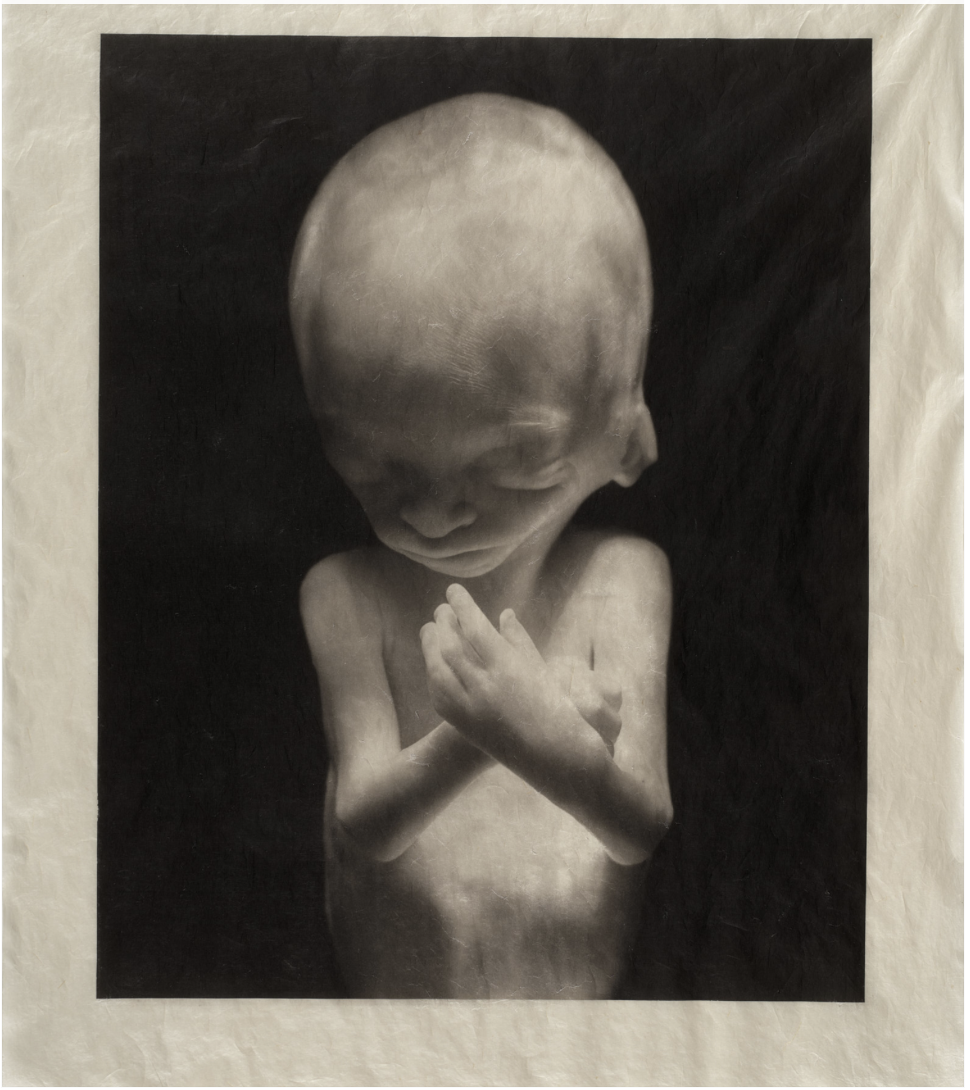
For years I researched opportunities to make portraits before life had begun without success. In the museums or medical collections I visited,fetuses were displayed as specimens. In virtually all the collections they were shown in small glass containers with their facial features distorted by preservatives, and with no space for gestures or distinguishing characteristics. It seemed impossible to do what I wanted, which was to create an intimate portrait of someone before life had begun. Then, almost 20 years after I completed The Travelers series, I read about a pre-natal display in a science museum, which was part of a much larger exhibition detailing the experience from conception until birth and the early years after birth. When I visited, I was excited to see that in the section on pre-natal development, there were a series of fetuses shown in large vitrines instead of jars or test tubes. I was riveted by the faces, the positions of hands and legs, the gestures that seemed poetic even though I realized they were random rather than intentional. I knew at once that I would be able to make portraits rather than just documents of a physical state.
HG What camera / equipment was used? Do you shoot on film, digital or both?
EH I almost always shoot film with an 8 x 10-inchview camera but this was an unusual project with extreme technical limitations. I needed to shoot in a public environment where I was not permitted to use a tripod or a large camera or bring lighting equipment. I had to shoot through the heavy glass of a vitrine and then through whatever liquid the figures were suspended in. I decided to use the most recent version of the Apple iPhone, which offered mobility, a high resolution and the ability to correct the less-than-ideal exhibition lighting. Once I shot the digital photographs, I was able to home in on the faces and gestures as I would with a living portrait. My first experiments were deeply moving and personal to me in a way I had not previously ever experienced before. I had never seen anything quite like it.
It was important to me in the printing to echo the privacy and depth of the womb as much as possible, and to find a way to separate the images from mere documentation and also from the sentimental. After much experimentation I decided to produce The Unborn portraits as platinum palladium prints. I was drawn to the depth, richness, and timeless quality of the monochrome platinum tones, which enabled me to enhance the layers of emotion in each portrait rather than merely create a record of a physical state. They are made by contact printing 16 x 20 negatives with no enlargement, and printed on Japanese gampi instead of the more traditional fine art watercolor paper.
The unique properties of gampi allowed me to mirror the fragility of my subjects in a pure, unsentimental way while retaining the beauty and delicacy of the subject matter.
HG Why is Venice an important event?
EH Every two years the European Cultural Centre hosts an international contemporary art exhibition in parallel with the Venice Art Biennale. It takes place in three historic venues, including Palazzo Mora, where my work will be shown. The exhibition brings together over 150 artists over the three venues from more than 30 countries. This exhibition provides a unique opportunity for artists to expose their work to a huge number of diverse people from all over the world. Entitled Personal Structures/Confluences, it will be viewed by over 300, 000 people during the seven months it is open to the public. It provides a rare opportunity for artists because content is not decided by a country or a committee but instead reflects the concerns and passions of each individual creator.
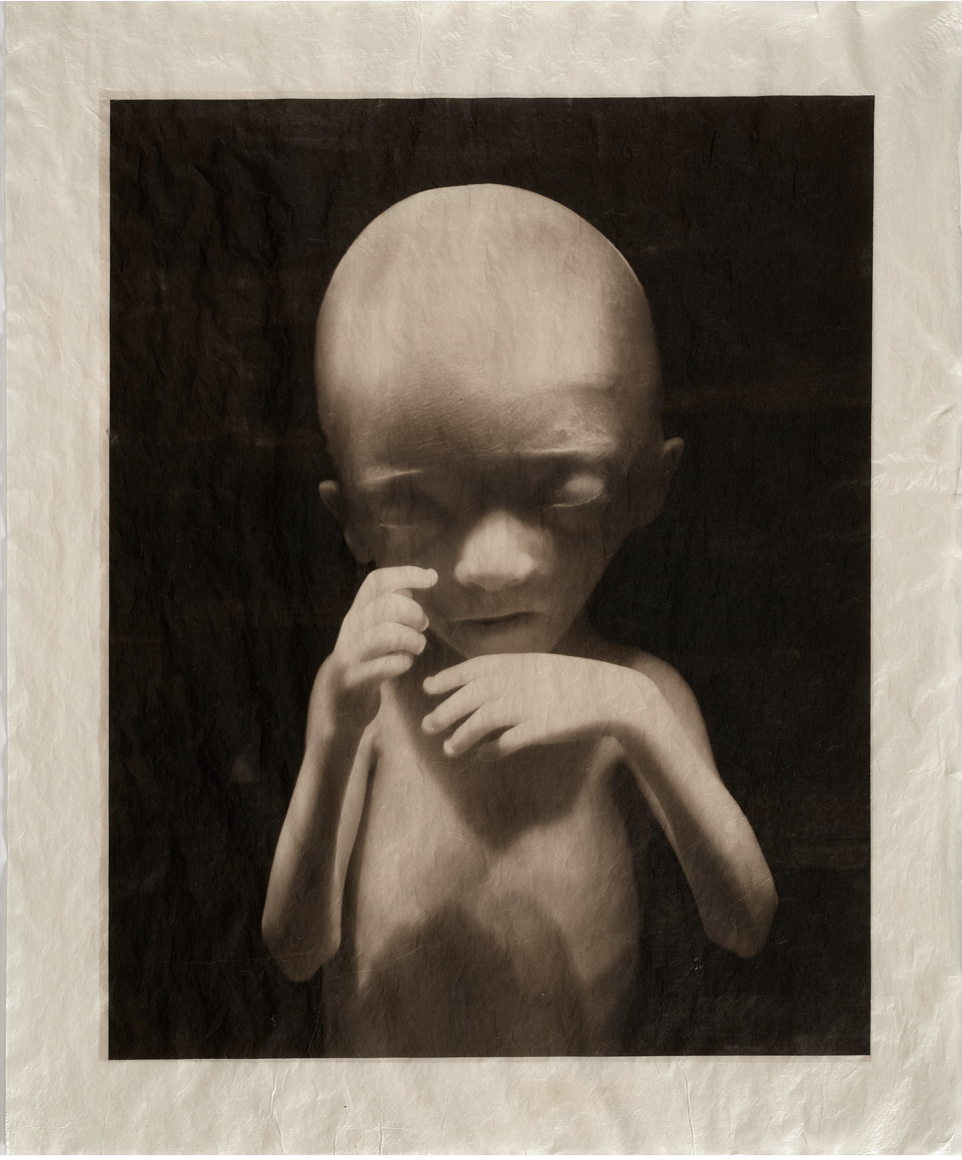
My exhibition space is in a beautiful ancient room in Palazzo Mora, which echoes the timelessness of my series. The photographs are framed simply, floating within a simple white frame, with lots of space around each of the pieces so that each portrait can be contemplated individually.
Looking at these portraits is a very different experience from looking at portraits of the living. Usually, the subject engages with the outside world, looking at the camera, or the photographer, or even looking away into the distance, but still looking. All the subjects in The Unborn look inward. Their eyes have not yet opened, they have not developed their senses, they cannot exist on their own. They exist in a private realm before they have entered the world. When I engage with these photos, it is through a lens of emotion, but I don’t think there is a right or wrong way to respond. I think about who they might have been, what lives they might have lived. We can each write their stories, if only in our imaginations.