
CEO of Time to Stand Up for Israel
Entebbe: When Courage Took Flight
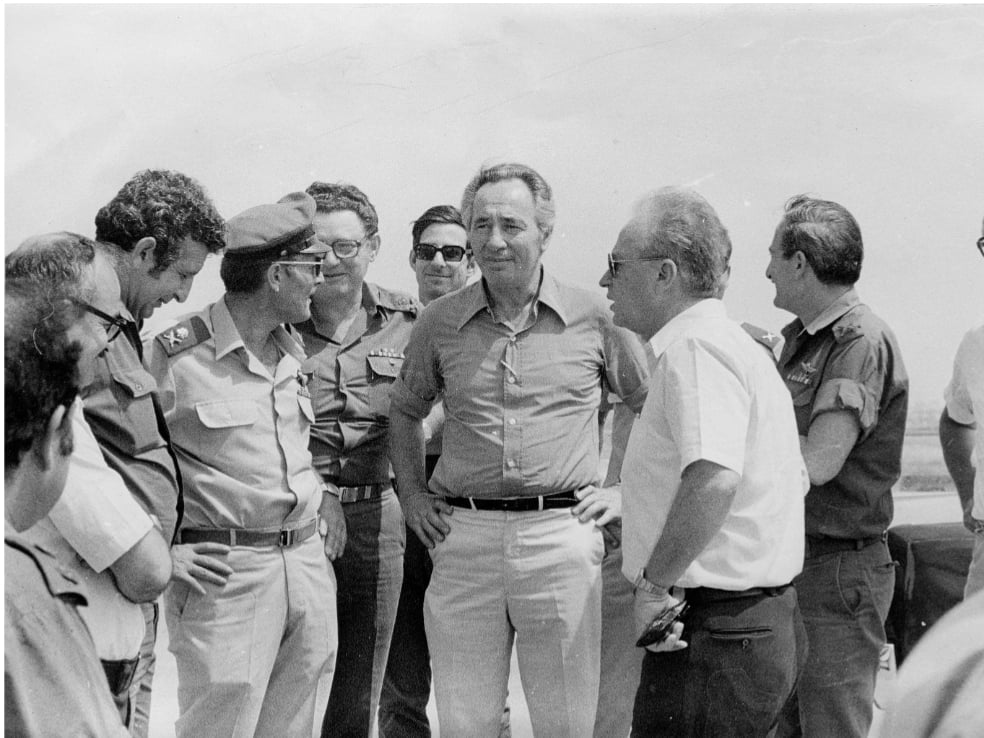
Photo Credits:
https://commons.m.wikimedia.org/wiki/File:Operation_Thunderbolt_XVIII.jpg
creative commons license
In the early hours of July 4, 1976, as the world slept, one of history’s most daring rescue missions was underway in the heart of Africa. In just 58 minutes, Israeli commandos stormed Uganda’s Entebbe Airport and rescued 103 hostages from the hands of Palestinian and German terrorists. But what happened that night wasn’t just a military success, it was a triumph of human courage, moral clarity, and unwavering commitment to life and liberty.
This was Operation Thunderbolt, later renamed Operation Yonatan in honor of its fallen commander, Lt. Col. Yoni Netanyahu, the only Israeli soldier killed in the operation.
The Hijacking
It began on June 27, 1976. Air France Flight 139 took off from Athens en route to Paris, carrying 248 passengers, many of them Israeli. Shortly after takeoff, the plane was hijacked by members of the Popular Front for the Liberation of Palestine External Operations (PFLP-EO) and the German terrorist group Revolutionary Cells. The flight was diverted to Entebbe, Uganda, where dictator Idi Amin welcomed the terrorists.
Once on the ground, the hijackers performed a chilling “selection”, separating the Jewish and Israeli passengers from the rest. Non-Jewish passengers were released. The Jews were kept hostage under threat of death unless Israel released dozens of terrorists imprisoned around the world.
It was a horrifying echo of the Holocaust, and it struck deeply in Israel and beyond.
“We Leave No One Behind”
While other governments hesitated or negotiated, Israel quietly mobilized. Intelligence was scarce, the risks monumental. Entebbe was over 4,000 kilometers away. But the message from the Israeli leadership was clear: no Jew would be abandoned.
A special commando unit led by 30-year-old Lt. Col. Yoni Netanyahu, older brother of future Prime Minister Benjamin Netanyahu, was selected to storm the airport. The plan was as bold as it was dangerous: four Hercules C-130 aircraft would fly low across enemy airspace, land under cover of darkness, and free the hostages in a lightning-fast raid.
Lt. Col. Avi Mor, the mission’s lead navigator, recalls, “We had no reliable intelligence. We were running out of time. But we had to try.”
Disguised as Ugandan forces, the commandos drove onto the airstrip in a convoy that included a black Mercedes resembling Idi Amin’s personal vehicle. But when a Ugandan guard reacted, the Israeli soldiers had no choice but to break cover early.
In just 20 minutes, the terrorists were killed, the hostages secured. Ugandan soldiers opened fire, and in the fierce gunfight that followed, Yoni Netanyahu was fatally shot while shielding hostages. His loss was devastating, but his courage became immortal.
By the time the last aircraft took off, the entire operation had lasted just 58 minutes.
Victory and Loss
Three hostages died in the rescue. A fourth, Dora Bloch, who had been taken to a hospital before the raid, was murdered by Ugandan soldiers the next day. Some Israeli soldiers were wounded. Yoni was the sole fatality among the rescuers.
The price was high, but the victory was resounding. The world stood in awe. Israel had achieved the impossible, proving not only its military capability but its moral compass. It stood for life, dignity, and the sacred duty to protect its people, no matter the cost.
Michel Bacos: The French Captain Who Refused to Leave
In the shadow of this bold military operation stood a quiet, steadfast man: Captain Michel Bacos, the French pilot of the hijacked Air France flight.
When the terrorists gave him and his crew the chance to leave after separating the Jewish hostages, Bacos refused. “I’m staying with my passengers,” he said simply. “I’m a pilot. That’s my duty.”
He stayed until the very end.
For this moral courage, France awarded him the Legion of Honour. Israel decorated him as a hero. He lived a quiet life in Nice, France, with his wife and grandchildren. In 2019, when he passed away at 94, Israel’s national anthem “Hatikvah” was played at his funeral. A street in Netanya was named in his honor.
Captain Bacos didn’t carry a weapon or wear a uniform, but his bravery shone just as bright. In a time of rising antisemitism and moral confusion, his act of solidarity remains one of the most powerful rebukes to indifference and cowardice.
Legacy
Operation Entebbe is more than a military story, it’s a human one. It’s about defying terror, choosing honor over safety, and reminding the world that Jewish lives are not negotiable.
It reminds us that in a world too often silent in the face of injustice, action matters.
Lt. Col. Yoni Netanyahu was more than a soldier. He was a poet, a philosopher, and a patriot. He wrote:
“The things for which we are willing to die are the things for which we are willing to live.”
Michel Bacos was more than a pilot. He was a symbol of moral clarity, the kind rarely seen in our cynical times.
Entebbe was more than a rescue mission. It was a declaration that never again is not a slogan, it’s a promise.
And Israel kept that promise.
Never forget the courage of those who refused to give in. Never forget Entebbe
Related Topics
Related Posts