
"I'm the spokesman for the OK Boomer generation"
Equality of Opportunity and Equality of Outcome
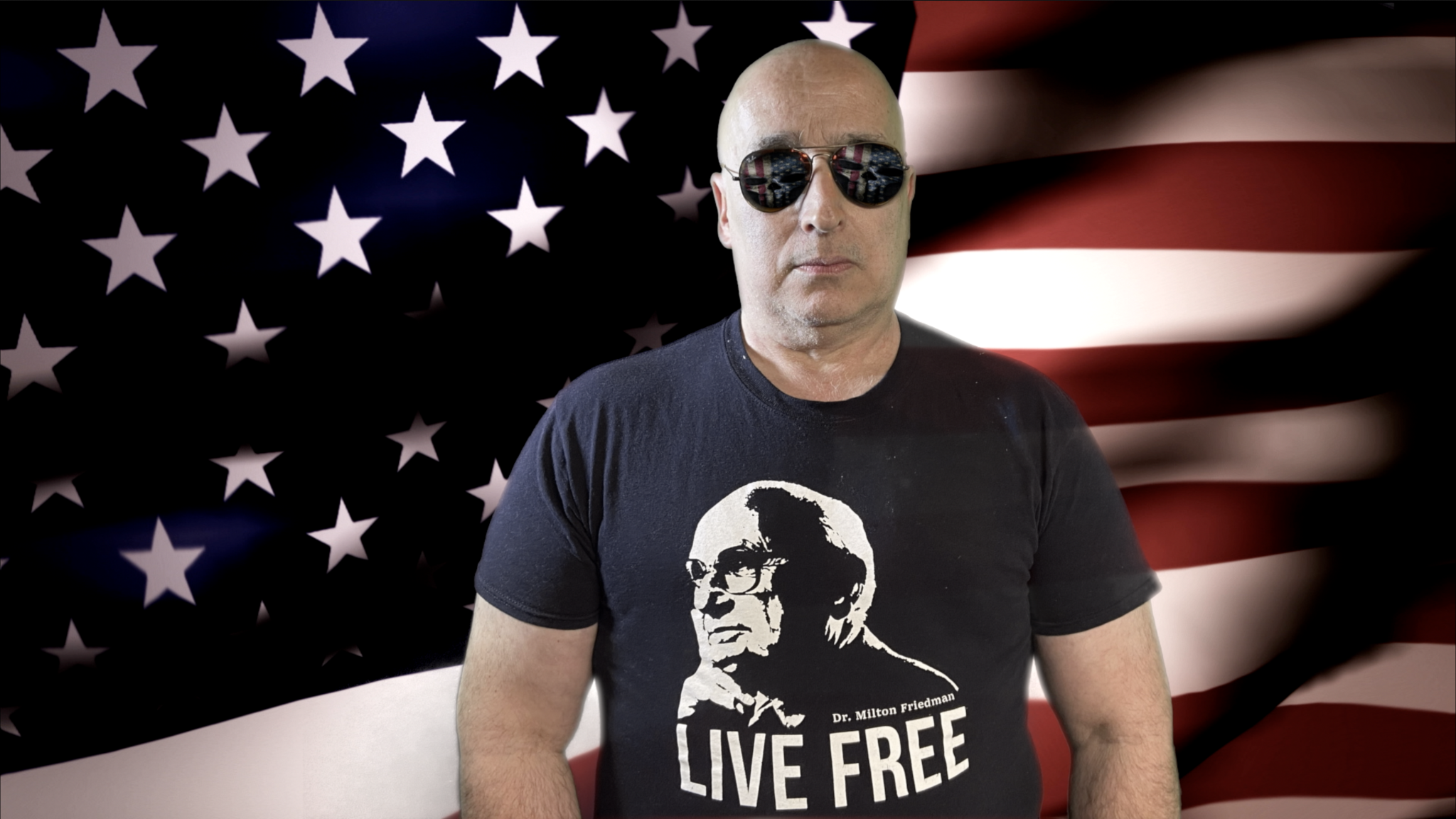
Photo: Tony Senatore: all rights reserved
I recently came across an illustration that got me thinking. It showed three people of different heights standing behind a fence, trying to watch a baseball game. Each person was given a box of identical height, representing equality. However, because they were different heights, the shortest person still couldn’t see over the fence. The proposed solution was to give each person a box of a different height so that everyone could see the game. This represented equity: providing people with what they need rather than giving everyone the same thing.
The underlying message was that treating everyone equally isn’t necessarily fair because people don’t begin life with the same advantages or disadvantages. The illustration also invoked the familiar Marxist principle, “From each according to his ability, to each according to his needs.”
At first glance, the argument seems perfectly reasonable. Why shouldn’t everyone be able to watch the game? Why should someone be denied the opportunity simply because they happen to be shorter than someone else?
But I found myself wrestling with a different set of questions. The illustration makes the solution look remarkably simple, while ignoring some rather important economic, philosophical, and practical considerations.
Who determines what everyone needs? Who decides what constitutes a fair allocation of resources? And perhaps more importantly, who is responsible for making it happen?
The illustration assumes that someone will recognize the unequal circumstances, determine the appropriate height of each box, build those boxes, finance their construction, and distribute them to the people who need them.
But none of that happens automatically.
Someone has to make those decisions, and those decisions require resources. Wood, labor, transportation, and money don’t simply materialize because we have identified an inequality.
We also have to ask who has the authority to determine what constitutes a sufficient box. What happens when people disagree about what they need? What happens when resources are limited, and there aren’t enough boxes to accommodate everyone?
The illustration presents equity as though it were simply a matter of good intentions. In reality, it introduces questions about authority, incentives, responsibility, resource allocation, and the distribution of wealth. Those questions are considerably more complicated than the drawing suggests.
There is another way to approach the problem, one that places greater emphasis on individual initiative, personal responsibility, and economic freedom.
What if each person were allowed to construct his or her own way of watching the game?
One person might purchase a taller box. Another might build a small platform. Someone else might bring a ladder. A particularly industrious individual might even construct a little viewing stand and rent space to others.
Each person would use their own ideas, abilities, resources, and money to solve the problem.
This is the entrepreneurial principle at work. People have different circumstances, different abilities, and different ideas about how to accomplish the same objective. Rather than relying on a central authority to determine what everyone needs, individuals are free to find solutions themselves.
This is where Milton Friedman enters the discussion. Friedman, the Nobel Prize-winning economist and author of Capitalism and Freedom and, with his wife Rose, Free to Choose, placed individual liberty and voluntary exchange at the center of his economic philosophy.
He distinguished between equality of opportunity and equality of outcome. In his view, people should be free to make the most of their abilities and opportunities, even though their decisions and results will inevitably differ.
I suspect Friedman would have questioned the assumption that someone must be appointed to determine everyone’s needs and distribute the appropriate boxes. He would likely have asked why individuals couldn’t find their own solutions through voluntary cooperation, private initiative, and economic exchange.
Perhaps one person builds a box, another sells it, and someone else rents one. Competition might even produce a better, less expensive solution. The important point is that people are free to experiment, innovate, and respond to their own circumstances rather than depend entirely on a centralized decision-maker.
Friedman would also have questioned the consequences of using government authority to impose a particular definition of fairness. In Free to Choose, he argued that equality of opportunity is compatible with freedom. In contrast, attempts to guarantee equality of outcome can require restricting some people’s freedom to benefit others.
He famously argued that a society putting equality of outcome ahead of freedom risks sacrificing both.
However, it would be inaccurate to suggest that Friedman believed society had no responsibility toward people in need. He supported a government role in alleviating poverty and proposed a negative income tax to provide financial assistance while preserving individual choice and incentives.
His disagreement was less about whether people should receive assistance and more about how that assistance should be organized, financed, and delivered.
Of course, the individual approach has limitations. Not everyone has the money, physical ability, or opportunity to build a suitable platform. There may also be restrictions imposed by the property owner. And if someone deliberately prevents certain people from watching the game, we have a different problem altogether.
That is where the discussion becomes more interesting. Individual freedom doesn’t mean ignoring circumstances beyond an individual’s control. It means recognizing that people should have as much freedom as possible to improve their own circumstances without unnecessarily restricting others’ freedom.
The phrase “From each according to his ability, to each according to his needs” comes from Karl Marx’s 1875 Critique of the Gotha Programme.
An important distinction often gets lost in the popular interpretation of this illustration. Marx envisioned this principle as belonging to a higher stage of communist society, not as an immediate formula for distributing resources in any society.
He also recognized that the transition toward communism would involve economic constraints, deductions for public services, reserves, and investment in production. His vision ultimately depended on common ownership of the means of production and a different organization of economic life.
In other words, the illustration simplifies a much larger philosophical and economic argument.
The central question isn’t whether people deserve help when circumstances place them at a disadvantage. Most reasonable people would agree that they do.
The question is whether a centralized system of determining and distributing resources is necessarily the best way to accomplish that objective.
This brings us to an important distinction in American political and economic philosophy: equality of opportunity versus equality of outcome.
America’s historical struggle against racial discrimination was fundamentally about denying people opportunities because of the color of their skin. The Civil Rights Act of 1964 sought to eliminate discrimination in employment, public accommodations, education, and federally funded programs.
The underlying principle was that people should not be denied the opportunity to participate in American society because of circumstances they did not choose.
But there is a distinction between removing barriers to opportunity and attempting to guarantee identical outcomes.
People have different talents, ambitions, interests, work habits, and priorities. Even when given comparable opportunities, they will make different decisions and achieve different results.
Some will work harder, some will take greater risks, some will be more entrepreneurial, and some will choose a different path altogether.
A society that recognizes individual differences must also recognize individual responsibility.
There is nothing inherently unfair about different people achieving different outcomes. The more important question is whether the rules of the game are fair and whether people have a genuine opportunity to participate.
And there is another consideration: not everyone measures success the same way. One person may want to accumulate wealth, another may value leisure, and another may find fulfillment in work that pays considerably less.
I keep coming back to the original illustration because it raises a question that extends well beyond baseball.
Who decides what is fair?
If we give everyone what they need, who defines those needs? Who pays for them? Who determines the priorities when resources are limited? And what happens when the people making those decisions get them wrong?
Conversely, if we leave everything to individual initiative, what responsibility does society have toward people who genuinely cannot help themselves or who face barriers they cannot reasonably overcome?
I don’t think we have to choose between a society that ignores inequality and one that places every decision about people’s needs in the hands of a central authority.
There is room for individual initiative, private enterprise, voluntary cooperation, charitable institutions, and properly limited government programs that address genuine disadvantages.
I would also argue that we should not underestimate the dignity that comes from building your own box, rather than having someone else decide what kind of box you deserve.
The ultimate objective should be to create a society in which people have the freedom and opportunity to improve their circumstances, while recognizing that some people will need assistance along the way.
Perhaps the real measure of a fair society isn’t whether everyone ends up with a box of exactly the right height, but whether everyone has a reasonable opportunity to build one for themselves, and whether we are willing to help those who genuinely cannot.
One final thought: The illustration assumes that the only question is how high to make everyone’s box. I think the more interesting question is why we assume there must be someone in charge of building all the boxes in the first place.
After all, the objective is to watch the baseball game. We shouldn’t lose sight of that objective while arguing over who gets to build the boxes.
Related Topics
Related Posts