Ethiopian Jews ask: Where are the Religious Zionists?
Recently, Israeli media reported that the Ministry of Aliyah and Integration is being restructured as a growth engine for the State of Israel. The ministry’s director general, Avichai Kahana, was quoted as justifying the reorientation of policy as “part of the historical process of developing the modern state of Israel,” which, he said, needs “trained engineers and physicians.”
True enough, but this policy change, which is reflected in revised budget allocations, is no mere technical reorganization. It marks a profound break from the moral core of Zionism. Aliyah has always been a sacred expression of kibbutz galuyot, the ingathering of exiles, rooted in the conviction that every Jew, regardless of income or status, is created b’tzelem Elokim, in the image of God. It was never contingent on a Jew’s earning potential.
What makes this transformation especially painful is that it is being advanced by the Religious Zionism Party, the very movement that once saw aliyah as a mitzvah and the redemption of the Jewish people as a collective calling. A policy that ties immigration to economic output risks turning a sacred commandment into an accounting exercise. That is not Torah; it is a distortion of Torah.
The movement that once led the way
For decades, Religious Zionist leaders such as Rabbi Hanan Porat, Zevulun Orlev, and Rabbi Yitzchak Levy fought relentlessly to bring Ethiopian Jews home and to ensure their full integration into Israeli life. They traveled to Ethiopia, secured budgets, and placed children in leading Religious Zionist schools. Their guiding conviction was simple: every Jew deserves a home in Israel, no financial test required.
Today, however, under Finance Minister Bezalel Smotrich and Aliyah and Absorption Minister Ofir Sofer, the aliyah of the remaining Ethiopian Jews – known as Beta Israel – has effectively been frozen: No new budget has been requested in years, government decisions mandating their aliyah remain unimplemented, no inspectors have been sent to evaluate the eligibility of roughly 7,000 individuals maternally linked to the Jewish people, and a ministerial commission completed its work more than 16 months ago, yet its recommendations have not been acted upon.
I understand the pressures they face: wartime constraints, budgetary limits, coalition politics. But acknowledging those pressures does not make the policy halakhically or morally defensible. When economic calculations eclipse covenantal obligation, something fundamental is lost.
The human cost
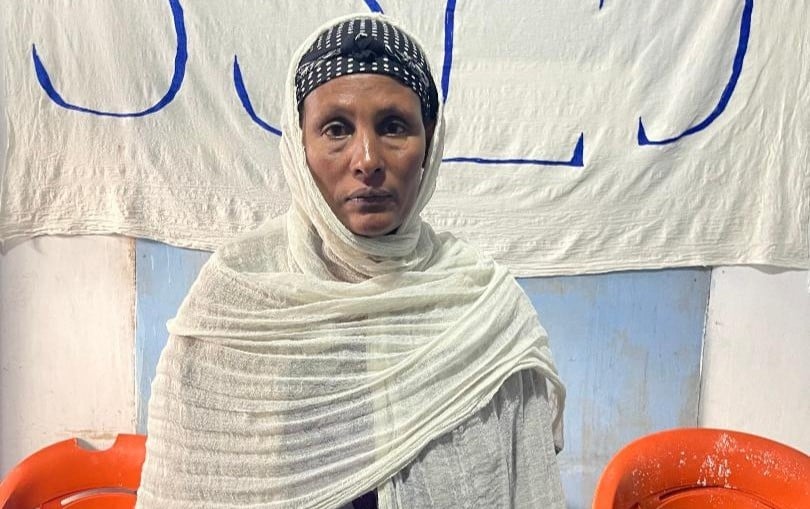
In Gondar and Addis Ababa, thousands of Jewish families – families that have lived Jewish lives for generations, keeping Shabbat, maintaining kashrut, and attending daily prayer – wait in deep uncertainty. Children grow up knowing that their grandparents, parents, and siblings live in Israel, while they remain in limbo. These are not hypothetical cases. Fourteen thousand practicing Orthodox Jews are waiting because a “growth engine” has replaced rachamim – compassion.
What halakhah demands
This impasse also contradicts the rulings of the very rabbinic authorities the Religious Zionism and Shas parties claim to revere. The aliyah of the remaining Ethiopian Jews (sometimes pejoratively called Falash Mura) was endorsed by the leading spiritual authority of Religious Zionism, Rabbi Mordechai Eliyahu z”l, and by Rabbi Ovadiah Yosef z”l, the foremost halakhic authority of Shas. Subsequent support came from former Chief Rabbi Shlomo Amar, the heads of major hesder yeshivot such as Rabbi Yaakov Meidan, and leading Ethiopian rabbis, including the former chief rabbi of Israel’s Ethiopian community, Yosef Hadane. Only a few months ago, a delegation of senior American Orthodox rabbis returned from Ethiopia pleading for immediate action.
No one suggests abandoning halakhic rigor. Questions of lineage must indeed be examined carefully. But halakhah demands examination, not blanket refusal. Even if some cases remain uncertain, the Torah commands clarity for those who meet the standard. As our sages teach: “A judge must rule only on the basis of what his eyes see.”
To decide without inspecting is not judgment; it is abdication.
A clear path forward
Israel’s government already has the framework it needs. What it lacks is will. The path forward is simple:
First, send inspectors immediately to evaluate the 7,000 Beta Israel with maternal Jewish lineage. Next, implement existing government decisions mandating their aliyah. Minister Ofir Sofer must request, and Treasury Minister Betzalel Smotrich should allocate, the necessary budget to fulfill Israel’s stated commitment. Finally, the government must set a timeline, complete evaluations within six months, and begin bringing eligible families home.
This is not a plea to make an exception. It is a demand that the halakhic process, which these parties publicly champion, actually be carried out.
A test of Religious Zionism itself
A movement that once defined itself by faith and sacrifice now risks defining itself by spreadsheets. If aliyah becomes a business plan instead of a covenant, if Jews must present résumés instead of lineage, if a halakhic movement refuses even to look, can it still call itself religious or Zionist?
The Religious Zionist public deserves an answer. So do the 14,000 Jews still waiting in Ethiopia.
The Torah commands lo ta’amod al dam rei’echa – do not stand idly by the blood of your neighbor. Our greatest rabbinic leaders understood that commandment as an obligation, not a slogan. The Torah has what director-general Abraham Kahana called “a growth engine for the Israeli economy.” Earlier this year, the minister responsible for aliyah likewise described immigration policy as a tool for economic expansion. This has not changed. What has changed are the priorities of those who claim to act in its name.
If Israel still believes in the ingathering of exiles, let it begin again in Gondar and Addis Ababa. The redemption of our brothers and sisters there will not weaken us; it will remind us who we are.