Eurovision – the Stage that Stopped Being a Given

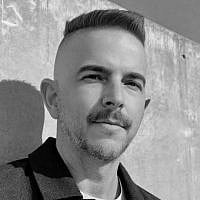
Tonight in Vienna, Noam Bettan walks onto the Eurovision stage. He is twenty-eight years old. He will sing “Michelle,” a pop ballad about ending a toxic relationship, performed partly in French, a nod to his family’s roots. Before he steps out, he will have gone through a security briefing run jointly by the Shin Bet, the Mossad, and Austrian elite police units. He will know that protesters have gathered outside the venue. He will know that part of the audience inside has come specifically to boo him. Above him, on banners across the venue and on the screens that will frame his performance, the contest’s official slogan will read: United by Music.
He has trained, like every Eurovision contestant, on his vocals. On the harmonies. On the choreography. On the dozens of details that make a three minute performance look effortless. He is a professional, and he has put in the hours. But unlike every other contestant this year, he has also trained on something else: how to stand on a stage while part of the audience tries to drown him out. How to breathe when the booing begins. Whether to close his eyes or fix on a single point on the back wall. Which expressions to allow himself. Which to suppress. How not to cry. If he does cry, what kind of makeup will hold. He said so himself, in an interview before leaving for Vienna: “I’m surrounded by an incredible team who make sure to shout boos at me during rehearsals, so I’m prepared for it.”
He is not the first. Eden Golan, twenty years old, did it in 2024, moving through Malmö in disguises, learning to perform under death threats, finishing fifth while thousands demonstrated across the city. Yuval Raphael did it in 2025, a survivor of the Nova festival massacre who had hidden under bodies for hours, returning to a stage to sing about hope while knowing she was again a target. Each absorbed a year of warnings, security drills, and the slow internalization of the fact that they were no longer attending a song contest. Two years after Malmö, Golan still suffers from recurring nightmares.
Three years, three artists, and a stage that has stopped being a given.
The institutions have responded by ratifying the new conditions. The EBU rejected two Israeli songs in 2024 as too political. It approved a third. It issued a formal warning days before Bettan’s semi final about Israeli voting campaigns. Five countries – Ireland, Iceland, Spain, Slovenia, the Netherlands – withdrew. The New York Times published a long investigation into Israeli Eurovision campaigning twenty four hours before he was scheduled to perform. Each act, taken alone, can be justified. Taken together, they are a structure.
Every party to this argument has been granted, by the structure of the conversation, the status of someone whose grievance counts. The boycotting countries. The EBU. The protesting governments. The activists. The columnists. Every party except one.
It is not exactly that the Israeli artist’s voice is absent. Bettan gives interviews. So did Golan. So did Raphael. What is absent is something deeper. Drawing on the sociological theory of Erving Goffman, every performance depends on a quiet agreement between performer and audience. The audience agrees to receive what is offered. The performer agrees to keep the machinery hidden, the rehearsals, the failures, the makeup tests, the body’s preparations. The front of the stage holds because what happens behind it stays behind it.
For the Israeli contestant, this agreement has been revoked. Part of the audience refuses to receive anything. They have come not to be performed for but to perform back, to make their political vigilance audible. And because the front of the stage can no longer hold itself together under that pressure, what should have stayed behind spills forward. The makeup that has to hold if he cries. The team that shouts boos in rehearsal. The security briefing before he sings. These are not embarrassing leaks from behind the curtain. They are the performance now. Bettan is not asked to sing. He is asked to demonstrate, in real time, that he can produce a stage out of conditions that have stopped supplying one.
What is being withheld from him is not comfort. It is the agreement that makes singing be singing.
The refusal to grant the stage is not another form of protest. It is an act that takes place inside the cultural space and dismantles it from within. Those who protest in the street operate outside the agreement. Those who enter the hall and use their presence to keep the singing from reaching ears operate inside the agreement and against it at the same time. They take the permission given to them as audience, to be present, to respond, to participate, and turn it into the instrument that revokes that permission itself. This is not a conflict within a culture. It is the way a culture learns to consume itself.
Whatever Bettan does tonight, whether he advances to Saturday, whether he is booed or cheered or both, does not change what has already happened. He has already trained for booing. He has already, at twenty eight, prepared for something no singer should have to prepare for. The performance tonight is not a test of whether he can sing. It is a record of what the audience that came to hear him decided a stage was for.