
Exclusive: Deputy Greyce Elias on Brazil’s Role Against Antisemitism
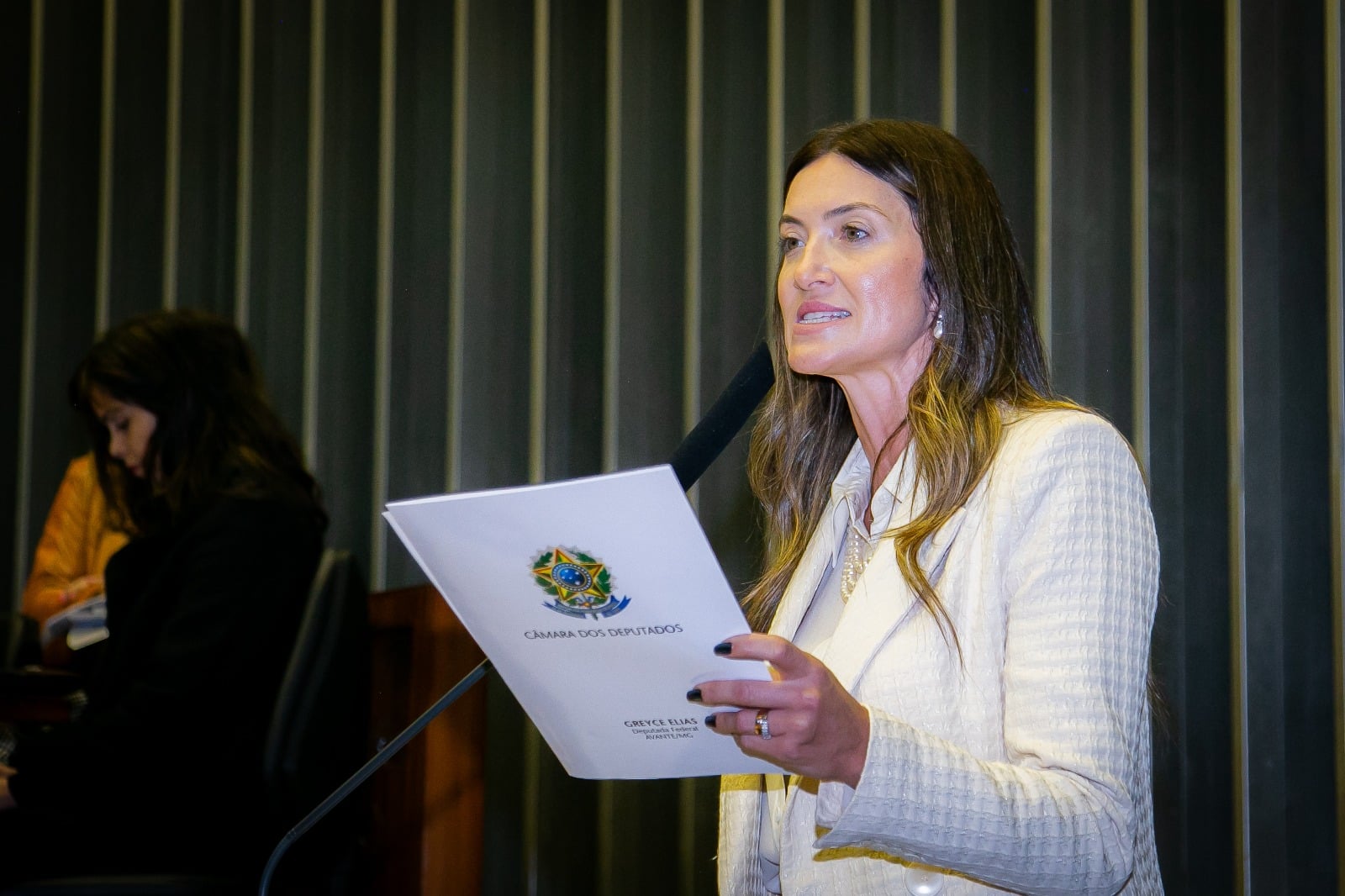
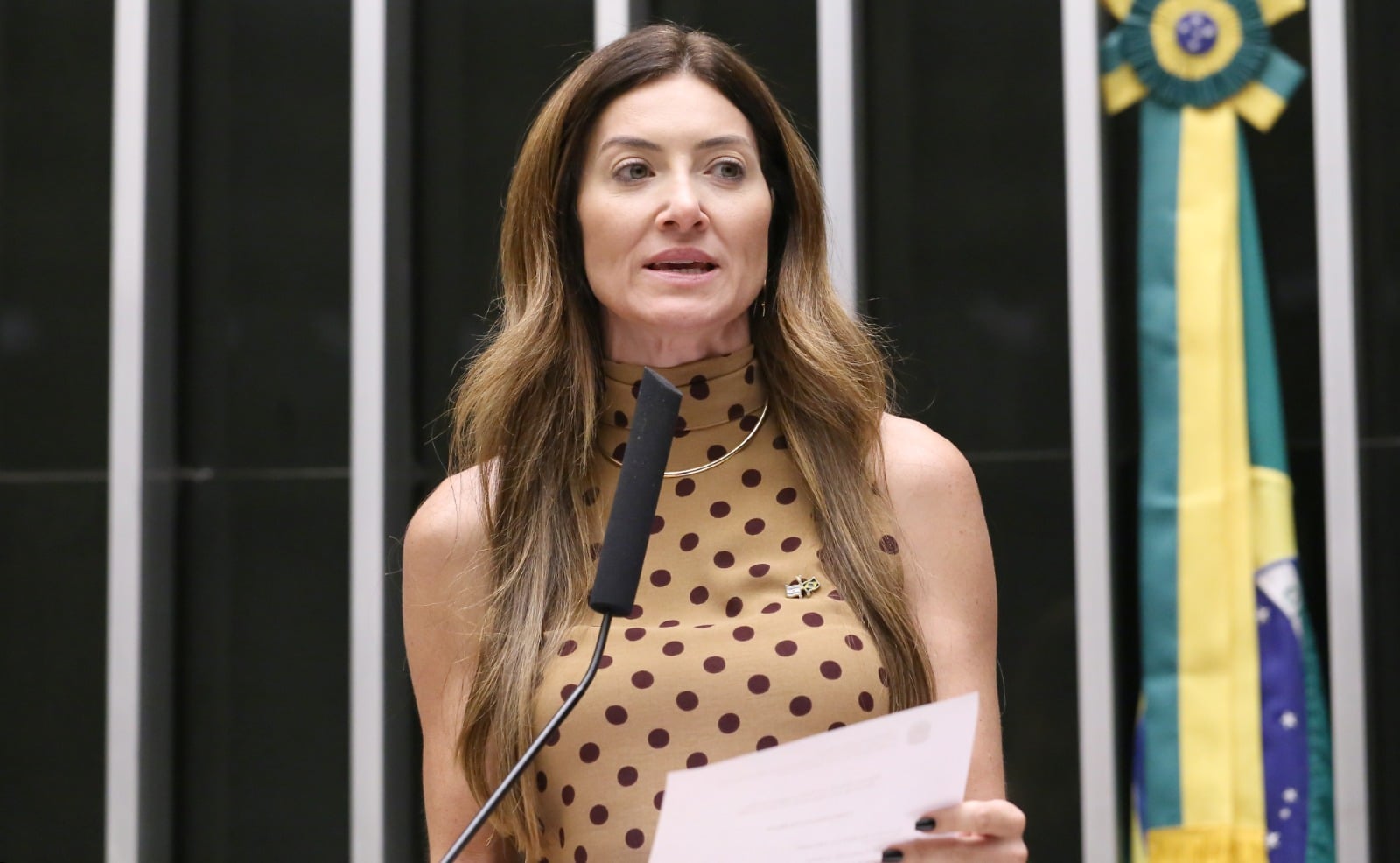
Federal Deputy Greyce Elias speaks about the Manifesto against antisemitism, the union between Christians and Jews, and Brazil’s role in defending religious freedom and human rights.
Profile of Federal Deputy Greyce Elias
Greyce Elias, Federal Deputy for Minas Gerais, is a Christian, lawyer, entrepreneur, rural producer, wife, and mother of two. A recognized political leader, she stands out for her advocacy in defense of families, women, agribusiness, truck drivers, and inclusive policies for autism, atypical conditions, and people with disabilities.
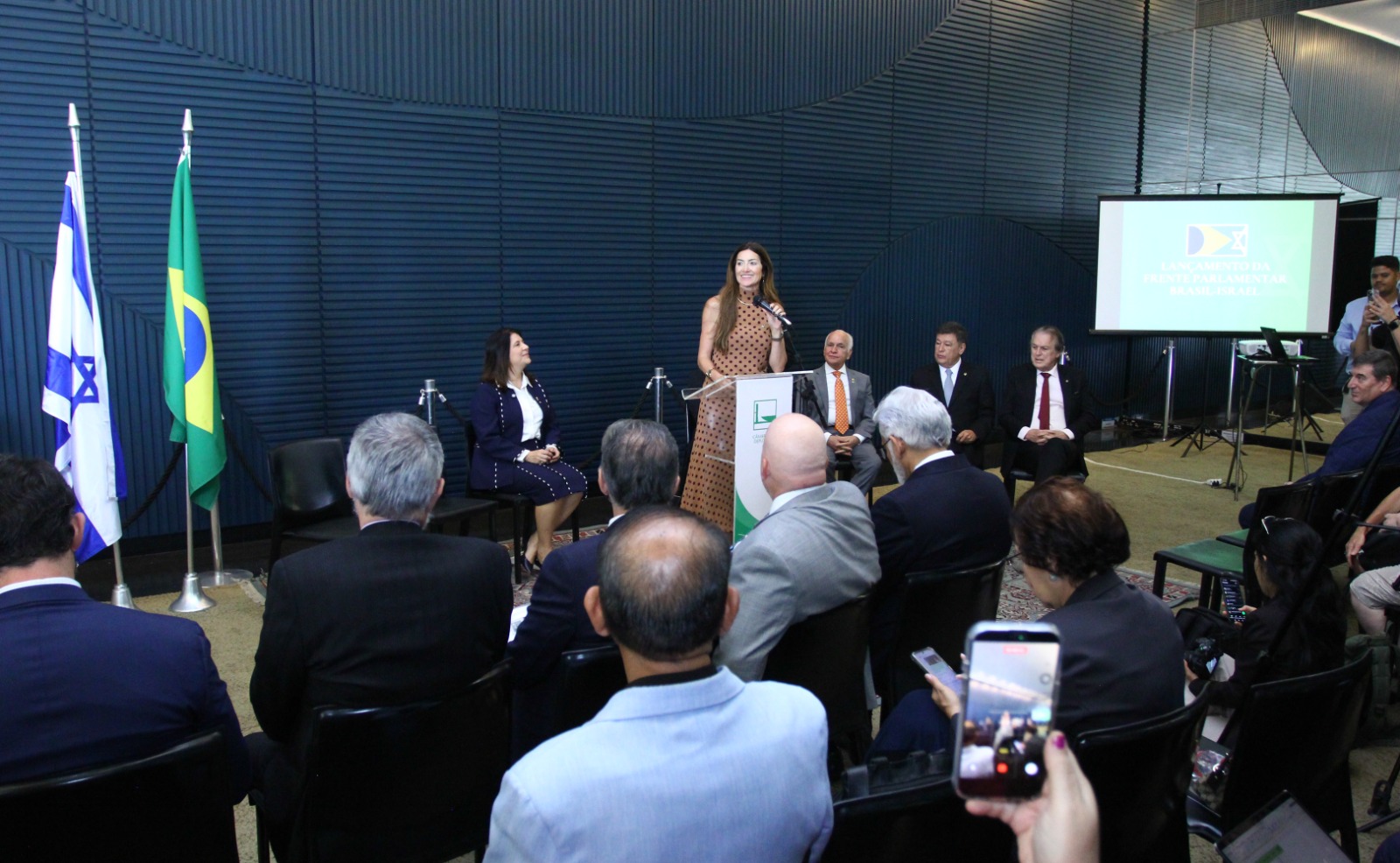
She is the author of impactful legislation, such as the Red Signal Law Against Domestic and Psychological Violence and the law that established the National Policy for Communities Affected by Dams. She also served as rapporteur for essential bills, including the one that doubles penalties for corruption crimes committed during pandemics and states of emergency, and the measure that creates support rooms for women victims of violence within Brazil’s public health system (SUS) and private healthcare services. As Vice President of the Evangelical Parliamentary Front, she reinforces her commitment to religious and social causes. The deputy has also shown strong support for the Jewish community and the State of Israel, highlighting the importance of cooperation and respect among nations.
A municipalist at heart, Greyce is Brazil’s official representative in the Mercosur Parliament (Parlasul). Her political career began as a city councilor in Patrocínio, Minas Gerais. In 2018, she became the first woman elected as a federal deputy from the Triângulo and Alto Paranaíba regions, with 37,000 votes. She was re-elected in 2022 with more than 110,000 votes, becoming the most-voted female federal deputy in Minas Gerais.
1. Manifesto Against Antisemitism
Deputy, what does this manifesto against antisemitism represent, and what is its relevance for the Brazilian Jewish community?
This Manifesto represents, above all, a public commitment of historical, moral, spiritual, and civic responsibility in the face of the resurgence of antisemitism in Brazil and around the world. It is not merely a declaration of solidarity, but a recognition that silence in the face of anti-Jewish hatred can become a form of moral complicity. For the Brazilian Jewish community, its relevance lies in the fact that evangelical Christian leaders explicitly assume the duty to reject all forms of antisemitism—classical or contemporary, explicit or disguised—even when cloaked in political, ideological, or religious discourse. The document also adopts the IHRA definition of antisemitism, which is endorsed by the European Union, recommended by the United Nations and the Organization of American States, and is the most mature and widely accepted definition from the perspective of comparative law. It reaffirms the Jewish people’s right to self-determination and to secure existence in the State of Israel. More than words, the Manifesto establishes concrete commitments to education, responsible denunciation, interfaith dialogue, institutional solidarity, and protection of Jewish institutions.
2. Personal Involvement
What was your direct role in building this project, and what motivated you to support it?
My role was to help ensure that this rapprochement between evangelical leaders and the Jewish community reached an institutional and parliamentary dimension. I supported the construction of this project because I understand that combating antisemitism is not an agenda restricted to the Jewish community, but a responsibility of all society committed to democracy, religious freedom, and human dignity. What motivated me was the realization that it is not enough to express solidarity only after episodes of hatred occur. It is necessary to prevent, educate, create permanent channels of dialogue, and build mechanisms of response. The Manifesto precisely embodies this transition from symbolic solidarity to lasting commitment, with defined goals, actions, and responsibilities. The Jewish community residing in Brazil is under the jurisdiction of the Federative Republic of Brazil. The country has the constitutional duty to protect it and to promote its rights.
3. Legal Dimension
In Brazil, we have seen individuals, groups, and even institutions openly supporting terrorist organizations such as Hamas. In addition, slogans like “from the river to the sea,” which suggest the elimination of Israel from the map, have been spread. Does the Manifesto seek to address and legally correct these problems effectively?
The Manifesto has political, educational, and institutional dimensions, but it also establishes a very clear legal agenda. It condemns terrorism in all its forms, explicitly mentions the genocidal attacks perpetrated by Hamas on October 7, 2023, and urges Brazil to formally designate Hamas, Hezbollah, the Islamic State, and the Islamic Revolutionary Guard Corps as terrorist organizations. Furthermore, the document supports legislative initiatives aimed at criminalizing antisemitism, promoting Holocaust education, and ensuring security for Jewish institutions. This action, however, must respect the constitutional principles of legality, freedom of expression, and freedom of religion. The goal is not to criminalize legitimate criticism of governments—obviously. That is a rhetorical strawman or a way to deflect the discussion, often used by those who wish to promote antisemitism under a guise of legitimacy. The goal is to clearly distinguish political criticism from discourse that incites hatred, legitimizes terrorism, denies a people’s right to exist, or promotes their dehumanization. The Manifesto itself emphasizes that legitimate criticism of governments must not be confused with prejudice against peoples or religions. Therefore, the Manifesto does not in itself create new legal obligations, but it offers an ethical and political platform for improving Brazilian legislation and public policies.
4. International Dimension
Can Brazil become a global reference in combating antisemitism?
Brazil has the conditions to play a relevant role, provided it transforms declarations of principle into permanent policies. In the Chamber of Deputies, we currently have 20 bills under discussion regarding antisemitism. Criticism, which is common in the legislative process, serves to mature and amend projects—not to shelve them, as advocated by groups whose hidden agenda is precisely to promote antisemitism. In fact, no bill is shelved due to criticism; it is amended. Our diplomatic tradition, our religious and cultural diversity, and our experience of coexistence among different communities can underpin a balanced and responsible international role. The Manifesto proposes that Brazil preserve its historic role as a mediating nation committed to multilateralism, while strengthening diplomatic, economic, scientific, and security relations with Israel. It also advocates adopting the IHRA definition of antisemitism, for all that it represents, as I have already mentioned, as well as Holocaust education, combating hate speech, and simultaneously rejecting both antisemitism and Islamophobia. To become a global reference, Brazil will need not symbolic gestures, but assertive actions: combining education, legislation, data production, protection of vulnerable communities, and international cooperation. Credibility will come from coherence between external discourse and internal measures.
5. Legislative Project
Is there a possibility that the Manifesto will evolve into a formal bill in Congress?
Absolutely. The Manifesto contains content that can inspire various legislative initiatives. It explicitly supports measures to criminalize antisemitism, promote Holocaust education, and strengthen the security of Jewish institutions, in cooperation with the Parliamentary Front Friends of Israel. This does not necessarily mean transforming the entire text of the Manifesto into a single bill. Some commitments may be translated into separate projects, such as national policies on education and memory, protocols for preventing and responding to hate crimes, improved protection for religious and cultural institutions, production of official data on antisemitic incidents, and measures to combat the advocacy and financing of terrorism. Other points depend on actions by the Executive Branch, federative cooperation, or administrative initiatives. The most effective path will be to identify, among the commitments made, which require legislation, which depend on regulation, and which can be implemented through public policies or institutional agreements.
6. Research and Public Opinion
A 2025 survey by StandWithUs Brasil indicates that 58.5% of Brazilian evangelicals support Israel. In your view, what are the main challenges and opportunities to transform this affinity into a broader partnership between evangelical leaders and the Jewish community around common interests?
This demonstrates, above all, that Brazil is a Zionist country in the most essential sense of the term: supporting the existence of the State of Israel in peace, as upheld by international law, the UN, and other international organizations—Israel being part of the clear majority of them, not only of regional bodies. It also shows that, despite attempts by journalists and opinion-makers to pit evangelicals against Jews by reviving historical antisemitism and sowing discord and hatred, the evangelical people are mature, do not fall into rhetorical traps, and understand the highly positive contribution of Jews to Western and civilizational values. The existing affinity represents an important opportunity. We want support not to remain only in the emotional, electoral, or circumstantial sphere. It is necessary to deepen knowledge about Jewish history, the Holocaust, contemporary antisemitism, the internal diversity of the Jewish community, and the complexity of the Middle East. Another challenge is confronting religious stereotypes and revising interpretations, sermons, or materials that—even unintentionally—reproduce historical forms of anti-Judaism. The Manifesto acknowledges this responsibility and proposes the revision of religious content, the education of new generations, and the creation of permanent dialogue tables between Christian and Jewish leaders. The opportunities are broad: education for human rights, religious freedom, combating hate speech, defending life, protecting communities, fostering innovation, science, social entrepreneurship, and strengthening democracy. The goal must be to build a mature partnership that does not depend solely on geopolitical convergences, but is grounded in mutual respect, historical truth, and shared actions of common interest.
7. Final Message
What message would you like to convey directly to the readers of The Times of Israel?
My message is one of solidarity, respect, and commitment, and of repudiation of attempts to manipulate the sacred evangelical people into adopting a senseless, outdated antagonism that history and doctrine have already overcome. The Brazilian Jewish community is not alone in the face of antisemitism, intolerance, or efforts to normalize terrorism. Undermining the rights of one Brazilian group means undermining the rights of us all. We recognize that words have consequences, and that silence in the face of hatred also causes harm. We want to help elevate the relationship between Christians and Jews in Brazil to a new level, founded on historical truth, sincere friendship, and permanent cooperation. This means preserving the memory of the Holocaust, defending religious freedom, protecting Jewish institutions, rejecting the dehumanization of any people, and ensuring that “never again” is not just a solemn expression, but a reality built daily. We will not remain inert while antisemitism, terrorism, and dehumanization spread. Our duty is to speak, act, educate, and cooperate.