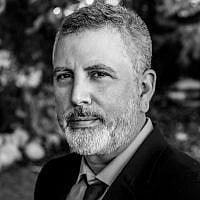
Exclusive Interview: Apostle Paulo de Tarso, Leader of the Apostolic House

A prominent figure in Brazil’s religious landscape, Apostle Paulo de Tarso has devoted himself to the mission of bringing Jews and Christians closer together through his ministry. Known for his firm yet conciliatory approach, he is the author of the Manifesto Against Antisemitism, a document that has gained wide national attention.
The manifesto, signed by Christian leaders from eight Brazilian states, was addressed to Senate President David Alcolumbre and Speaker of the Chamber of Deputies Hugo Motta, as well as to the heads of the Executive, Legislative, and Judiciary branches, the Brazilian public, and the Jewish community.
The text was reviewed by respected legal and political authorities, including Dr. Clarita Maia — an expert in international affairs and senior legislative consultant — and Federal Deputy Greyce Elias, further reinforcing the initiative’s credibility and importance.
1. Personal Background and the Apostolic House.
For the Israeli reader who may not yet know you: who are you, and what has been your journey as a Christian leader in Brazil?
My name is Paulo de Tarso. I am Brazilian, trained as a lawyer, and in 2000 I left my legal career to dedicate myself fully to pastoral ministry. In 2004, I was commissioned to the apostolic ministry, with the responsibility of serving churches and denominations across Brazil and abroad.
What is the Apostolic House that you lead? How did it come about, and what is its central mission?
The Apostolic House was founded in 2014, ten years after I was sent into apostolic ministry. Many leaders and churches across different states began seeking my spiritual covering and pastoral guidance — a way of serving with the gift I received from God. Since 2010, I have also been part of the Brazilian Apostolic Council, a national group of leaders.
Our mission is both simple and broad: amid the vast diversity of the Brazilian church, we help each leader feel useful and called to fulfill their role in proclaiming the values of God’s Kingdom.
What kinds of leaders are part of the Apostolic House, and from which regions of Brazil and the world do they come?
Something very special happened on May 1, 2026. Leaders of the Apostolic House from many Brazilian states gathered with representatives from the United States, Portugal, Spain, Argentina, Chile, and Israel. At that meeting, we decided to move beyond being just a group of leaders directly connected to me as a “spiritual father” and to become a broader platform — welcoming other seasoned leaders of major churches and denominations, whose work is recognized both nationally and internationally.
This process of growth and maturity created the spiritual and institutional strength that led to the Manifesto of July 8 in support of Israel and the Jewish people.
How does the Apostolic House work with these leaders in practice?
We are transitioning from a more vertical model to a horizontal, plural, and collaborative network. We continue to support small ministries and emerging leaders, but we also serve as spiritual and moral backing for Christian leaders who hold public office — in legislative and executive roles — at municipal, state, and federal levels.
One of our major goals is to prepare young people for the challenge of proclaiming the Gospel of the Kingdom of God to all nations. We support existing initiatives and create new training programs, so that they may become “bright lights” in a time that, for us, is marked by deep moral and spiritual darkness.
2. Origin of the Manifesto.
What specifically led you to draft and make public this Manifesto in support of the Jewish Community?
I understand, before God, that my calling has always been connected to consoling the Jewish people. I am not Jewish, but I was reached by the Word that the Living God gave to Israel at Sinai — a Word that, through the faithfulness of that people, reached the “ends of the Earth,” including my own family in Brazil. For years I have prayed, preached, written, and used my social networks to defend Israel and the Jewish people. But recent events showed me that this was no longer enough. I realized I needed to act in a clearer, more public, responsible, and legally sound way: to be a voice that confesses our historic sin of omission in the face of this new wave of antisemitism, anti-Judaism, and anti-Zionism rising in the world. I am convinced that if hatred against the Jews is not contained, Christians will be next. Faced with this, I cannot remain silent.
Was there a specific episode after October 7, 2023, that served as a turning point?
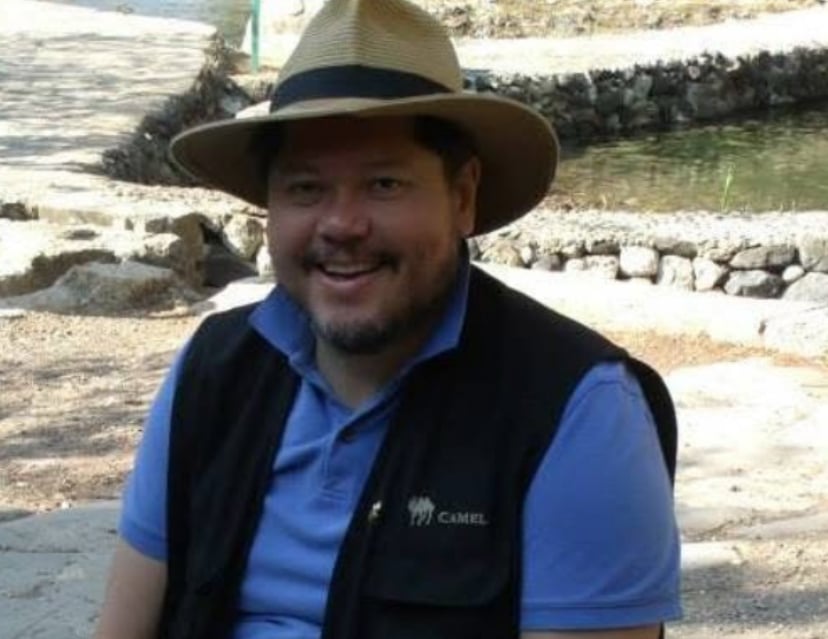
Yes. October 7, during Simchat Torah, was decisive. On a day when Israel celebrated the joy of the Word it received from the Eternal — the Word with which it blessed all nations — the people were cowardly attacked, once again with the declared support of the Iranian regime and through Hamas. For me, that was a new Shoah, a cry that echoes the promise of “Never Again” made by the generation of my parents and grandparents. Since then, I have intensified my actions: praying, teaching, consoling Israelis in Israel and Jews in Brazil. In 2025, even after delays caused by the war, I led a trip to Israel organized by the Terra Santa agency, directed by Jewish entrepreneur Ricardo Caro. We went more to console and pray than to do tourism. I like to say that I go to Israel to visit my family: I have an adopted Jewish daughter who lives in Kibbutz Yagur and has already given me three grandchildren. On these trips, I bring groups of evangelicals and Catholics and seek to teach about the God of Israel and the people of the Word — the Jewish people. All of this converged into the need for a public manifesto.

How was the process of drafting the text? Who participated?
I was appointed as the rapporteur of the Manifesto because the leaders who signed it with me know my calling regarding the House of Israel. However, the text gained great legal and political strength through the contributions of Dr. Clarita Maia and Federal Deputy Greyce Elias, who co-signed the document with us. Our common goal was to create a serious starting point for discussion, teaching, and raising awareness — not merely a statement of sympathy, but a milestone that provides solid foundations to support the Jewish people and resist the waves of hatred we have witnessed.
3. Historical Confession and Repentance.
Why did you consider it essential to begin with a historical confession and a request for forgiveness?
Because history is clear: for centuries, in different Christian traditions — both Catholic and Protestant — the Jewish people were persecuted, expelled, and killed. Many times, when Jews saw the cross, they also saw persecution and death. Something, however, changed with the rebirth of Israel in 1948 and, in a special way, with the reunification of Jerusalem in 1967. Many Christians began to realize that much of traditional theological teaching, laden with antisemitism, was incompatible with the Bible itself.
The so-called “replacement theology,” which claims that God rejected Israel and placed the church in its place, is, in my view, one of the most diabolical strategies in Christian history. It ignores the fact that the very sacred texts of Christians affirm that the Jews are the “natural branches” of the olive tree and that God never rejected His people. Even so, German Christians and many others were complicit with Nazism. We did not react with the strength and at the time we should have, and six million Jews were murdered. To say “Never Again” first requires confessing where we failed.
When you say that “we did not fully honor the commitment of ‘Never Again,’” to whom are you referring?
I am referring to humanity as a whole. There will be, according to our faith, a judgment for the nations that treated the Jewish people with contempt and violence. We Brazilians are part of this generation that witnesses explicit threats of annihilation against Israel — coming from ayatollahs and groups such as Hamas, Hezbollah, the Houthis, and others — and, many times, we remain silent. That silence places us in a morally very dangerous position.
What does this repentance mean in practice? What change is urgent?
First, it means deeply revising our theology and our ecclesiastical culture. We want to form study groups, include these themes in Bible schools and seminaries, review materials and sermons, so that the content of this Manifesto becomes known and produces a change in perspective. It is not just about repeating that “those who love Jerusalem will prosper.” It is about loving those whom God loves. Interceding for Israel and for the Jewish people is, for us, an expression of friendship and spiritual alliance, not of utilitarian interest.
4. Antisemitism Today: Diagnosis and Response.
How do you view the growth of antisemitism in Brazil and around the world?
We believe this growth was foretold in the Scriptures, but that does not lessen our responsibility. Each person must choose which side of history they will stand on. I choose to stand on the side of God, of truth, and of justice — and that, for me, includes defending the Jewish people and Israel’s right to exist in safety.
Where do you see the danger of “silence, indifference, and false neutrality” among Christians?
When we remain silent, we become complicit in the shedding of innocent blood. History shows us what happened in countries that kept silent in the face of persecution against the Jews. I do not want my generation to repeat that mistake.
What is the boundary between legitimate political criticism of Israel and disguised antisemitism?
People are free to have political opinions about any government, including Israel’s. The problem begins when criticism of specific policies turns into denial of Israel’s right to exist, or into justification for massacres and gratuitous hatred against Jews simply for being Jews. Israel is a plural society, with strong internal debate. What is unacceptable is using that as a pretext to support or relativize attacks against civilians — in Brazil or anywhere else — because of their Jewish identity.
5. Theology, the Bible, and Rejection of “Replacement Theology”.
How did you come to the conviction that “replacement theology” is diabolical and unbiblical?
Over the years, I realized that many hymns, sermons, and Christian books explicitly or implicitly claimed that “we are the true Israel,” in opposition to the Jewish people. This became so common that it was treated as normal. Studying the Bible seriously and looking at history forced us to confront this as sin.
We revere figures such as Martin Luther for his contribution in making the Bible accessible to all, but we must also acknowledge that his violently anti-Jewish writings were later used by Nazism. Catholics carry the weight of centuries of institutional antisemitism; Protestants, the burden of a theology and leaders who fueled hatred. Confronting this is not a personal merit; it is simply the minimum required of anyone who claims to love God and His Word.
What concrete changes do you intend to promote in sermons and teaching materials?
In practice, this is already underway. We teach that all of Scripture is true and that it does not authorize antisemitism, anti-Judaism, or anti-Zionism. At the same time, we confront another recent distortion: the attempt to “Judaize” non-Jews, as if it were necessary to “become Jewish” in order to be loved by God. Respecting and loving the Jewish people does not mean usurping their identity. If God wanted us to be Jews, we would have been born Jews. Our calling is to love God above all and our neighbor — Jew or non-Jew — as ourselves.
When a non-Jew disguises themselves as a Jew and is later confronted, it can generate resentment and even hatred. We must also be careful about this.
How would you explain to a Jewish reader the importance of Israel and the Jewish people in your Christian faith?
For us, the center of Christian faith is a Jewish rabbi, from the tribe of Judah, descendant of David HaMelech, who taught the Torah in its deepest essence and sent his disciples not only to the Jewish diaspora but also to distant peoples — like us, at the ends of the Earth. A prophet said that “the knowledge of the Eternal will fill the Earth as the waters cover the sea.” It was through the Jewish people that this knowledge reached us.
That is why we can call the Eternal “Avinu,” even though we are not natural children of Israel. We love the Jewish people and the State of Israel because we read in the prophets that God treats Israel as His children — with firmness, but without abandoning them — and blesses those who bless the descendants of Abraham. For us, this is a matter of faithfulness to God Himself.
6. Israel, Self-Determination, and Security.
How do you respond to those who say that supporting Israel’s right to self-determination and self-defense is “taking sides” in the conflict?
Anyone who defends values is always taking sides. I take the side of history, of truth, and of justice. From a biblical perspective, we have ancient records of purchase and sale — such as Hebron and the cave of Machpelah, bought by Avraham, and Mount Moriah, bought by David HaMelech. Scripture records prices, buyers, and sellers. From a historical and legal perspective, Israel exercised its right to self-defense in wars such as those of 1967 and 1973. Yes, I take sides. And those who criticize me also take sides. The difference lies in favor of whom, and of what.
The Manifesto condemns the attacks of October 7 and terrorism in all its forms. What message do you want to send to the international public?
We cannot accept that an organization — or a “state project” — has, in its own charter, the goal of destroying another people. If the international community had reacted firmly to this kind of ideology, many families would still be alive today. Children murdered before their parents, parents killed before their children, girls assaulted and executed, young people massacred while dancing. The Bibas family can no longer simply live their lives. This is morally unacceptable. International bodies that relativized this reality, and governments that support or justify such groups, bear responsibility. Our silence does too.
At the same time, you speak of the “sacredness of every human life.” How do you balance support for Israel’s security with concern for Palestinian civilians?
Golda Meir’s words remain relevant: if those who today define themselves as “Palestinians” love their children more than they hate the Jewish people, much will change. The systematic teaching of hatred to children is a moral tragedy. The duty of the international community is to condemn both terrorism and the use of civilians as human shields. Every life is sacred — Jewish or Arab. Precisely for this reason, supporting Israel in its responsible self-defense is also a way of rejecting the culture of death promoted by terrorist groups.
7. Concrete Commitments of the Apostolic House.
What will be the first practical actions after the publication of the Manifesto?
First, to disseminate it widely so that it may be read, discussed, and applied — beginning with Christian leaders connected to the Apostolic House and reaching other segments, including Catholics and other religious groups. We also want to bring this debate into institutional spaces: human rights, foreign relations, and education. With the support of Christian fronts from various denominations, we hope to help Brazilian society — plural and peaceful as it is — recognize the danger of disguised antisemitism.
What is being planned in terms of courses, trips, exchanges, and dialogue with Jewish leadership?
It is already our practice to visit Israel regularly, recognizing it as the Jewish nation of Israel, and we are always well received and respected in our faith. On our side, we have the duty to extend the same respect to other religious expressions. We want to intensify study trips, courses on the Shoah and antisemitism, and permanent dialogue tables between Christian and Jewish leaders — to speak about the Bible, history, the present, and the future with love, respect, and dignity.
How can you ensure that the Manifesto will not be just a one-time gesture?
By working to make it a reference in religious, educational, and cultural environments, with periodic reviews, goals, and monitoring. Our commitment is to permanence, not to a passing emotion.
8. Brazil, Politics, and Diplomacy.
What role do you believe Brazil should play in relation to Israel?
Brazil needs to honestly recognize that Israel is a true democracy in the midst of a regional environment marked by authoritarian regimes. Traditional Brazilian diplomacy must be revisited, because the majority of the Brazilian people sympathize with Israel and the Jewish community, yet this rarely enters the electoral debate. The result is a foreign policy that often does not represent the majority sentiment of the population and adopts positions that, in practice, sound hostile or even antisemitic — as we have seen especially in recent years.
How has the reception of the Evangelical Parliamentary Front and other political leaders to the Manifesto been?
Surprisingly positive. The Evangelical Parliamentary Front and other political leaders showed great sensitivity and support, which gave the Manifesto visibility that we might not have achieved alone as religious leadership.
Do you fear any political cost for taking such a clear stance?
I do not fear it. I know criticism will come, but I ask myself: what if it was precisely for this time that we were called? Our duty is to do what is right, even if it leads us through the “valley of the shadow of death.” We believe the Eternal is with us.
9. Repercussions in the Church and the Jewish Community.
What reactions have you received from other Christian leaders?
So far, I have received full support from Christian leaders who have spoken out. Many told me that the Manifesto expresses something they themselves felt but had not yet put into words.
And from the Jewish Community, in Brazil and abroad?
I have received expressions of support and gratitude, as if I were doing something extraordinary. Honestly, I see this only as the fruit of God’s goodness that touched my heart. Every word of honor and every gesture of gratitude I receive from Jewish brothers I return in worship to the Eternal, our God.
Do you believe the document can inspire other Christian movements in other countries?
Yes, I do. We are already sharing the text with friends who serve in parliaments of other countries, especially in Argentina, so that similar initiatives may arise in other national contexts.
10. Final Message to Jews and Christians.
What message would you like to address directly to the Jewish reader of The Times of Israel, perhaps wary of Christianity’s history toward their people?
I think of Ruth, the Moabite — a non-Jew who saw, in the life of her mother-in-law Naomi, a Jew from the tribe of Judah, the goodness of the God of Abraham, who cares for widows, foreigners, and the vulnerable. Ruth chose to unite her destiny with Naomi’s people: “Your people shall be my people, and your God shall be my God.” That is the feeling of my heart. We do not want to “be Jews”; we are grateful to God for making us as we are. But we wish to unite our destiny, in love and solidarity, with the destiny of the Jewish people, trusting in the promise of the God of Abraham, Isaac, and Jacob: His eternal presence.
If you had to summarize your appeal to Jews and Christians in one sentence for the future, what would it be?
“Am Israel Chai. Adonai Melech, Adonai Malach, Adonai Imloch Leolam Vaed — The people of Israel live. The Eternal reigns, reigned, and will reign forever.”