
Fallen But Not Wasted: Journey of Mangrove Leaves
In the hot, muddy and salty coastal areas of Kachchh (Gujarat), a fallen leaf of mangrove plant may look lifeless. But below the trees on the muddy ground, a hidden world of crabs, mudskippers and various tiny organisms is busy carrying life forward by using that dead leaf. In general, each and every part of plants including dead litter fallen on forest ground can be utilized and nothing is considered as a waste.
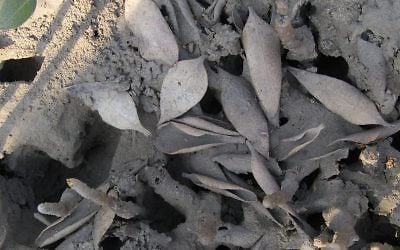
Ecologically the term ‘litter’ has considered as surface layer of dead or fallen plant material such as leaves, needles, twigs, stems, flowers, fruits, bark etc. present on forest floor, which is still not in the advanced decomposition stages. However, the term ‘decomposition of forest litter’ is not yet clear with benchmark for the beginning the process of decomposition of litter. In the terrestrial ecosystems of forests, the litter decomposition plays significant role in release of carbon dioxide (CO₂) with recovery of nutrients and carbon compounds into the soil. The nutrient recovery and carbon storage is dependent on the quantity and quality of litter. The geographical conditions (latitude, longitude and altitude) can also affect the production of forest litter through various biotic factors such as precipitation and temperature. Mangroves ae present in the intertidal areas of tropics and subtropics throughout the globe. Mangroves thrive in a harsh environment of extreme heat, saline water, muddy streams, and shifting tides along the Kachchh coast. The predominant mangrove species in this area is Avicennia marina, which provides a verdant haven along hostile coastal environment, although the mangrove vegetation here is stunted due to extreme environmental conditions. Take a close look under these trees. There may be dark brown, and rotting leaves strewn all over the ground among the roots, and tiny animal holes. These leaves could seem like nothing more than dead plant matter at first.
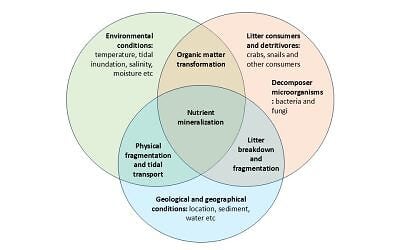
Are they truly a waste, though? Not at all. A falling leaf starts a new trip that links mangrove trees to mudflat creatures, crabs, microbes, and the larger coastal food chain. Mangrove leaves contain carbon, nitrogen and other elements that plants have absorbed during their growth. After falling, the leaves are gradually broken down by fungi, bacteria and small animals. During this process, their physical structure and chemical composition change, and nutrients become available for reuse within the ecosystem.
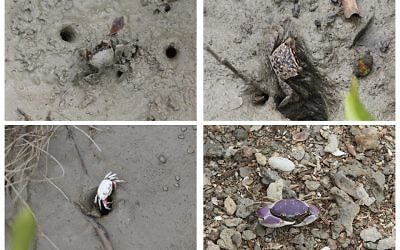
Mangrove litter can support a network of organisms. Crabs and other detritivores may consume leaf material directly or fragment it into smaller pieces. Microorganisms colonize the leaves, changing their nutritional quality and helping break down complex organic compounds. The resulting material can contribute to food webs involving invertebrates, fish, and other coastal animals. Tides may also carry leaf litter and fine organic particles from mangroves into adjacent creeks and mudflats. This means that the ecological influence of a mangrove forest can extend beyond the area occupied by its trees. The movement and breakdown of organic matter help connect mangroves with neighboring coastal habitats. Research from mangroves has revealed that crabs can clear enormous volumes of leaf litter from the forest floor. Some hide leaves in their burrows, while others shred them into smaller bits.
Mangrove mudflats are also home to mudskippers that move across wet mud and can remain out of water for periods of time under suitable conditions. They use their fins to move over the mud, search for food and interact with the small world around their burrows. Their presence adds movement to a landscape that may otherwise seem quiet. However, they are not generally considered the main consumers of mangrove leaf litter. Depending on the species, they feed on items such as small crustaceans, worms, insects and other tiny animals, as well as algae or other material. Their diet varies with species and habitat, which makes their connection to fallen leaves often indirect. As leaves are broken into smaller particles and processed by microorganisms and other animals, they contribute to a changing environment in which many small organisms live. Those organisms may form part of the wider food web used by mudflat animals, including mudskippers.
The leaf is no longer attached to the tree, but its ecological story is far from over.