Using science background to write rationally about Israel, Jews and Academia
False Analogies: The Lazy Logic of Modern Debate
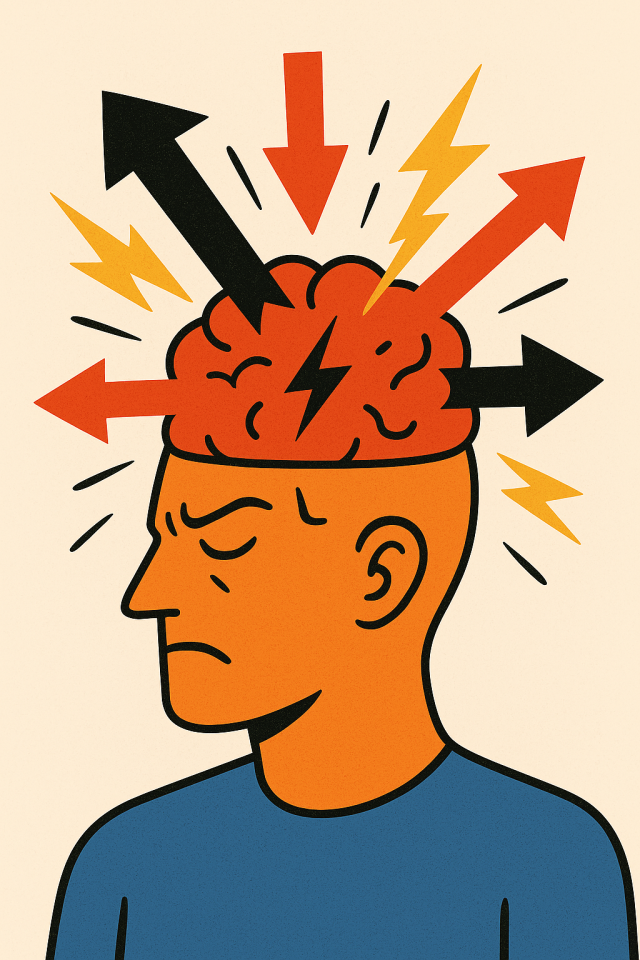
Public debates in social networks revealed propensity of the debating public to fall victims to all kinds of logical fallacies. Most frequently occurring are the red herring, straw man, and false analogy fallacies. While the first two are quite easily spotted and dispelled, the last one usually requires lengthy explanations not always possible in the formats of Facebook, or even more so on Twitter. And for some reasons this type of fallacy seems to me most offending from the intellectual point of view. This is probably because the method of analogies is extremely useful and powerful when used correctly, and it is quite often used in serious philosophical, religious and even scientific expositions. Let me indulge myself with a few examples of good analogies.
Plato’s Cave: Plato compared ordinary human perception to prisoners chained in a cave, mistaking shadows on the wall for reality. The analogy captures in a vivid story the philosophical problem of distinguishing appearance from truth.
Darwin’s Tree of Life: Darwin used the image of a branching tree to explain the complex process of evolution—something invisible and slow—through something everyone could picture.
Augustine’s Trinity Analogy (De Trinitate): Augustine struggles to explain how God can be one and yet three (Father, Son, Spirit). He builds an explicit analogy from the structure of the human mind: Memory, understanding, and will are distinct faculties, yet one mind. He walks through their relationships and unity to reason: Just as the three faculties are distinct yet inseparable, so too are the three divine persons one God.
Maimonides’ Parable of the Palace (Guide for the Perplexed): Maimonides describes people seeking to understand God as people approaching a king’s palace: Some wander outside the city (never think about God), some circle the palace (dabble in theology), some enter the courtyard (know scripture), a few enter the inner chambers (grasp philosophical truth about God).
Wave-particle duality in quantum physics: in the absence of proper vocabulary to talk about quantum objects, physicists used the analogy with behavior of particles in one kind of experiments, and with waves in other kind of experiments.
Analogies expressed in mathematical terms allows us finding similarities in dissimilar situations: harmonic oscillators and electric circuits, heat propagation and diffusion of particles – physics is full of extremely useful examples
And the final example leading to the main topic of this text: use of analogies in political discourse. Useful political analogies are plentiful, but I will mention only one – the check and balances concept in American political theory is a direct mechanical analogy of a State as a mechanical system, which need to be kept in equilibrium.
When it comes to everyday public political debate, analogies serve the role of the fast food: quick, convenient, and easy to digest. The right analogy can make a complicated point instantly clear. The danger comes when analogies are stretched beyond their limits or applied where the differences outweigh the similarities. That’s when they stop being clarifying tools and turn into propagandist manipulations. They become like junk food: fill your brain with noise and leave you with nothing but heartburn. (In my case it is rather a brain freeze than heartburn, but the analogy is clear.) They might sometimes sound clever, but the more you think about them the less sense they make. Two recent examples, which prompted me to write this essay are the reaction to the murder of Charlie Kirk and the calls for cultural boycotts of Israeli musicians and sportsmen, which show just how damaging false analogies can be.
Recent murder of Charlie Kirk inflamed the country stronger than his inflammatory political positions ever did. Even more appalling than the murder itself was the reaction of the society where each political side used this tragedy to score political points. While there have been some sober and dignified reactions such as the one by Bernie Sanders and other democratic politicians, the reaction from the opposite side of the political spectrum, such as that of President Trump and Utah Governor Cox was less dignified. Trump rushed to blame “leftists” inflammatory rhetoric against Kirk for the murder even before the actual motives of the shooter were established. They have not yet been established as far as I know at the time of this writing, but given loyalty of FBI director Patel to Trump, one can anticipate that the results of the investigation will confirm Trump’s remarks. I, however, want to focus on statement by Cox pointing out the absence of riots, and burnt cars in the aftermath of Kirk’s murder. This was directly aimed at comparison with nation-wide violent disturbances that took place after the murder of George Floyd. The right-wing commentators picked up this line and run with it: “See, we, the republicans are on the side of law and order, and it is the Democrats who are sowing chaos”. The comparison of the two murders and public reaction to them is a glaring example of the false analogy.
Kirk’s murder obviously was not just a random crime – it was almost certainly political in nature. That makes it deeply troubling, because political violence undermines democratic life in a direct way. Floyd’s killing, by contrast, was not a political assassination at all. It was worse in a different way: a blatant example of the misuse of the force by the police. But if you look at the victims, and the perpetrators in these two cases, with an unbiased eye, you would immediately see that there is nothing even remotely similar between them. In one case, the victim, Charlie Kirk is a rich white guy with large political clout belonging to a sector of society with enormous political power, which played an oversized political role even when Democrats were in the White House. The perpetrator is another white “all American” guy, an overachiever from a deeply religious family with unclear political affiliations and even less clear motives. Despite all political ramifications it was still an act committed by an individual against another individual, shocking but limited in scope. Floyd’s murder on the other case was an act of the officers of the State against an individual belonging to a group with a long history of oppression. What made Floyd’s death ignite nationwide protests was that it wasn’t a unique occurrence It was one in a series of highly publicized cases—Eric Garner in New York, Michael Brown in Ferguson, Tamir Rice in Cleveland, Breonna Taylor in Louisville, among others, each reinforcing the sense that Black lives could be taken by police with impunity. It is also important that the perpetrator in this case was not just an individual – it was a member of law enforcement, an organization, which was rightly or wrongly perceived as historically biased against African Americans. This is why the reaction to Floyd’s murder was so different – It was the last drop overflowing the ocean, the last straw breaking the back of a camel . It says nothing about civility of democrats versus civility of republicans as both groups contain both decent and indecent people. To claim otherwise is an offensive attempt to score political points and deepen already dangerous divisions in society.
A second false analogy has emerged in the cultural sphere. Recently, a Belgian festival canceled a performance by the Munich Orchestra because its conductor was an Israeli. Unfortunately it wasn’t an isolated precedent. There have been a letter signed by hundreds classical musicians calling for the boycott of Israeli musical organizations, a letter of American filmmakers to boycott Israel’s film industry, there were calls to ban participation of Israeli sport teams in European events, or the recent blackmail by Ireland to boycott Eurovision if the Israel is allowed to participate. These acts were justified using another unfortunately widespread false analogy. Their supporters used the cancellation of Russian musicians and ban on Russian sport teams after the Russian invasion of Ukraine as a justification. They say: “If it was right in the case of Russia, it must also be right in the case of Israel”.
But once again, under close scrutiny the analogy breaks down. The Ukraine case was a straightforward war of aggression. Russia invaded a sovereign neighbor in an act condemned almost universally. Many of the Russian musicians who faced cancellations were either closely tied to the Russian state or openly supportive of Putin. The logic was: if you’re a public face of Russian culture while Russia wages war, you’re complicit in propagating Russian soft power. If you signed a shameful letter of support of Russian occupation of Crimea you are personally responsible for Russian occupation. If you performed on the occupied territories or for Russian troops in Ukraine you are personally responsible for Russian war crimes. I participated in many protests against such figures as conductor Gergiev or pianist Matsuev or jazzman Butman, so this theme is close to my heart. The Gaza war is not the same. It did not begin with Israel launching an unprovoked invasion. It began with Hamas’s October 7 massacre, one of the bloodiest terrorist attacks in modern history. Israel’s military response has been devastating, controversial, and heavily criticized, but to equate it with Russia’s conquest of Ukraine is to erase context and complexity. Israel never had a goal to subjugate Gaza Arabs or to deny them their language, culture, and national self-identification. Despite emotional and unjustified claims, Israel did not and did not intend to commit genocide in Gaza – the goal was to eliminate Hamas, which is an enemy of not only of the Jews, but also of the Palestinian Arabs as well . At the same time, Putin’s goal in Ukraine is cultural genocide. He aims to erase Ukrainians as a nation and turn them into small Russians. Besides a glowing difference in political circumstances of the two wars, the treatment of individuals also differs. While Russian cultural figures scrutinized and punished for their direct participation in Russia’s military machine, Israeli musicians are being excluded simply for their nationality, regardless of whether they support their government or not. If this is not a manifestation of deep lying antisemitism, which now had now a legitimate reason to raise to the surface of people consciousness then what is?
False analogies thrive because they’re simple. They let people feel like they’ve found the key to a complicated moral puzzle: this is just like that, so we know what to do. But reality rarely fits so neatly. In the Kirk vs. Floyd example, the analogy erases the historical racism that explains why Floyd’s killing set off a movement, and why Kirk’s did not. In the Israel vs. Ukraine example, the analogy distorts the reality of two different wars, replacing the need for deep understanding with a chance to express deeply hidden internal biases against Jews and Israel, which now find a legitimate way to rise to the surface of the political consciousness. And in everyday language, overusing terms like Nazi, fascist, or communist robs them of their historical precision and their moral weight. The problem with these shortcuts is not just logical sloppiness. They misdirect public anger, flatten history, and justify actions that don’t stand up to scrutiny. They make debates dumber, not smarter.
Spotting a false analogy is not just an exercise in logic. It’s a reminder of what public reasoning requires: attention to context, an appreciation of history, and the discipline to resist lazy shortcuts.
Related Topics
Related Posts