
Israel Paralympian Silver Medalist, Adaptive Sport Thought Leader
Faxing genius: Between world-class innovation and third-world bureaucracy
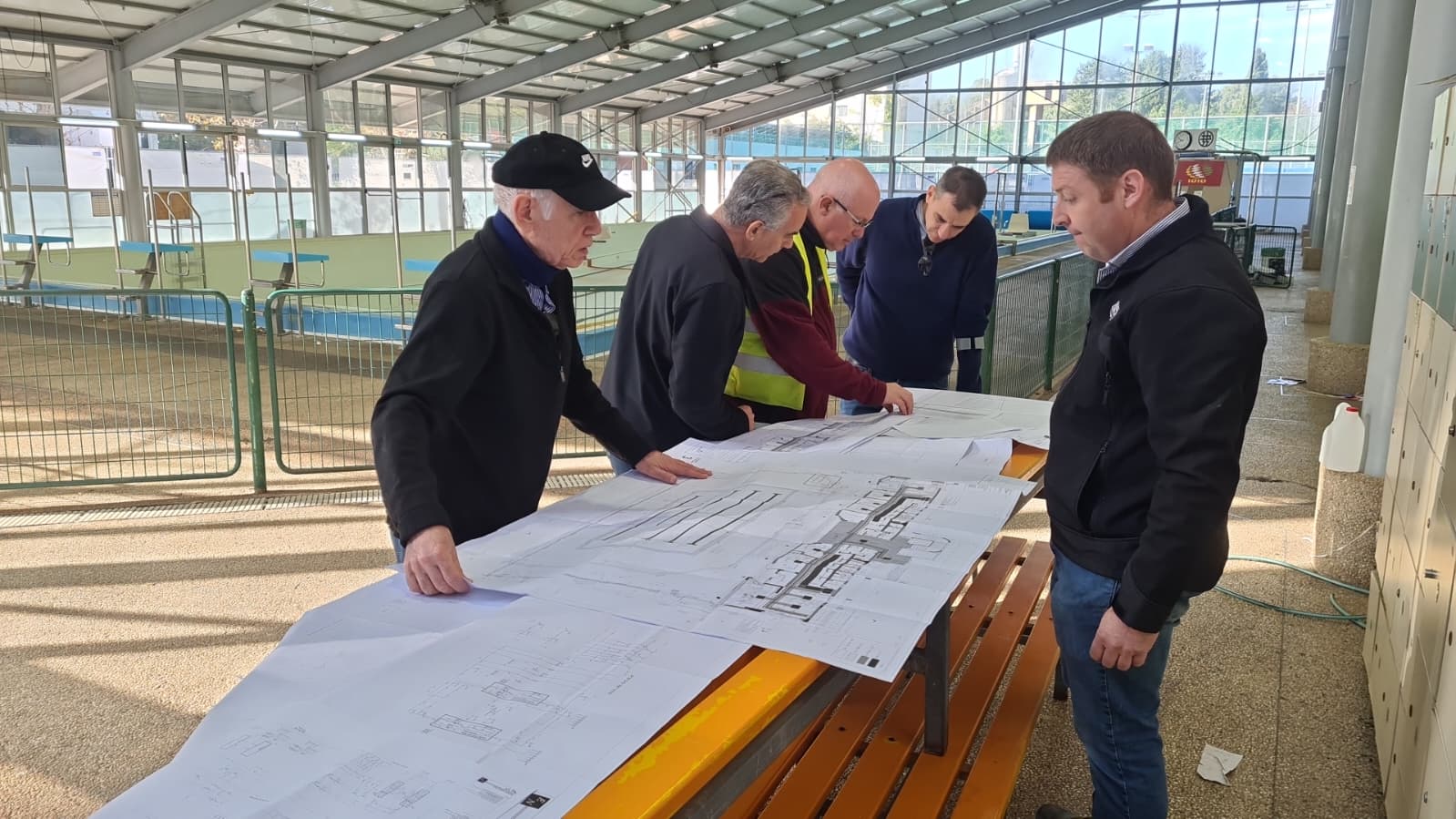
Renovation team discussing the overhaul of the Israel ParaSport Center’s semi-Olympic pool (photo taken by Boaz Kramer)
I recently picked up an American guest from his hotel in Tel Aviv to go to dinner. He had just arrived a few hours earlier to Ben Gurion Airport. He sat down in my car and sighed. How is it possible, he asked, that Israel has the power, skill, technology and jaw dropping capacity to take out an arch-terrorist with a satellite-laser-guided AI pen-size missile developed by a local hi tech company, through the window of the 7th floor apartment of his lover in Tehran, yet the very same country can’t figure out a simple airport taxi line.
It’s a very legitimate question. It seems like the gap between what Israel is amazingly able to do and what it is frustratingly unable to do has become maybe just too much to grasp. The same country and people that invented Waze, is the same country where you still need to send a fax(!) to Social Security if you change your bank account; the same country which launches satellites into space is the same where you have to wait three months for a city engineer to sign a building permit; and the same country where you get your blood drawn in the morning and the lab results to your phone before noon, is the same where you sometimes wait 10 hours in the ER to see a doctor.
Israel can wear you out, amaze you, annoy and frustrate you, and stun you, sometimes all at the same time, on just an average weekday. It’s sometimes mind boggling for people looking from the outside or visiting, and it is even more so if you live here, raise your children here, or do something completely random, like try to rebuild a swimming pool in an adaptive sports facility.
Which we are now doing, here at the Israel ParaSport Center.
The contrast between the layers of bureaucracy and the skills of the engineers; the creativity of the AC guy who needs to install a new system in a 65-year-old facility and finds a way, and the 100-light-year wait for the authorizations from the Institute of Standardization; the AI powered drones they use to map the area and the fact they can’t begin their workday, because the guy responsible for bringing their hard hats slept in in the morning. Israel is beautiful and horrible, it drives you mad but you can’t help loving it, and it is both an unbelievable miracle and a tragic fiasco.
And yet, when you zoom out, you realize it’s not a coincidence. It’s actually the same raw ingredients that make Israel on the one hand the world’s sandbox for innovation and on the other hand a place that feels like it’s held together with duct tape and chutzpah. Israel’s greatest strength is that almost nobody here plays by the book. Rules are just suggestions, obstacles to be creatively bypassed. Hierarchies are flat, procedures are negotiable, and “that’s impossible” is just innovation fuel. That’s why a tiny country with almost no natural resources became a global superpower in cyber, security, medicine, and AI. When you don’t accept limitations, you invent new paths. When you don’t respect structure, ideas jump levels. When you question authority at age five, you end up managing engineers at 25.
But that exact same culture causes chaos when what you really need is reliability, order, predictability, or God forbid – compliance. If every form is negotiable, then every form becomes a debate. If every rule can be bent, then no rule is trusted. If everyone thinks they’re the exception, then lines don’t exist (airport taxi or otherwise). In a culture that admires speed and improvization, institutions that require boring consistency like hospitals and municipalities, struggle to function smoothly. Innovation thrives, but infrastructure fails.
My guest in the car was right to be frustrated. But the wild mess and the wild genius are two sides of the same coin. At the end of the day, for all its insanity, grit and charm, I wouldn’t be able to live anywhere else.
Related Topics
Related Posts