
Thoughtful, Caring and Effective Therapy
Featured Post
Feeling like Freud at the end of the Austro-Hungarian Empire
Were the mental health crises I witnessed in American Jewish teenagers a symptom of a political destabilization already on its way?
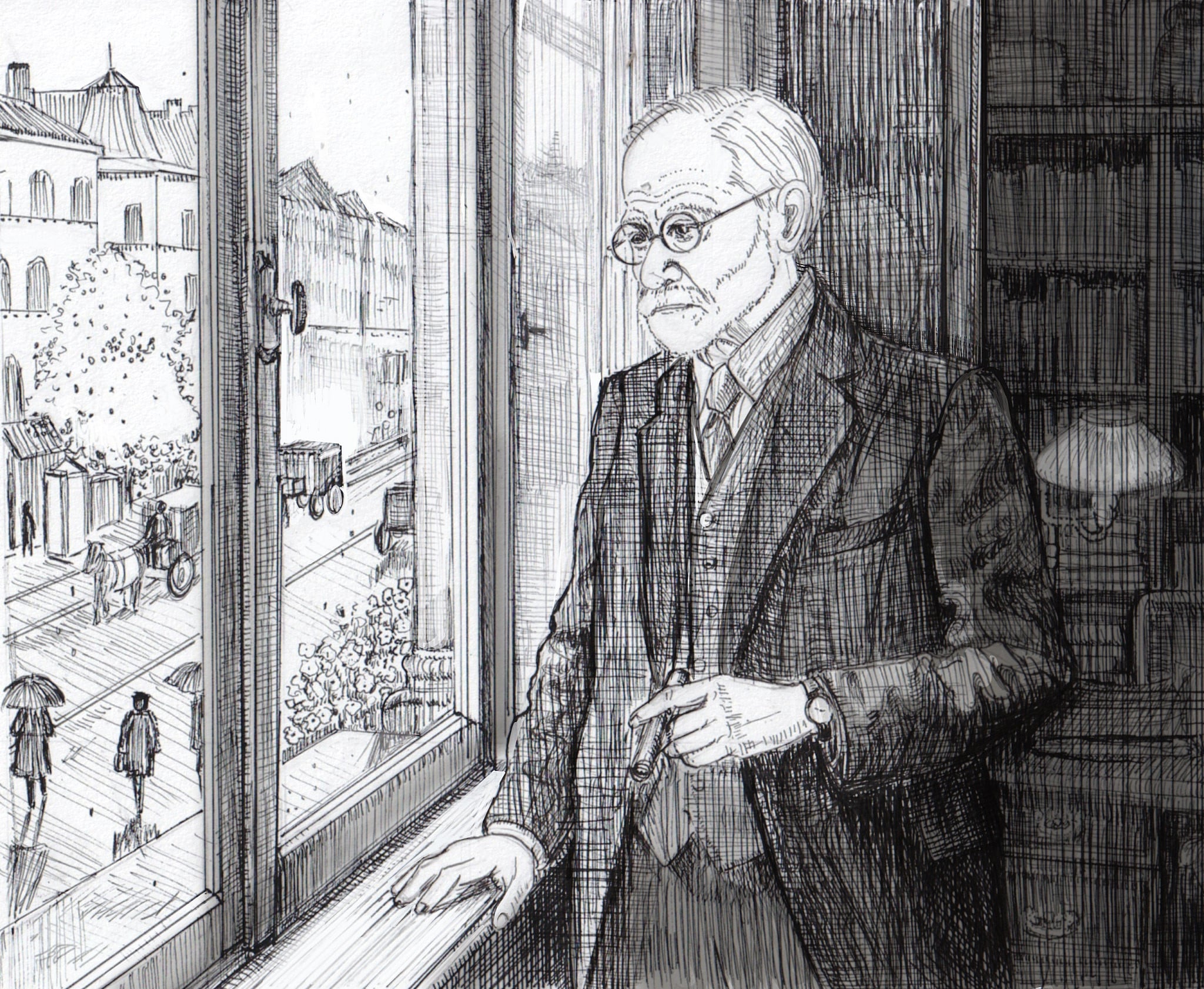
*Illustration by Liron Kirschen
For many years, I worked with hundreds of American Jewish teenagers on four-week summer programs in Israel. The paramount responsibility — for my staff and me — was the health, safety, and security of these young people who were thousands of miles from home. Their parents had placed enormous trust in our organization, and my role was to be the central address when any emergency or crisis arose.
What I could not have anticipated was how profoundly the nature of those crises would change.
For many years, the medical issues on these trips were familiar and manageable: broken bones, allergies, standard physical ailments. Serious at times, but navigable. Then, beginning around 2011, something shifted — rapidly and unmistakably. The dominant health challenge was no longer physical. It was mental.
The range of conditions these teenagers carried with them was striking: anxiety, depression, complex PTSD, eating disorders, panic attacks, ADHD, cutting, and other forms of self-harm. An entire cohort of young people had arrived at a point where basic daily functioning had become genuinely overwhelming. The volume of psychiatric medication they brought reflected this reality — Fluoxetine, Sertraline, Escitalopram, Citalopram, Paroxetine, Fluvoxamine, and others. I was not judging these young people. I was deeply concerned by the scale of suffering they were quietly carrying.
This was further compounded by their parents, many of whom communicated their own considerable anxiety directly and constantly — calling staff at all hours, their fear transmitting back to their children across the ocean and creating a cycle that was difficult to interrupt.
Year after year, the pattern intensified. It was during this period that I remarked to a colleague that I felt, in some small way, like Freud confronting hysteria at the close of the Austro-Hungarian Empire — treating symptoms whose deeper roots lay in a country coming apart at the seams.
Freud practiced in Vienna as an old familiar political order crumbled around him. His patients were not simply ill in the narrow medical sense. They were registering — in their bodies, in their breakdowns, in their silences — the unbearable pressure of a society straining against itself. The hysteria he documented was, among other things, a social symptom. Because as we know, the personal is often political.
Looking back now, in the wake of America’s deepening destabilization and polarization and the shocking surge of antisemitism that preceded and followed October 7th, I find myself wondering whether these young people were registering something the adults around them had not yet recognized. They lacked the language to name it. But something in them knew things were about to change and not necessarily for the good.
Young people are often the first to sense when the ground is shifting beneath all of us. It is as though these American Jewish teens were the canaries in the coal mine, warning us that a political destabilization that had not yet arrived was already on its way. Maybe we just weren’t listening.
Related Topics
Related Posts