
The feng shui of reused furniture, or the joy of bringing home found trash
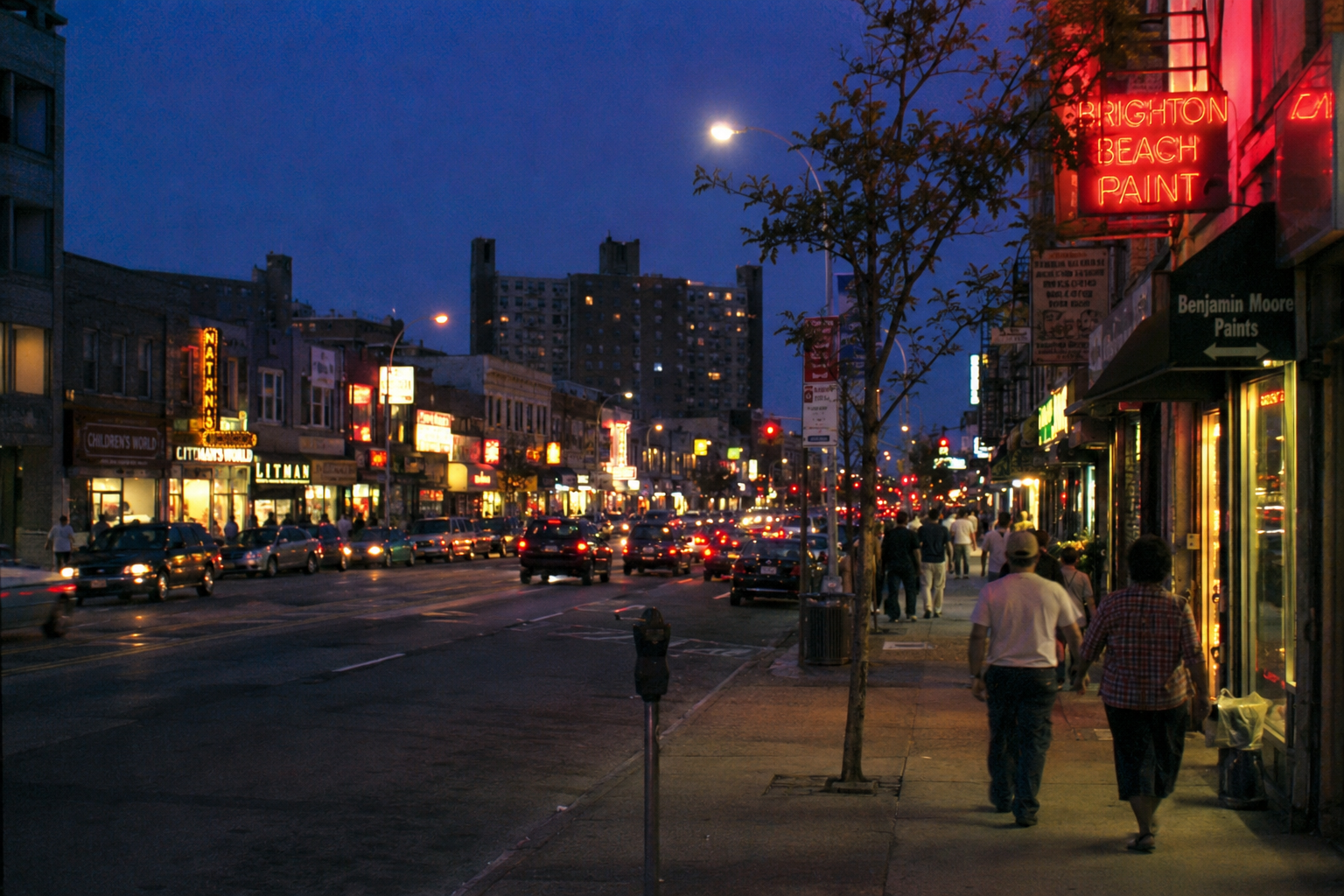
It’s Tuesday evening and the year is 1990. I am 9 or 10 years old, depending on the month, and excited for an evening stroll with my family to pick up some new stuff for the apartment. My sister, who is four years older than me, is a lot less excited. Doesn’t she want a new chair, or perhaps a bedside lamp, I ponder. Teenage girls are so moody. Who can know why they get this way?
I wonder if perhaps her enthusiasm is dampened because she knows we are not going to a furniture store. Everyone in our community, meaning recent Soviet arrivals, knows that Tuesdays are garbage disposal days in South Brooklyn, and this means prime pickings!
My family left the Soviet Union in the spring of 1989. Our first stop post-departure was Austria. From there, it was Italy, where we had to convince American State Department officials first of our suffering at the hands of Soviet antisemites whose aim was to sabotage education and career opportunities for Jews, and also that our family would make fine Americans if only we were granted the privilege to join this land of opportunity.
And so, in August 1989, we arrived in NYC. The Soviet Union, aside from taking our passports and citizenship, which we gladly forfeited, also disallowed taking with us most valuable things such as jewelry, electronics, and, of course, money. We arrived with a few hundred dollars, some clothes, books – of course Soviet Jews took books – and receipts for shipping containers that we filled with household necessities back in the USSR that in theory would arrive at our final destination a few months after us.
After several weeks of sleeping on the floor of relatives, my parents found their first American employment, and the four of us moved to a small one-bedroom apartment in South Brooklyn. Since we had nothing by way of furnishing, or really anything else, we slept on the floor on the few blankets that we brought with us.
As you probably already guessed from the title, we furnished our apartment with things we found in the trash, and I will get to that. But to understand our ingenuity and appreciation for the bounty that awaited us on the curbsides of Brooklyn, one should understand garbage in the Soviet Union.
Waste in the Soviet Union was very different than it is in the US, and there was a lot less of it. The first thing to know is that most of the trash was food byproducts. In the Soviet Union there were no disposable utensils, plates, cups, spoons, and food was not bought in packaging such as you would see in Western stores. No soda bottles or cans, no yogurt cups, no cereals in colorful boxes, no cheese or cold cuts in clear packaging. No diapers or paper towels. Liquids were sold in glass bottles or jars, and those were either reused for something at home or brought to a recycling station. Cheese or cold cuts were wrapped in paper, and everything else, and there wasn’t much of it, you had to carry out in whatever container you brought with you. The large black garbage bags you see on the curb of American streets, filled with a week’s worth of household trash, did not exist.
What also did not exist in the trash were bulk items such as furniture, toys, clothing, for the most part, or any electronics. Because consumer goods were hard to come by, a refrigerator, for example, could take years to purchase; almost everything was used for decades, repaired, used for parts, passed down to newlyweds, or, if one was fortunate enough to get something new, the old items could be sold to a Soviet version of a consignment store. Say what you will about planned economies in constant shortage; they are easy on the landfill.
You can imagine our surprise then, when, during our first evening strolls on the streets of Brooklyn, we saw piles of garbage, and, among them, treasures. A floor lamp lying on the sidewalk? Surely it must be in a state that is beyond repair. Of course, we brought it home. Even if it didn’t work, it could be taken apart and the parts stored for later use. We plugged it in, and what do you know, there was light, and it was good; oh, it was very good.
On future strolls, we found tables and chairs, and sofas, and even TVs, and armoires, and mirrors. I kept an eye out for toys, which from time to time we found. I once found a small comic book collection, which I still have. There was always a need for chairs. Even with a one-bedroom apartment, you are going to want at least 10 chairs, because if anything, you can also use them as nightstands and coffee tables and as makeshift bookshelves.
Of course, we weren’t the only ones roaming the street seeking household goods. Thousands of families who arrived around the same time we did now roamed the streets with the same mission. Many were familiar faces from back home, or people we met on our immigration journey, our paths until this moment very similar. The families would greet each other, sometimes showing off newly acquired items and sharing fertile gathering grounds. “Look at this radio; some of the knobs fell off, but surely it still works. Go three blocks east, on the right. Looks like someone was moving and emptied their place. Lots of nice stuff.” And sure enough, you might find a full living room set, maybe even an old painting and a vase. Soon, the apartments of many families resembled antique shops.
If you are judging too harshly and thinking, how could these people who were just months earlier engineers, doctors, scientists, and professors stoop so low as to furnish their apartments with literal garbage, you must remember that all these new immigrant families had nothing. Without knowing English or getting their bearings, the first jobs that were available to my parents and others like them paid minimum wage.
Aside from paying living expenses, which was hard enough, we needed to buy basic necessities like dishes, school supplies, clothing, hygiene products, and mattresses, since most people drew the line at sleeping on trash mattresses. A car was also something to aspire to, and those could not be found in the trash. In 1990, the minimum wage in NYC was $3.80. If a family wanted to get those non-trash mattresses and eventually a very used car, there was absolutely no way to splurge on other household necessities.
And why would you want to when the items to be found in the trash were serving their purpose? Plus, there was always an opportunity to upgrade. After finding a couch and using it for a few months, there was a chance of finding a better one. Some friends and extended family members were very enterprising. Every time I visited, they had gotten rid of their previous finds and replaced them with something better. The goal was to find matching sets, which often happened, and get rid of less flattering items. After all, just because you are furnishing from the trash doesn’t mean you can’t at least try to be stylish.
And just like in much richer communities where everyone tries to outdo each other with nicer stuff and constant renovations, the same phenomenon happened here. Even though the price, nothing, was what we all paid, families would get jealous if someone’s trash furniture was nicer than theirs. Or when someone else snagged what you thought was rightfully yours. For example, say you saw a really nice couch on the curb and ran home to find someone to help you lug it back. As you hurry to retrieve your find, you might run into another family already making off with your booty. You could protest and mope all you want, but as the kids say, finders’ keepers.
As a young kid, I loved the hunt; you never knew what you would find. Some adults embraced these adventures like I did. Others were uncomfortable or embarrassed. They were ashamed about what strangers would think about these “poor dirty Russians.” Even more, they were embarrassed by what other families from the community, who were there longer and more established economically, would think. This was not unwarranted. Just like in the early 1900s when the more established German Jews were embarrassed by the poor and uneducated Eastern European Jews pouring into Manhattan’s Lower East Side and tried to disassociate from them, immigrant families that had ascended a few steps higher on the economic ladder were concerned that the new arrivals would make them look bad, which was why they would sometimes be the first ones to mock the new arrivals.
Some 30 years later, this community, like many other immigrant communities, has seen a meteoric socioeconomic rise. The same people, literally the same individuals, who ate their first American meals on dining sets that were found on the curbside are now finance and IT executives, doctors, lawyers, and very successful entrepreneurs. Their material wealth and lifestyles are worlds apart from where they started in the 90s. And to their American-born kids, these experiences sound foreign and detached from their own boutique furniture and designer-branded realities.