
First Vote in Israel: My Divided Chosen Home
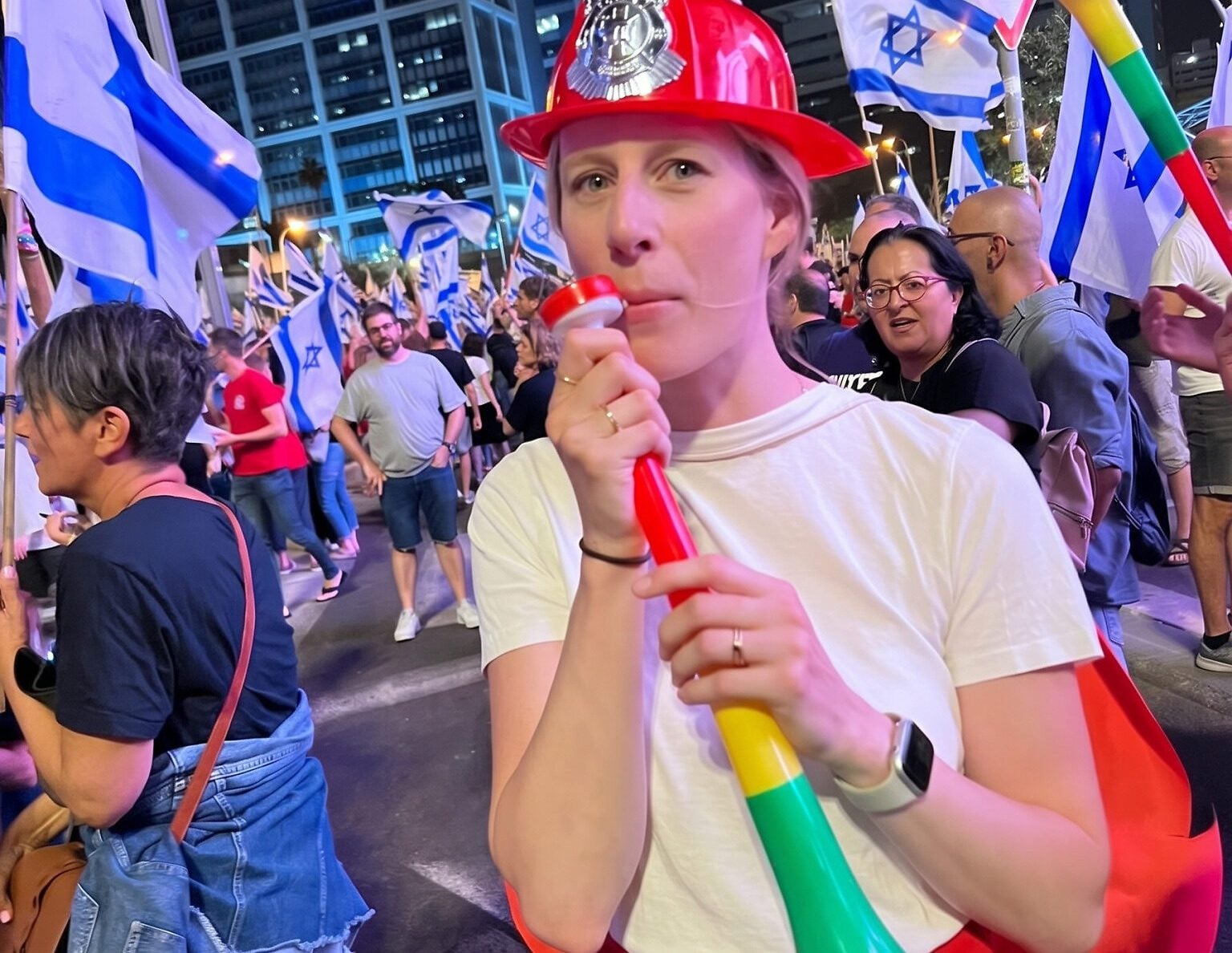
Whenever I introduce myself to people here, I always joke that I’m kind of lost in the Middle East. Even after almost thirteen years, I still can’t quite believe how a Dutch girl who packed a backpack for a world trip ended up living here.
Soon, for the very first time, I am allowed to vote in an Israeli election. But walking into that voting booth doesn’t feel like a happy milestone. It feels terrifying.
I met my husband fourteen years ago on the South Island of New Zealand. It was the very end of his trip and just the beginning of mine. Afterward, he flew back to Israel and I kept going to Indonesia and Nepal. We stayed in touch, and the moment I got back to the Netherlands, I caught a flight straight to Tel Aviv to see if our connection was real.
It was, but he was very blunt from day one: he saw his future in Israel and nowhere else. His parents raised him to be secular and Zionist, his family devoted themselves to defending the country, and he believed this is where he belonged. He told me straight out: You either move here, or there is no future for us.
I was young, in love, and naive. I jumped. I figured I had nothing to lose. In the worst case scenario, I’d just move back to Amsterdam. Now, all these years later, we are still here. We have two boys, six and four, and we’re expecting our third son early next year.
For a long time, we just lived our lives. Then the judicial overhaul started, right around the time our second son was born.
Looking at my baby, the tables turned. This time, I gave him the ultimatum: You either fight for this country by protesting, or there is no future for us and the kids here.
I pushed him and his friends to take to the streets instead of packing their bags and running away with their second passports. We became completely devoted. Almost every Saturday night, he went out to protest, and whenever I could, I joined him with our kids.
Then came October 7th, and it shook me to my core.
Four days later, we fled through Prague back home to the Netherlands. When I turned the key to lock our apartment door, I cried because I truly believed I would never see my home or Israel again. My biggest fear had come true: an all-out war. It was good to be back with my family. They were so caring and wanted nothing more than for us to stay and settle down safely in the Netherlands. But we still felt completely alone. In those first weeks, he couldn’t even mention the idea of returning, and I couldn’t imagine going back. We were also watching the news and seeing so much hatred directed at Israel. We had no school for the kids in the Netherlands, so we were stuck inside, remotely working full-time with two small children around us 24/7. When schools in central Israel started opening up again, we decided to come back to Tel Aviv.
Whenever Israeli people ask me why on earth I’m still here, I always answer in Hebrew: “Kasheh po aval beyachad; be’Europa kal aval levad.” “Life here is hard, but together. In Europe it’s easy, but you’re alone.”
In Israel, I actually feel freer as a person. In the Netherlands, life is boxed in by rules, social expectations, and calendars where you have to book a coffee with a friend weeks in advance. Here, people live day by day. It’s warm, spontaneous, and real.
Yet, living here also leaves you feeling torn apart. With my Dutch friends living in Israel, the conversation always comes back to the same question: Do we stay or do we go? We often feel like we’re screwed for life, because we’re not really at home here, but we’re not at home in the Netherlands anymore either. We’re stuck in between.
My social circle is getting smaller. Most of the friends I started this journey with in 2015 left the country in the last few years. And two other friends will be relocating by the end of this year.
Now, as I carry our third son, a much heavier fear keeps me awake at night. I will soon be raising three boys who will grow up to serve in the army, boys who will likely end up in combat units. At the same time, the ultra-Orthodox community is exempt from serving.
It tells me that in the eyes of the government, the lives of my sons are worth less than the lives of ultra-Orthodox boys. My children will be expected to risk their lives, while another group gets a free pass. And the bitter irony is that the same state that will demand my sons put their lives on the line still doesn’t even recognize them as Jewish.
This draft crisis didn’t happen by accident. It is an issue created, protected, and kept alive by Bibi Netanyahu just so he can keep his political coalition together. To protect his own seat, he is willing to tear the country apart and make a deal that treats secular soldiers unfairly and puts a heavy burden on their mothers.
Every day, I watch the country being dragged further and further to the extreme right, and it scares me deeply.
With the 2026 elections coming up, my biggest fear is that Netanyahu will somehow get elected again. Where I come from in the Netherlands, it would be unthinkable for a Prime Minister to stay in office after a failure like October 7th. In a normal democracy, you take responsibility and you step down. If Lapid or Bennett had been Prime Minister on October 7th, I would expect the exact same thing from them: resign. But Bibi acts as if nothing is his fault.
I didn’t move across the world, learn the language, and build a family here just to watch this country be destroyed from the inside by politicians who care only about their own survival.
When I cast my first vote, I will be voting for my three boys. We need a real change. Without it, I don’t see a future for us here anymore. We owe that change to our children, to ourselves, and to everyone who has fallen since October 7th.