Former AIPAC Director of Policy Analysis (1986-2024)
Flashback Half-a-Century: Saying Goodbye to ‘My’ Kibbutz (Kfar Blum) – A Homage!

Personal photos of Kibbutz Kfar Blum taken by the author
50 years ago to-the-day – ”On This Day” in May 1976 – I left the Kibbutz where I had spent almost two, personally-transformative, years as a volunteer: Kibbutz Kfar Blum in the Upper Galilee alongside the Jordan River with the mountains of Lebanon and Syria in the distance. The kibbutz, named after the former French socialist Jewish Prime Minister, Leon Blum imprisoned by the Nazis, had been founded by the Habonim movement with people primarily from the United Kingdom, South Africa, the United States and the Slavic countries.
I had arrived at Kfar Blum in August 1974 intending to spend a month as a volunteer. When I finally left the Kibbutz 21 months later; my departure was involuntary! The result of the Kibbutz determining that its long-term volunteers – of which I was one of several – should either apply for Kibbutz membership or move on. I wasn’t ready to contemplate such a decision but I do wonder sometimes about “the road not taken.” So very sadly, I and some others, moved on!
That it was Kfar Blum was pure serendipity – or fate! I had gone to the Central Kibbutz office in Tel Aviv, and been offered some Kibbutz options and someone advised me to go to Kfar Blum. (In fact my entire trip to Israel had come about somewhat by chance!) I had already visited Israel on three previous occasions – including twice before the “Six Day War.” But I had never been on a kibbutz and knew few practical details about them. Of course every Jewish child knew about the famed “kibbutz ‘tembel’ hat and children living away from parents! (A matter which has evolved and differs among Kibbutzim)
Back in the 1960s and 1970s: Spending some time on a Kibbutz was pretty- common – with the Kibbutz seen as a lighthouse to the youth of the World. Boris Johnson and Bernie Sanders were among today’s “celebrities” who famously spent time on a kibbutz. For some it was wanting to experience the communal life – of socialism in practice (including all Kibbutzniks receiving the same wages, regardless of job). For others it was just the novel experience. Whether one was Jewish or a Zionist often didn’t come into it. My experiences were with Kfar Blum (and later a few month on another Kibbutz – Ramat Hashofet ulpan.) But ask any volunteer at any kibbutz and they will have many shared experiences.
When I arrived, there were maybe 40 foreign volunteers on the kibbutz (numbers ebbed and surged) from all over the World; but particularly the United States, Canada England and Scotland. But they came also from South Africa, Holland, France, Sweden, Australia and New Zealand, Ghana and Nigeria. Some came, left and then returned for a second stint. Some just stayed a few weeks. And then some like myself just stayed and stayed! There was also an Ulpan with another 30 or 40 foreign students, who also worked part time. And then a 10th Grade American High School class, with the American students working part of the time.
Life on the Kibbutz was far-more of a self-contained or somewhat isolated place than it is today. Especially for volunteers. That couldn’t be replicated today even if one wanted to. There were no cellphones or internet or cable or social news. The one Israeli TV channel was in Hebrew. It was hard – and expensive – to make overseas phone calls. (It was even difficult to receive local phone calls). Volunteers kept in touch with the news via the English-language Jerusalem Post newspaper which was read and then passed around – or the BBC World Service. You received news from home in an “air letter” which took a week from writing to get to you. (I still have letters written from my time there.)
My kibbutz jobs, which one worked six days a week: My longest job was in the apple orchards: Picking apples by ladder or on a “cherry picker” in the summer; pruning trees in the winter. I also worked in the Laundry, the garden, cotton field, Irrigation, Kitchen and Dining Hall, Guest House (now transformed); the occasional visit to the fish ponds and taking chickens to market and sweeping out the giant chicken buildings.
It was in no-way a religious kibbutz, although there was a small Beit Knesset and a special Friday night meal – invariably chicken soup, chicken and wine. The two key holidays on the Kibbutz were Yom Yom HaAtzmaut (Israeli Independence Day) and Purim.
Other events on the Kibbutz: The communal breakfast, lunch and dinner. There was a weekly movie shown in the Gymnasium. The almost weekly kibbutz dance. Taking the Egged bus to Jerusalem, Tel Aviv or Haifa or going to the nearby town of Kiryat Shmona – scene of the horrific massacre just a few month earlier – for falafel. Hitchhiking (everyone did it back then). Evenings in the communal coffee house, talking or playing backgammon (shesh besh). It was on the Kibbutz that I started to smoke – complements of the free TIME cigarettes we were given. (I only managed to quit several years later.). The cheap alcohol you could buy from the kibbutz store. There was an Olympics Size swimming pool. And then there were various other volunteer activities and memories which I won’t get into here! Strangely enough, it was on Kfar Blum that I first “owned” a cat. (“Owning a cat” on a kibbutz, being of course, a double oxymoron!)
Obviously there was somewhat of a divide between the often- partying (but still working) volunteers and the kibbutzniks for whom the Kibbutz was both their place of work and their home. But if you spoke or learned a little Hebrew, you could at least get to know a few kibbutzniks. In my case, the person I worked with in the Apple Orchards David Weinstein, who had just lost his son the previous year during the Yom Kippur War. The person in charge of the volunteers, Yehuda Shagen, originally from South Africa, was a wonderful man, which any volunteer from that era would attest to. And the woman in day-to-day charge of the volunteers, when I first at least initially was Yehudit Hammier
Israel then was governed by the Labour Party and its coalition partners (including the religious parties). Yitzhak Rabin and Shimon Peres had just months previously replaced Golda Meir and Moshe Dayan. Menachem Begin’s Likud was nearing its third decade in the opposition.
This was the time of Palestinian terrorism on the land, sea and skies. Of bombings in cities and towns; of terrorists coming into Israel from Lebanon and slaughtering civilians including foreign tourists. Of Katuysha rockets being fired into Northern Israel. Of plane hijackings – and attempted hijackings in Europe. (“Entebbe” occurred just weeks after I left the kibbutz). It was the time when the PLO was being legitimized (the PLO’s Yasser Arafat at the UN in1974) – and Zionism delegitimized. The 1975 “Zionism is Racism” resolution being adopted at the United Nations. It was Henry Kissinger’s “Shuttle Diplomacy” and Israel being perceived as “recalcitrant” leading to the famed President Ford US Reassessment of relations with Israel. And the possibility of renewed war with Syria.
Looking Back
I don’t want to over- romanticize my time on the Kibbutz. It wasn’t all sunshine and roses – and obviously nostalgia plays a role. But I can only say that to this day I still view Kfar Blum as my spiritual home, even though I deliberately haven’t returned to the Kibbutz. But “You can’t go home again.” And there have obviously many, many changes in the Kibbutz – including privatization and the end to communal dining. But I have kept up from afar with a handful of fellow volunteers from that time and on a former Kfar Blum Volunteer Facebook page.
What’s remarkable how history was both shortened and expanded. My time on the kibbutz was only 25 years after Israel’s founding; seven years after the June 1967 “Six Day War” and less than a year after the October 1973 Yom Kippur War. But it seemed forever.
Israel has obviously changed much over the past half-century – both physically in infrastructure and population, politically and in its approach to the World. Obviously not all for the good. And Israel’s image in the World has changed for the worse. But to this day, I remain very-much a Zionist – even as the term has become for many, a derogatory one – and I spent much of my life working for a pro-Israel advocacy organization (My 40 years working at AIPAC)
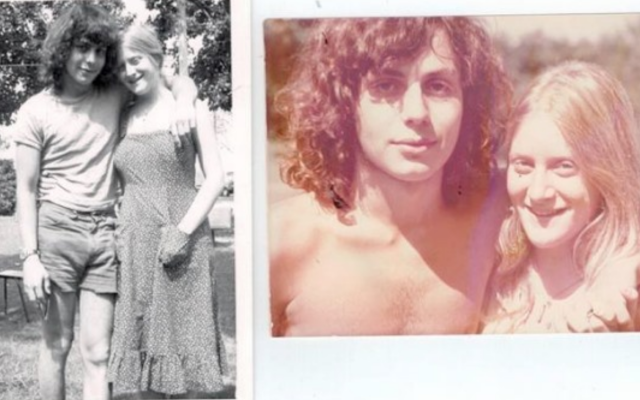
That I left Kfar Blum with a fellow-volunteer from Cleveland, Jessica – my “soulmate” – with whom I have spent these past 50 years, might be another strong reason for my very-warm memories and feelings about and gratitude towards Kfar Blum!
Addendum: If interested, one can stay at the Pastoral Kfar Blum Hotel (vastly upgraded from the old Kfar Blum”Guest House” of my time); One can look online and view some Kfar Blum archives. There’s a translated online autobiography of Nechemia Levanaon (who had many outside important roles outside the Kibbutz) writing about the founding of Kfar Blum. There’s a Jerusalem Post profile of another Kibbutznik (whose parents were my “Kibbutz parents”) and life on the kibbutz today (10 years ago) And there’s a fascinating 1974 book by two Kfar Blum founders, Yosef (Joe) Criden and Saadia Gelb “The Kibbutz Experience; Dialogue in Kfar Blum”
Related Topics
Related Posts